
Levothyroxine Absorption Calculator
How to Use This Tool
Enter your dosing schedule and check common interference factors. This calculator estimates your absorption risk based on clinical studies.
Check Your Interference Factors
Select substances you take near your dose
Absorption Risk Assessment
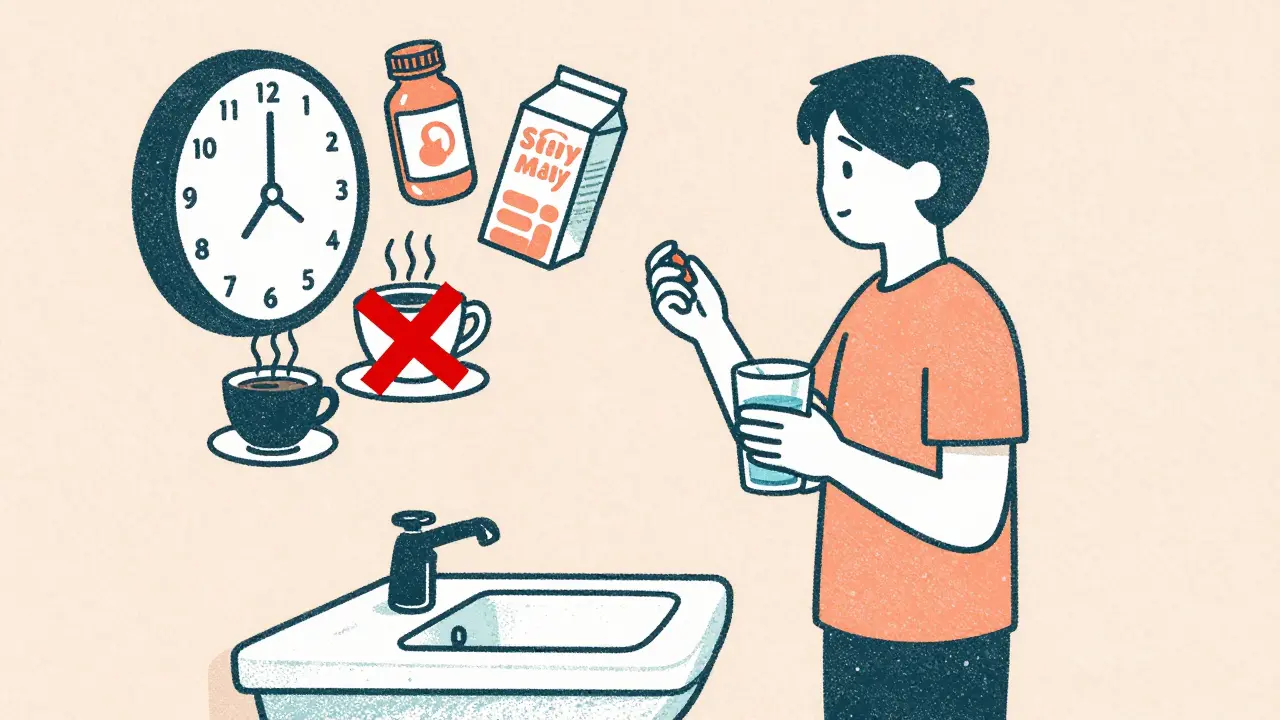
Most people taking thyroid medication don’t realize that levothyroxine doesn’t work if they take it the wrong way. It’s not about the dose-it’s about when and how you take it. A single cup of coffee, a multivitamin, or even breakfast eaten 20 minutes after your pill can throw your thyroid levels off enough to make you feel tired, cold, or depressed again-even if your prescription hasn’t changed.
Why Timing Matters More Than You Think
Levothyroxine is a synthetic version of the hormone your thyroid used to make. It’s simple, cheap, and effective-but only if your body absorbs it properly. The problem? It’s picky. Absorption happens in the upper part of your small intestine, and it needs an empty stomach and the right pH to work. Food, drinks, and other pills can block it like a wall.
Studies show that taking levothyroxine with breakfast can reduce absorption by up to 50%. One 2009 study found that patients who took it with food had TSH levels 176% higher than those who took it on an empty stomach. That’s not a small difference-it’s the difference between feeling fine and feeling awful. TSH is your doctor’s main tool to check if your dose is right. If absorption is poor, your TSH rises, and your doctor might think you need more medication. But you don’t. You just need to take it correctly.
What Ruins Levothyroxine Absorption
It’s not just food. A lot of everyday things interfere. Here’s what you need to avoid for at least 30-60 minutes after taking your pill:
- Coffee - Reduces absorption by 36%. Even black coffee, no sugar, no cream. The compounds in coffee bind to the hormone before it can be absorbed.
- Calcium supplements - Drop absorption by 27-36%. This includes antacids like Tums and calcium-fortified orange juice.
- Iron supplements - Cut absorption by 39%. Common in women with heavy periods or during pregnancy.
- Soy products - Soy milk, tofu, edamame. They contain compounds that interfere with absorption.
- Proton pump inhibitors - Omeprazole (Prilosec), lansoprazole (Prevacid). These reduce stomach acid, which is needed for the pill to dissolve properly.
- Fiber supplements - Psyllium, methylcellulose. They trap the medication and push it through too fast.
- Multivitamins with minerals - Most contain iron, calcium, or zinc. Take them at bedtime, not in the morning with your thyroid pill.
These aren’t myths. They’re backed by clinical studies published in journals like the Journal of Clinical Endocrinology & Metabolism and Thyroid. If you’re taking any of these, space them out by at least 4 hours. That’s the only way to be sure your body gets the full dose.
Morning vs. Night: Which Is Better?
The classic advice is to take levothyroxine 30-60 minutes before breakfast. That’s still the gold standard. But what if you can’t do it? What if you’re always rushing, or your stomach gets upset on an empty stomach?
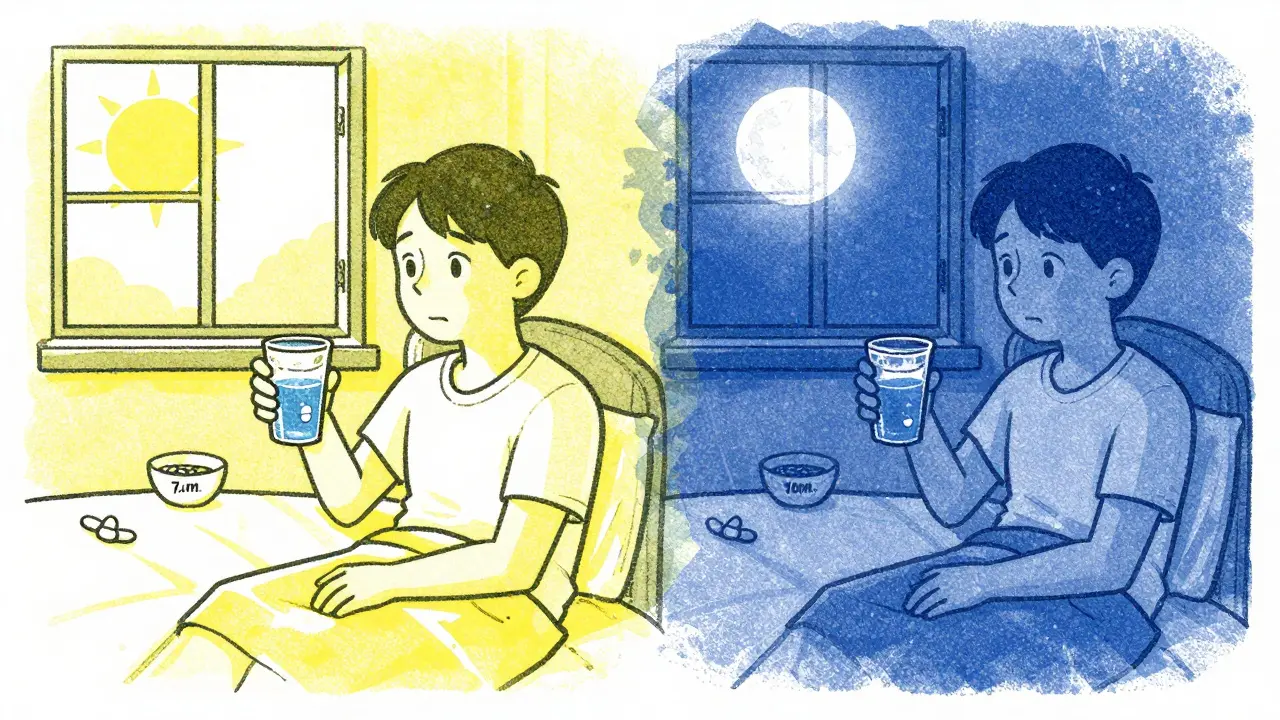
Here’s the surprising part: some people do better taking it at night. A 2020 systematic review of 12 studies found that nighttime dosing led to lower TSH and higher free T4 levels compared to morning dosing. Why? Because the body absorbs it more consistently when the gut is quiet-no food, no coffee, no other meds.
But not everyone agrees. Some studies show no difference. Others show worse absorption at night. The truth? It depends on the person. If you’ve tried morning dosing and still feel off, night dosing might be worth a try. Just make sure you take it at least 3-4 hours after your last meal. No snacks. No late-night tea. No bedtime snack of yogurt or cereal.
One patient on a thyroid forum said, “I switched to bedtime dosing after 8 years of fluctuating TSH. My levels went from 3.5 to 1.2 and stayed there. I sleep better, too.” That’s not luck. That’s science.
Special Cases: Pregnancy, Cancer, and Older Adults
If you’re pregnant, you don’t get to choose. The American Thyroid Association says you must take levothyroxine on an empty stomach before breakfast. Why? Your baby’s brain depends on your thyroid hormone in the first trimester. Even small drops in absorption can affect development. Your doctor will likely check your TSH every 4 weeks during pregnancy.
If you’ve had thyroid cancer and are on suppressive therapy (meaning your TSH is kept below 0.1), absorption mistakes can be dangerous. You need every microgram to stay in remission. No exceptions. No shortcuts.
For older adults on multiple medications, timing gets messy. Many take calcium for bones, iron for anemia, or omeprazole for heartburn. The Endocrine Society recommends spacing levothyroxine 4 hours apart from all of them. That’s hard to do. But if you can’t, talk to your pharmacist. There are workarounds-like switching to a liquid form or adjusting other meds.
What’s New: Better Formulations Are Coming
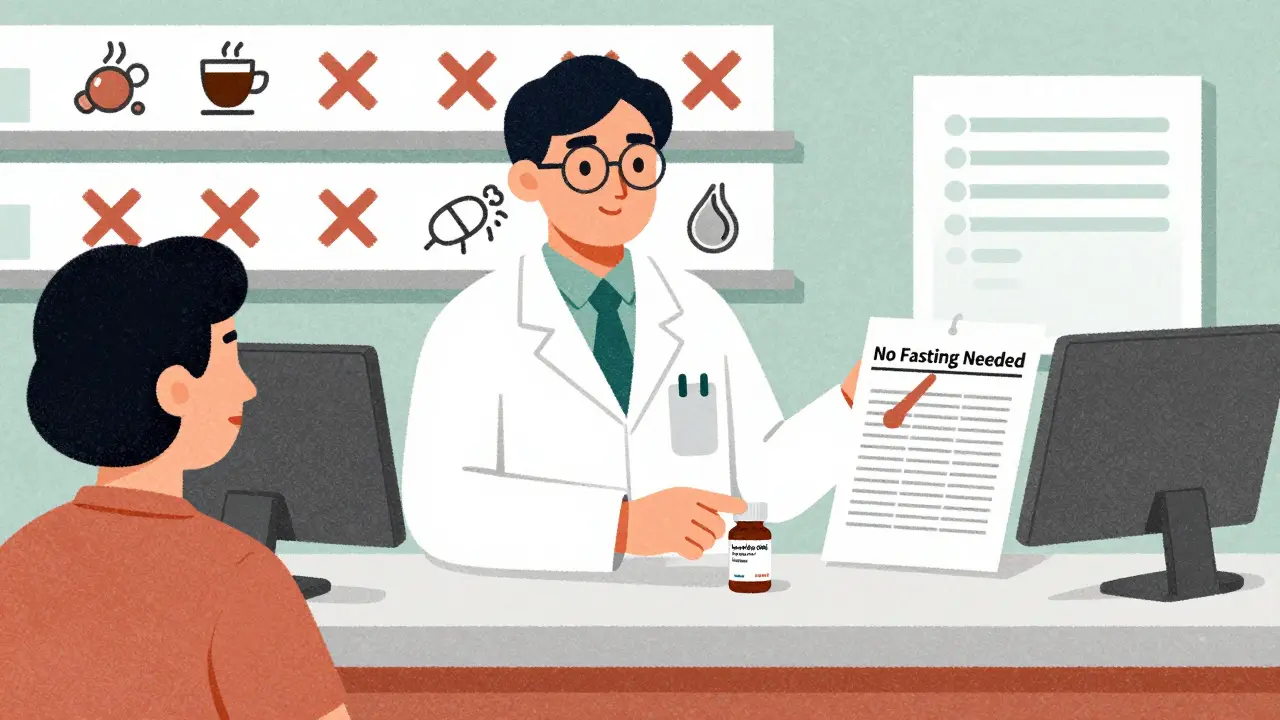
Not everyone has to struggle with timing. In 2017, the FDA approved Tirosint-SOL, a liquid form of levothyroxine. It’s absorbed just as well whether you take it with food or not. A 2019 study showed no difference in TSH levels between fasting and non-fasting states. It’s more expensive, but if you’ve tried everything else and still can’t get stable numbers, it’s worth asking about.
Even better, a new delayed-release tablet is in phase 3 trials. Early results from the 2023 American Thyroid Association meeting showed 92% of patients maintained target TSH levels-even when they took the pill with breakfast. This could change everything. But until it’s widely available, most people are still on the old tablets. And for them, timing still matters.
How to Actually Stick to the Rules
Knowing what to do isn’t the same as doing it. Here’s how real people make it work:
- Keep your pill next to your toothbrush. Brush your teeth → take your pill → wait 30 minutes → eat. It becomes automatic.
- Use a pill organizer with alarms. A 2022 study found that smartphone reminders increased adherence by 38%. Set a daily alarm: “Take thyroid med.”
- Turn your bottle upside down after taking it. Simple, but it tricks your brain into remembering. No more “Did I take it?”
- Write it down. Keep a small log: “Took at 7 a.m., waited 45 min, no coffee.” You’ll spot patterns.
- Don’t skip doses because you forgot. If you miss your morning dose, take it at night-4 hours after dinner. Better than nothing.
One woman in Wellington told me she started keeping her pill in her purse. If she was running late, she’d take it at the office before lunch, wait an hour, then eat. She didn’t get perfect absorption, but she got enough to stay stable. That’s the goal-not perfection, but consistency.
When to Check Your TSH
Don’t wait until your yearly checkup if you’ve changed your routine. If you switched from morning to night, or started taking calcium, get your TSH tested 6-8 weeks later. Your doctor needs to see the numbers before adjusting your dose. If your TSH jumps from 1.5 to 4.0 after a change in timing, that’s not a dose problem. That’s an absorption problem.
Once you’re stable, you can go back to annual checks. But if you’re pregnant, have cancer, or are on multiple meds, you might need checks every 3 months.
Can I take levothyroxine with water?
Yes, water is the only liquid you should take with levothyroxine. Avoid coffee, tea, milk, or juice for at least 30-60 minutes after taking it. Water helps the pill dissolve properly without interfering with absorption.
What if I forget and take levothyroxine with breakfast?
Don’t panic. Skip your dose for the day and take your next one at the correct time tomorrow. Don’t double up. Taking two pills at once can cause side effects like a racing heart. One missed dose won’t hurt you, but doing it often will mess up your thyroid levels.
Is it okay to take levothyroxine at night?
Yes, if you can’t take it in the morning. Take it at least 3-4 hours after your last meal, and avoid eating or drinking anything else afterward. Studies show it can work just as well-or even better-for some people. Talk to your doctor before switching.
Why does coffee affect thyroid medication?
Coffee contains compounds that bind to levothyroxine in the gut, preventing it from being absorbed. A 2017 study showed a 36% drop in absorption when taken with coffee. This happens even with black coffee-no sugar or cream needed. Wait at least 60 minutes after taking your pill before drinking coffee.
Do I need to take levothyroxine at the same time every day?
Yes. Consistency matters more than the exact hour. If you take it at 7 a.m. Monday through Friday but skip Saturday, your TSH can drift. Pick a time you can stick to-morning or night-and stick with it. Your body responds to routine, not just the dose.
Final Takeaway
Levothyroxine isn’t a pill you pop and forget. It’s a tool that only works if you use it right. The difference between feeling fine and feeling exhausted might come down to whether you waited 30 minutes before your coffee-or whether you took your calcium at the same time. Most people don’t realize how sensitive this medication is. But once you do, you take control. You stop blaming your dose. You stop wondering why you’re still tired. You start managing your absorption-and that’s when real change happens.



11 comments
Ryan Riesterer
Levothyroxine absorption is governed by pH-dependent solubility and passive diffusion in the duodenum. Coffee’s chlorogenic acids and calcium’s divalent cations form insoluble complexes with the thyroxine molecule, reducing bioavailability by up to 36% as demonstrated in randomized crossover trials (JCEM, 2017). Consistent fasting administration remains the gold standard for pharmacokinetic stability.
Patrick Roth
Actually, the 2020 systematic review you cited? Flawed. Most of those studies had tiny sample sizes and didn’t control for gut motility or circadian cortisol rhythms. I’ve been taking mine with breakfast for five years and my TSH is rock solid at 1.8. Your ‘science’ is just fearmongering dressed up as medical advice.
Lauren Wall
Stop lying to people. Coffee ruins everything. Just wait an hour. It’s not that hard.
Tatiana Bandurina
Interesting how the article conveniently ignores that pharmaceutical companies profit from people being confused. Tirosint-SOL is 10x the price of generic levothyroxine. Meanwhile, the FDA approved it without requiring bioequivalence testing against the original tablet under non-fasting conditions. Coincidence? Or corporate engineering?
Philip House
Let’s be real - if you’re too lazy to wait 30 minutes before coffee, you’re probably too lazy to care about your health. This isn’t rocket science. It’s basic discipline. America’s decline? It’s people who think ‘convenience’ is a valid substitute for responsibility.
Akriti Jain
LOL they didn’t mention the 5G towers and fluoridated water. 😂 That’s why your thyroid is messed up. The CDC knows. They’re hiding the truth. Take iodine drops, not this corporate poison. 🌱💧 #ThyroidTruth
Mike P
I took mine with coffee for 12 years and never had a problem. My doctor even said my numbers were perfect. You’re telling me my body doesn’t work like everyone else’s? Nah. I’m not some lab rat. I’m American. We do what we want.
shivani acharya
Okay, so let me get this straight - you want me to wait 4 hours after dinner to take my pill at night, then not eat anything else, not even a banana, not even a sip of tea, and then wake up at 4 a.m. to take it again in the morning because I ‘missed’ the window? And if I do it wrong, my baby’s brain gets damaged? My husband’s on 7 meds, I’m working two jobs, and my 3-year-old just threw up on my shirt. So now I’m supposed to become a pharmacologist on top of everything else? This isn’t medicine. This is torture dressed up as ‘care.’ You don’t get it. You’ve never had to choose between feeding your kid and taking your pill on time. This system is broken, and you’re just the messenger.
Sarvesh CK
The complexity of levothyroxine pharmacokinetics reveals a deeper tension in modern healthcare: the gap between idealized clinical protocols and the lived reality of patients navigating socioeconomic constraints. While fasting administration optimizes absorption, the burden of temporal precision disproportionately impacts marginalized populations with limited access to consistent routines, healthcare literacy, or socioeconomic stability. A truly patient-centered approach must acknowledge pharmacological efficacy not as an absolute, but as a dynamic equilibrium shaped by context, resilience, and systemic support - not merely compliance.
Hilary Miller
My mom in India takes hers with chai and swears she feels better. Culture matters. Maybe the rules aren’t universal.
Margaret Khaemba
Has anyone tried the new delayed-release tablet yet? I’m on Tirosint-SOL and honestly, it’s been life-changing. I can take it with breakfast now and my TSH is stable. I wish I’d known this sooner. Still expensive, but worth it if you’re struggling.