
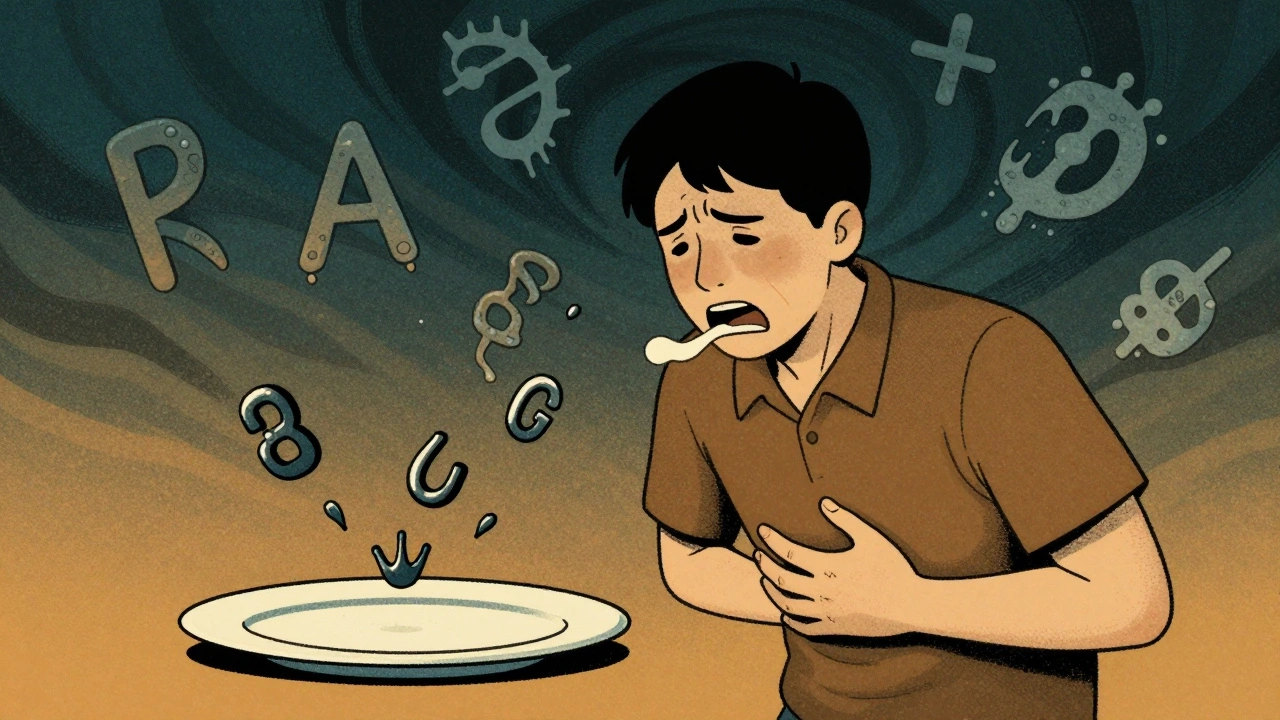
When your kidneys fail, your body doesn’t just slow down-it starts poisoning itself. Uremic symptoms like constant nausea and unbearable itching aren’t just uncomfortable; they’re warning signs your body can’t clean its own blood anymore. These aren’t vague complaints. They’re measurable, life-altering signals that dialysis may be the only thing standing between you and serious harm.
What Exactly Are Uremic Symptoms?
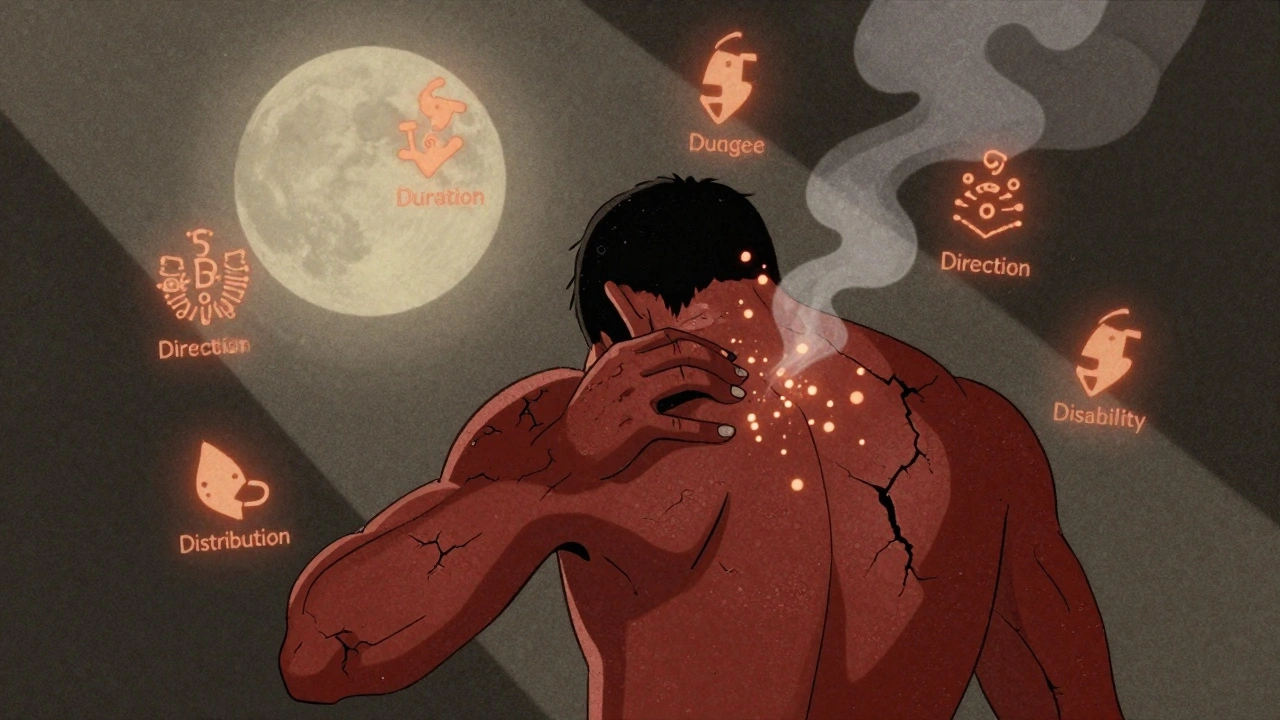
Uremia isn’t a disease. It’s the result of kidney failure. When your kidneys can’t filter waste, toxins like urea, creatinine, and middle molecules build up in your blood. This isn’t just about high numbers on a lab report. These toxins trigger real, physical reactions in your body-nausea, itching, fatigue, confusion, and even heart problems. Nausea is one of the most common symptoms, affecting about 68% of people with stage 5 chronic kidney disease. It’s not just feeling a little queasy. It’s a persistent, crushing feeling that makes food taste like metal, turns meals into chores, and leads to weight loss. One patient on Reddit lost 18 pounds in two months because eating felt like swallowing sand. Itching-called uremic pruritus or CKD-associated pruritus-is even more widespread. Between 37% and 70% of people with advanced kidney disease experience it. It’s not dry skin. It’s deep, unrelenting itching that doesn’t go away with lotion or antihistamines. It hits at night. It’s worse on your back, arms, and legs. You scratch until you bleed. Sleep becomes impossible. Studies show patients with severe itching have CRP levels (a marker of inflammation) more than three times higher than those without it.Why Do These Symptoms Happen?
Nausea isn’t caused by your stomach. It’s caused by toxins hitting your brain. Uremic waste products like p-cresyl sulfate and indoxyl sulfate cross the blood-brain barrier and activate the chemoreceptor trigger zone in your brainstem. This area controls vomiting. When BUN levels climb past 80 mg/dL, nausea almost always follows. In one study, 92% of patients reported nausea starting just 6 to 12 weeks before they started dialysis. Itching is even more complex. It’s not just one toxin-it’s a mix. High phosphate, high PTH, and inflammation all play a role. Patients with pruritus have average CRP levels of 12.7 mg/L, compared to 4.2 mg/L in those without itching. That’s not coincidence. It’s proof that your immune system is in overdrive. The International Forum for the Study of Itch says true uremic itching must last more than six weeks, affect large areas of skin symmetrically, and have no visible rash. That rules out allergies, eczema, or liver disease.When Should You Start Dialysis?
For decades, doctors waited until patients were near death before starting dialysis. That’s not the standard anymore. But you don’t start dialysis just because your eGFR is below 15. You start when your symptoms can’t be controlled. The 2023 KDOQI guidelines say dialysis should begin when uremic symptoms become unmanageable. That usually means:- eGFR below 10.5 mL/min/1.73m²
- BUN above 70 mg/dL
- creatinine above 8 mg/dL
What Triggers Dialysis More Than Numbers?
Doctors now look for specific red flags:- Weight loss over 5% in 3 months from nausea or loss of appetite
- Severe itching scoring above 15 on the 5-D Itch Scale (Duration, Degree, Direction, Disability, Distribution)
- Uremic pericarditis-inflammation around the heart detected by ultrasound
- Fluid overload that doesn’t respond to diuretics
- Neurological symptoms like confusion, tremors, or seizures
How Are Symptoms Managed Before Dialysis?
You don’t just wait. There are steps to control symptoms before dialysis begins. For nausea:- Ondansetron (Zofran): 4 mg up to three times a day
- Domperidone: 10 mg four times a day (used cautiously due to heart risks)
- Diet changes: smaller meals, avoid greasy or strong-smelling foods
- Optimize dialysis (if already on it): Target Kt/V ≥1.4
- Gabapentin: Start at 100 mg at night, increase to 300 mg three times a day
- Difelikefalin (Korsuva): FDA-approved IV drug for CKD itching; reduces itch by 32.7% in 48 hours
- Nalfurafine: Oral kappa-opioid agonist; shown to cut 5-D scores in half
What Happens If You Wait Too Long?
Delaying dialysis isn’t brave. It’s dangerous. Patients with uncontrolled uremic symptoms face:- Higher hospitalization rates
- Increased risk of heart failure
- Worse outcomes after starting dialysis
- Longer recovery times
Why Do Some People Get Diagnosed So Late?
A 2022 University of Michigan poll found 41% of CKD patients saw three or more doctors before being told their symptoms were kidney-related. The average delay? 8.7 months. Why? Because doctors don’t always connect the dots. Nausea? Maybe it’s the flu. Itching? Maybe it’s eczema. Fatigue? Probably stress. But when you have chronic kidney disease, these aren’t random issues-they’re signs your kidneys are failing. That’s why tracking your symptoms matters. Keep a journal: when you feel nauseous, how bad the itching is, how much you eat, how well you sleep. Bring it to your nephrologist. Don’t wait for them to ask.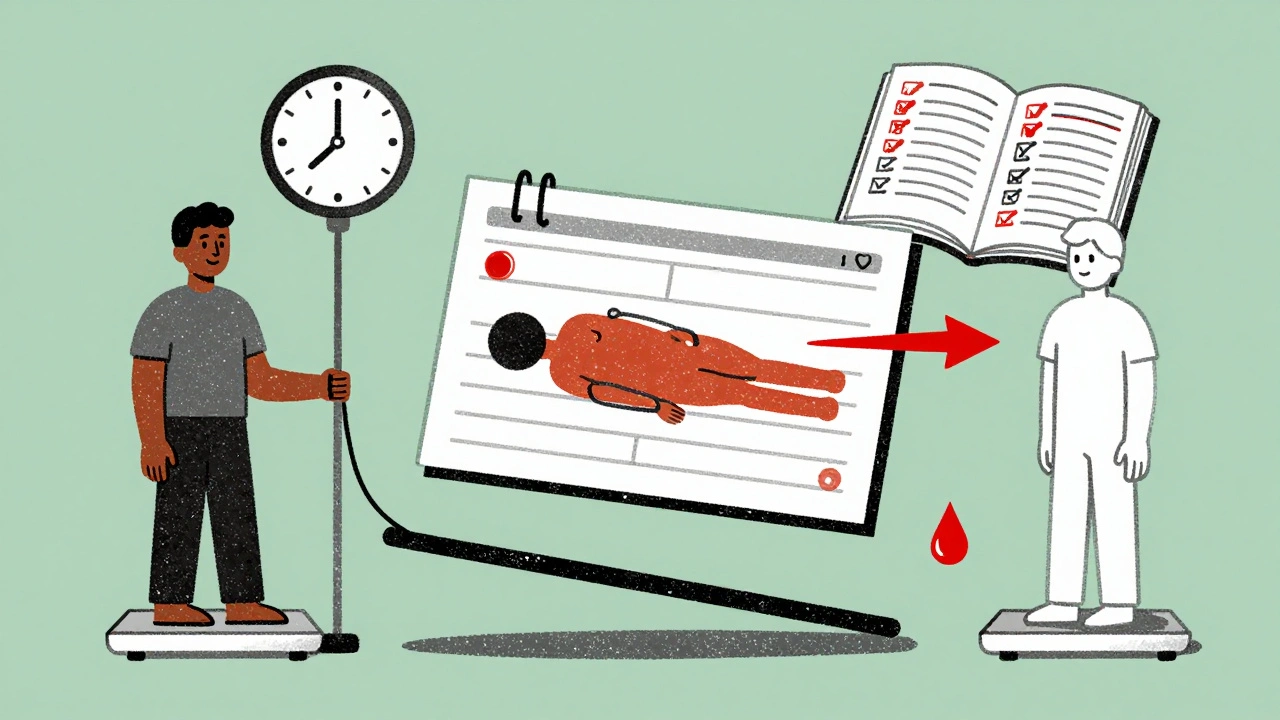
What’s New in Treatment?
The field is moving fast. In 2023, the FDA approved nemifitide, a new drug that targets kappa-opioid receptors and reduced itching by 45% in trials. The 2024 KDIGO guidelines are expected to shift from relying on eGFR to using patient-reported outcomes. Soon, your dialysis start date might be based on your score on the PROMIS-Itch scale-not just your lab numbers. If your score is above 15, you qualify for dialysis, even if your eGFR is 12. This is a win for patients. It means your experience matters as much as your numbers.What About Disparities?
Black patients wait an average of 3.2 months longer than White patients before starting dialysis-even when symptoms are identical. That delay leads to 18% higher hospitalization rates. It’s not about access to care alone. It’s about how symptoms are recognized, listened to, and acted upon. The NIH just allocated $47 million to research non-opioid treatments for uremic itching. Why? Because gabapentin, often used off-label, is being overprescribed at unsafe doses for kidney patients. We need better, safer options.What Should You Do Now?
If you have advanced kidney disease and you’re dealing with nausea or itching:- Track your symptoms daily. Use a notebook or phone app.
- Don’t downplay them. Tell your doctor exactly how bad they are.
- Ask for the 5-D Itch Scale or PROMIS-Itch assessment.
- Request blood work: phosphate, PTH, CRP, BUN, creatinine.
- Ask about difelikefalin or nalfurafine if itching is severe.
- Ask if your dialysis timing should be based on symptoms, not just eGFR.
What causes nausea in kidney failure?
Nausea in kidney failure is caused by uremic toxins-like p-cresyl sulfate and indoxyl sulfate-building up in the blood and stimulating the brain’s vomiting center. This typically happens when BUN levels exceed 80 mg/dL. It’s not a digestive issue; it’s a neurological reaction to waste products your kidneys can’t remove.
Is itching a sign I need dialysis?
Yes, if it’s severe, persistent, and unrelieved by standard treatments. Uremic pruritus affects up to 70% of dialysis patients. If your itching scores above 15 on the 5-D Itch Scale, disrupts sleep, or causes you to scratch until you bleed, it’s a strong indicator that dialysis should be considered-even if your eGFR isn’t extremely low.
Can I manage uremic symptoms without dialysis?
You can temporarily manage symptoms with medications like ondansetron for nausea or gabapentin/difelikefalin for itching. Diet changes and phosphate binders can help too. But these are stopgaps. Once toxins reach a critical level, dialysis becomes the only way to remove them effectively and prevent organ damage.
What’s the difference between early and late dialysis initiation?
Early dialysis (eGFR 10-14) doesn’t improve survival compared to late initiation (eGFR 5-7), according to the IDEAL trial. But late initiation, when symptoms are well-managed, leads to better quality of life. The goal isn’t to start sooner-it’s to start when symptoms overwhelm your ability to function.
How do doctors measure itching severity?
The 5-D Itch Scale rates itching across five areas: Duration, Degree, Direction, Disability, and Distribution. A score above 12 means severe itching needing treatment. A new tool, PROMIS-Itch, is being adopted for future guidelines and measures how much itching affects daily life. Both are validated and used in clinical trials.
Are there new drugs for uremic itching?
Yes. Difelikefalin (Korsuva) was FDA-approved in 2021 and reduces itch by over 30% within 48 hours. Nemifitide, approved in 2023, showed 45% greater itch reduction than placebo in phase 3 trials. These are breakthroughs-targeting the brain’s itch pathways rather than just treating skin dryness.
Why do some patients wait so long to get diagnosed?
Many doctors don’t connect nausea or itching to kidney disease. Patients often see multiple specialists-dermatologists for itching, gastroenterologists for nausea-before a nephrologist is consulted. On average, it takes 8.7 months from symptom onset to correct diagnosis. Tracking symptoms and asking, “Could this be my kidneys?” can shorten that delay.



12 comments
Francine Phillips
This post is way too long. I just wanted to know if itching means dialysis.
James Kerr
Man, I wish I'd read this 2 years ago. My mom waited too long and it nearly killed her. Dialysis ain't the end-it's the reset button. 🙏
Makenzie Keely
I’m a nephrology nurse, and I can’t tell you how many patients I’ve seen who suffered for months-itching until their skin cracked, vomiting after every bite-because doctors kept calling it ‘stress’ or ‘eczema.’ This post? Perfect. Track your symptoms. Bring the 5-D scale. Demand to be heard. You’re not ‘just being dramatic.’ Your kidneys are failing.
Rashi Taliyan
In India, so many families don’t even know what dialysis is. They think it’s a curse. My cousin’s father died because they waited for a ‘miracle’ from the temple. Please, if you’re reading this from a country with poor healthcare access-tell someone. Share this. Knowledge saves lives.
Kara Bysterbusch
The paradigm shift from eGFR-centric to patient-reported outcome-driven dialysis initiation is nothing short of revolutionary. The validation of instruments such as the PROMIS-Itch scale and the 5-D Itch Scale represents a profound epistemological transition in nephrology-from quantifying biochemical parameters to honoring lived experience as a clinical datum. This is not merely medical progress; it is moral progress.
Rashmin Patel
I’ve been on dialysis for 5 years now, and let me tell you-difelikefalin changed my life. Before, I’d scratch my back raw against the wall just to feel something besides the itch. Now? I sleep. I eat. I hug my kids without fear. And yes, the cost is insane, but if your doc won’t prescribe it, keep pushing. This isn’t luxury-it’s dignity. Also, nalfurafine works too, but you need a specialist who actually knows what it is. Most don’t.
sagar bhute
You people act like this is news. We’ve known for decades that uremic toxins cause itching and nausea. The real problem? Pharma companies pushing expensive drugs like Korsuva while ignoring cheaper, safer options like activated charcoal or dietary phosphate restriction. This is capitalism disguised as medicine. Stop glorifying expensive pills and fix the system.
Cindy Lopez
There’s a missing period after '8 mg/dL' in the second paragraph. Also, 'BUN above 70 mg/dL' should be 'BUN > 70 mg/dL' for consistency with other units. Minor, but it undermines credibility.
Gavin Boyne
So let me get this straight-we’re now diagnosing kidney failure based on whether someone can sleep through the night? Next they’ll start dialysis if you cry during commercials. The irony? We spent 40 years telling patients to ‘tough it out,’ and now we’re told to ‘listen to your body.’ Funny how medicine circles back to common sense… only after it’s been monetized.
bobby chandra
This isn’t just a medical post-it’s a manifesto. I used to think dialysis was the end. Now I see it as the beginning of reclaiming your life. That guy who quit teaching because he couldn’t stop scratching? He’s not weak-he’s been gaslit by the system. The fact that we’re finally measuring suffering instead of just creatinine? That’s the future. And it’s beautiful.
vinoth kumar
I’m from India and we don’t have access to Korsuva or nalfurafine. But we do have neem oil, turmeric paste, and cold compresses. My aunt used them and said it helped a little. Maybe we need low-cost solutions too, not just fancy drugs. Also, why is no one talking about how dialysis centers in rural areas are understaffed? We need both medicine AND access.
shalini vaishnav
Americans think they invented patient-centered care. In India, we’ve always known symptoms matter more than numbers. My grandmother refused dialysis until she couldn’t stand. She lived 7 more years. You don’t need FDA-approved drugs to survive-you need willpower, family, and faith. This post feels like cultural imperialism dressed in medical jargon.