
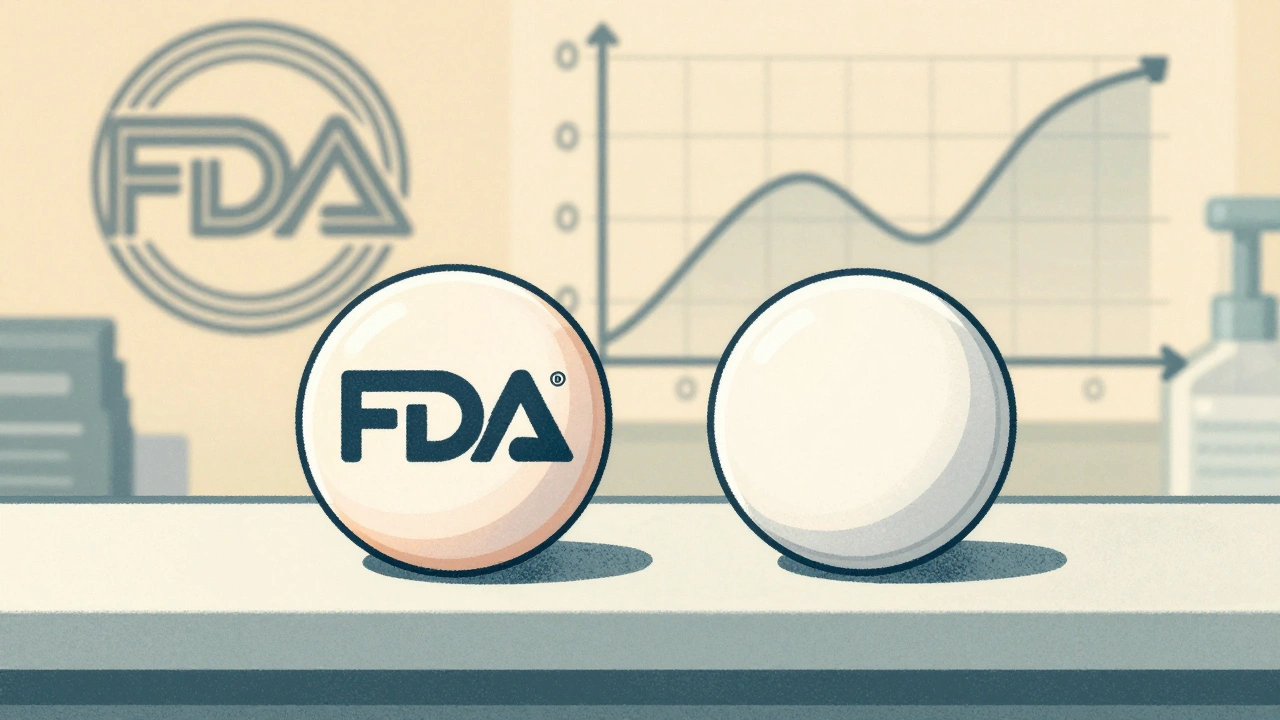
When you pick up a prescription, you might see two pills that look almost identical-one with a familiar brand name, the other plain, with no logo or fancy packaging. You might wonder: is this cheaper version really the same? Are authorized generics just as effective as the brand-name drug you’ve been taking for years? The short answer is yes. But here’s why, and what you need to know before making the switch.
What Exactly Is an Authorized Generic?
An authorized generic isn’t a copy. It’s not a knockoff. It’s the exact same drug, made in the same factory, using the same ingredients, and following the same process as the brand-name version. The only difference? It doesn’t have the brand name on the bottle. The FDA defines it clearly: an authorized generic is a brand-name drug sold without the brand name on the label. That’s it. No changes to the formula. No shortcuts in production. No hidden differences. These drugs are made by the original brand manufacturer-or under license by them-and sold under the same New Drug Application (NDA) as the branded version. That’s a big deal. Most generics go through a different approval path called an ANDA (Abbreviated New Drug Application), where they have to prove they work similarly to the brand. Authorized generics skip that step entirely because they’re not similar-they’re identical.Why Do They Exist?
You might think, why would a company that spent millions developing a drug turn around and sell the same thing cheaper? It’s a business move, but not a shady one. When a brand-name drug’s patent expires, other companies can start making generics. That drives prices down. But the original maker doesn’t want to lose all their customers. So they launch their own generic version-authorized and identical-to stay in the game. It’s not a trick. It’s competition. This strategy gives patients a cheaper option that’s still made by the same company they trust. It also puts pressure on other generic makers to keep prices low. In 2022, over 387 authorized generics were available in the U.S., and about 68% of top-selling brand drugs launched one within six months of patent expiry.Are They Really the Same?
Let’s break it down. Authorized generics match brand-name drugs in every measurable way:- Active ingredients: Same compound, same dose, same purity.
- Inactive ingredients: Same fillers, binders, coatings-no surprises.
- Manufacturing process: Same machines, same facility, same quality checks.
- Release profile: Same how fast the drug enters your bloodstream.
- Quality standards: Same FDA inspections, same cGMP compliance.
What About Side Effects or Tolerability?
Some people say, “I switched to a generic and felt different.” Often, that’s not the drug-it’s the packaging. A different color, shape, or size can make you feel like something’s changed. Or maybe the pill tastes slightly different because of a coating variation. But if you’re on an authorized generic, those differences don’t exist. A survey by the Asthma and Allergy Foundation of America found that 87% of patients switching from brand-name Singulair to its authorized generic reported no change in effectiveness. Only 8% noticed minor tolerability issues-and those were linked to the inhaler device, not the medication itself. Kaiser Permanente tracked over 8,000 patients using authorized generics. Their adherence rates were 94%, compared to 92% for brand-name versions. No statistically significant difference in how well the drugs worked. No hidden drop in effectiveness.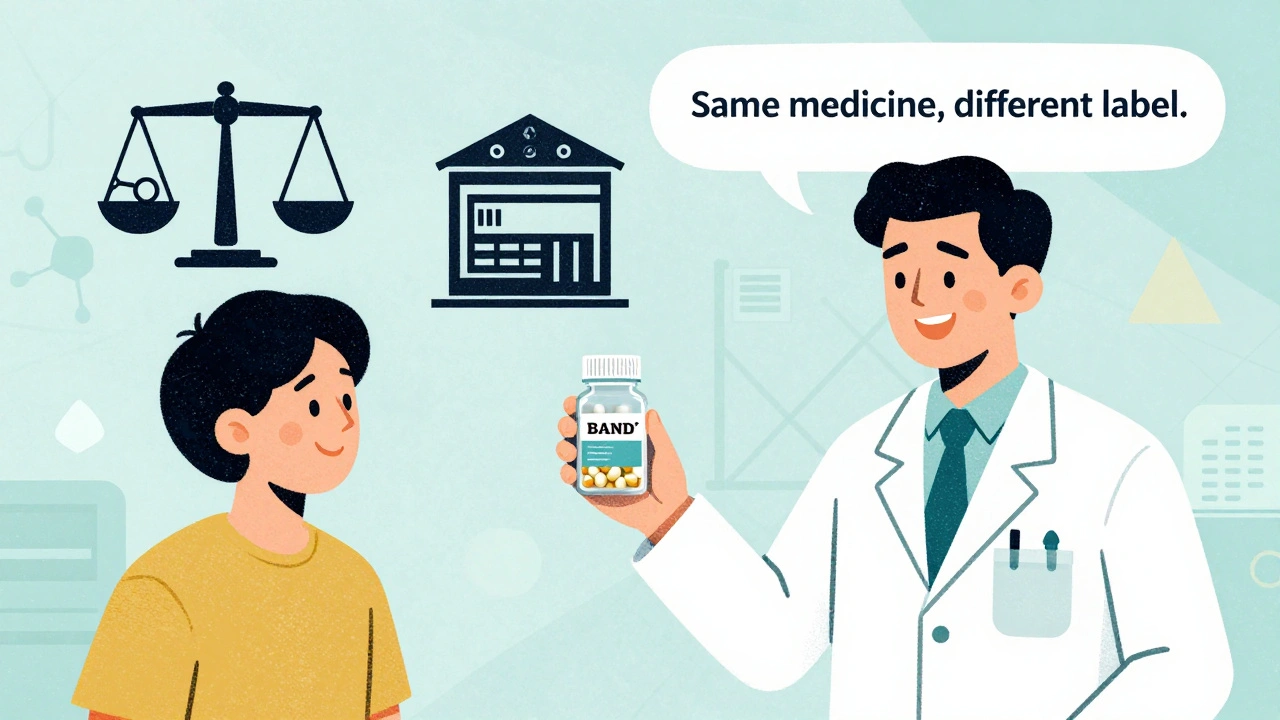
Cost: How Much Do You Save?
Authorized generics usually cost 15-30% less than the brand-name version. That’s a real savings. But they’re often 10-20% more expensive than traditional generics because they’re still made by the original manufacturer. Still, for many people, the peace of mind that comes with knowing it’s the exact same drug is worth the small price difference. Insurance plans often treat authorized generics the same as traditional generics-meaning lower copays. Some pharmacies even stock them side by side with the brand. Ask your pharmacist: “Is there an authorized generic for this?” It’s a simple question that could save you money without risking your health.What Do Experts Say?
Dr. Janet Woodcock, former head of the FDA’s drug approval center, said it plainly: “Authorized generics are the brand product without the brand name on the label-they are identical in every way.” The American College of Clinical Pharmacy agrees. Their official position: authorized generics are therapeutically equivalent to brand-name drugs because they are exactly the same drug product. Even critics like Dr. Randall Stafford from Stanford acknowledge the equivalence. His concern isn’t about quality-it’s about confusion. With so many generic options, pharmacists or patients might accidentally switch between versions without realizing. But that’s a system problem, not a product problem.Are There Any Downsides?
The biggest issue isn’t the drug-it’s the pharmacy counter. Some pharmacists don’t fully understand the difference between authorized and traditional generics. A Reddit thread from r/pharmacy in 2022 had dozens of stories of patients being told, “This isn’t the same as your brand,” even when it was. That’s misinformation. Also, not every brand-name drug has an authorized generic. Only about 20-25% of branded drugs offer one after patent expiry. And availability can change. If your authorized generic disappears, you might be switched to a traditional generic without warning. That’s why it’s smart to ask your pharmacist to note your preference on file.
Real-World Trust: What Do Patients Say?
GoodRx users gave authorized generics an average rating of 4.6 out of 5. Over 92% said they’d recommend them to a friend. That’s higher than many brand-name drugs. People don’t just trust them because they’re cheap. They trust them because they work. One user wrote: “I’ve been on the authorized generic for my blood pressure med for three years. My numbers are the same. My doctor didn’t even notice I switched.” Another said: “I used to feel anxious every time I got a new bottle. Now I know it’s the same pill. I sleep better.”What Should You Do?
If you’re on a brand-name drug and you’re paying full price, ask your doctor or pharmacist:- Is there an authorized generic available for this medication?
- Can I switch to it without changing my treatment?
- Will my insurance cover it at the same low copay as a regular generic?
Final Thought: It’s Not About Brand. It’s About Biology.
Your body doesn’t care what’s printed on the pill. It responds to the chemical inside. If the active ingredient, the dose, and the delivery system are identical, the outcome will be too. The brand name is marketing. The authorized generic is medicine. Don’t let a label fool you. If you’re paying more for a name, you’re paying for advertising-not effectiveness.Are authorized generics FDA-approved?
Yes, but not in the same way as traditional generics. Authorized generics are made under the original brand’s FDA-approved New Drug Application (NDA). They don’t need separate approval because they’re identical to the brand-name drug. The FDA requires the manufacturer to notify them when launching an authorized generic, but no additional testing is needed.
Can I switch from a brand-name drug to an authorized generic safely?
Absolutely. Since authorized generics are chemically and physically identical to the brand-name version, switching poses no risk to effectiveness or safety. Many patients switch without any change in symptoms or side effects. Always inform your doctor and pharmacist about the switch, but no new prescription is needed.
Why do authorized generics cost more than regular generics?
Authorized generics are made by the original brand manufacturer, so they don’t have the same cost savings as traditional generics made by third-party companies. Traditional generics compete on price, often driving costs down further. Authorized generics usually cost 10-20% more than traditional generics but still 15-30% less than the brand name.
Do authorized generics have the same side effects as brand-name drugs?
Yes. Because they contain the exact same active and inactive ingredients, the side effect profile is identical. Any differences patients report are usually due to packaging, pill appearance, or psychological factors-not the drug itself.
How do I know if my prescription is an authorized generic?
Check the label. Authorized generics will have the generic name of the drug, not the brand name. The manufacturer’s name may match the original brand. You can also ask your pharmacist directly: “Is this an authorized generic?” They can look it up using the NDA number or drug database.
Are authorized generics available for all medications?
No. Only about 20-25% of brand-name drugs have an authorized generic version, usually launched shortly after patent expiration. Availability depends on the manufacturer’s business strategy. If one isn’t available, ask if a traditional generic is an option-and whether your insurance covers it.



11 comments
Paul Dixon
I switched my blood pressure med to an authorized generic last year and honestly? My numbers haven’t budged. I used to stress about the brand name, but now I just grab the plain bottle and save like $20 a month. No drama, no side effects. Just same pill, cheaper price. Why pay more for a logo?
john damon
OMG YES 😍 I’ve been doing this for years and people act like I’m smuggling counterfeit meds from a back alley. It’s literally the SAME PILLS. My pharmacist even said, ‘This is your brand, just without the glitter.’ 🤷♂️💊
Monica Evan
Y’all are overthinking this so hard 😅 I used to be skeptical too but after my doc switched me to the authorized generic for my thyroid med I was like… wait this feels exactly the same. No weird jittery mornings no weird fatigue. Turns out my brain was the problem not the pill. The label doesn’t change the chemistry. Also side note: my dog doesn’t care if my pill has a logo or not so why should I?
Taylor Dressler
The FDA’s position on authorized generics is unequivocal: they are therapeutically equivalent to brand-name drugs because they are chemically and physically identical. The distinction lies solely in labeling and marketing. Traditional generics must demonstrate bioequivalence within an 80–125% range; authorized generics are not required to do so because they are manufactured under the same NDA. This is not a loophole-it is regulatory clarity. Patients should feel confident switching.
Aidan Stacey
LET ME TELL YOU SOMETHING. I was on a brand-name drug that cost me $400 a month. I switched to the authorized generic. $120. Same exact bottle, same exact pills, same exact results. My doctor didn’t even notice. My insurance didn’t care. My body didn’t care. The ONLY thing that cared was my wallet. And now I’m saving enough to take my kid to Disney. So yeah. This isn’t just smart. It’s life-changing. 🙌
Michaux Hyatt
For anyone nervous about switching: ask your pharmacist to check the NDA number. If it matches the brand’s, you’re golden. I used to think generics were ‘lesser’ until I learned this. Now I’m the guy telling everyone at the grocery store to ask for authorized generics. No shame in saving money when the science says it’s the same thing.
Raj Rsvpraj
You Americans are so gullible. You think ‘FDA-approved’ means something? In India, we know the truth: pharmaceutical companies are global cartels. Your ‘authorized generic’ is still a corporate trick to keep you paying more than you should. Real generics from India are 90% cheaper and just as good. Why are you letting Big Pharma fool you? 🇮🇳💊
Michelle Edwards
Just wanted to say-this post made me feel so much better. I’ve been too scared to switch for years, worried I’d feel ‘off.’ But reading this? It’s like someone handed me a quiet hug. I’m going to ask my pharmacist tomorrow. Thank you for making something so technical feel safe.
Nikki Smellie
Wait. So you’re telling me the FDA allows pharmaceutical giants to sell the exact same pill under a different label… and call it a ‘generic’? That’s not transparency. That’s manipulation. They’re gaslighting us into thinking we’re saving money when really, they’re just rebranding their monopoly. I’ve read the NDA filings-there are undisclosed excipients. They’re hiding something. I won’t take it. I won’t.
Neelam Kumari
Wow. So you actually believe this? The same company makes the brand and the ‘generic’? Please. That’s like saying McDonald’s and their ‘budget burger’ are the same because they use the same grill. They’re just milking your trust. You’re not saving money-you’re paying for their PR team. And your doctor? Probably got a kickback. Wake up.
Queenie Chan
Okay but what if you’re allergic to a filler? Or the coating tastes like cardboard? I once switched to a generic and felt like I’d swallowed a chalky sock. But then I realized-it wasn’t the drug, it was the pill’s personality. The authorized generic? Same coating, same shape, same flavor. It’s like wearing your favorite hoodie vs. a knockoff that’s slightly too tight. The brand didn’t change. The fit did. And sometimes… the fit matters more than we admit.