Diabetes Medications: What Works, What to Watch For, and How They Really Help
When you have diabetes medications, drugs prescribed to help control blood sugar levels in people with type 1 or type 2 diabetes. Also known as antihyperglycemic agents, they don’t cure diabetes—but they keep it from running wild. For millions, these pills and injections are the difference between feeling okay and feeling awful. But not all diabetes medications work the same way, and mixing them up can cost you more than money—it can cost you health.
Take metformin, the first-line drug for type 2 diabetes that reduces liver sugar production and improves insulin sensitivity. It’s cheap, widely used, and often helps with weight too. But some people crash into fatigue because it lowers vitamin B12 over time. Others think it’s making them feel worse when it’s actually their diet or sleep messing with their blood sugar. Then there’s insulin, a hormone replacement therapy required for type 1 diabetes and sometimes needed in advanced type 2. It’s powerful, but getting the dose wrong means lows that leave you shaking, sweating, or worse. And while closed-loop systems now automate insulin delivery, most people still manage shots and pumps by hand—meaning timing, food, and activity all matter more than the pill bottle says.
Diabetes medications don’t exist in a vacuum. They interact with what you eat, what else you take, and even your sleep. NSAIDs can hide warning signs of low blood sugar. Herbal teas might mess with how your liver processes metformin. Even the time you take your statin can shift how your body handles glucose. The posts below don’t just list drugs—they show you how real people manage them, what goes wrong, and how to spot trouble before it hits.
You’ll find real talk about why metformin makes some people tired, how insulin pumps actually work in daily life, and why switching from brand to generic isn’t always as simple as saving cash. There’s no fluff—just what happens when these drugs meet real bodies, real schedules, and real mistakes. Whether you’re new to diabetes meds or been on them for years, what’s below will help you ask better questions, spot red flags, and take back control—without needing a pharmacy degree.
- Dec 4, 2025
- Posted by Cillian Osterfield
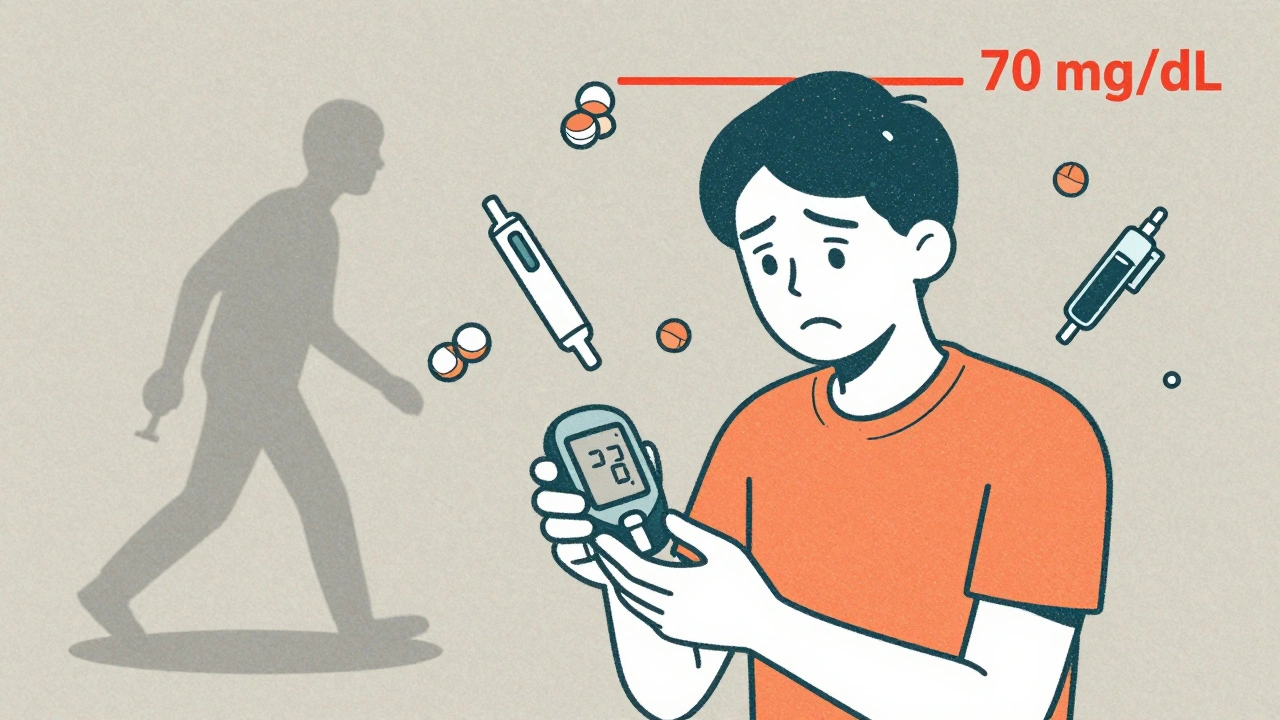
Managing Hypoglycemia from Diabetes Medications: A Practical Step-by-Step Plan
Learn how to prevent and treat low blood sugar caused by diabetes medications like insulin and sulfonylureas. This practical guide covers risk factors, emergency treatment, tracking patterns, and new technologies to stay safe.