
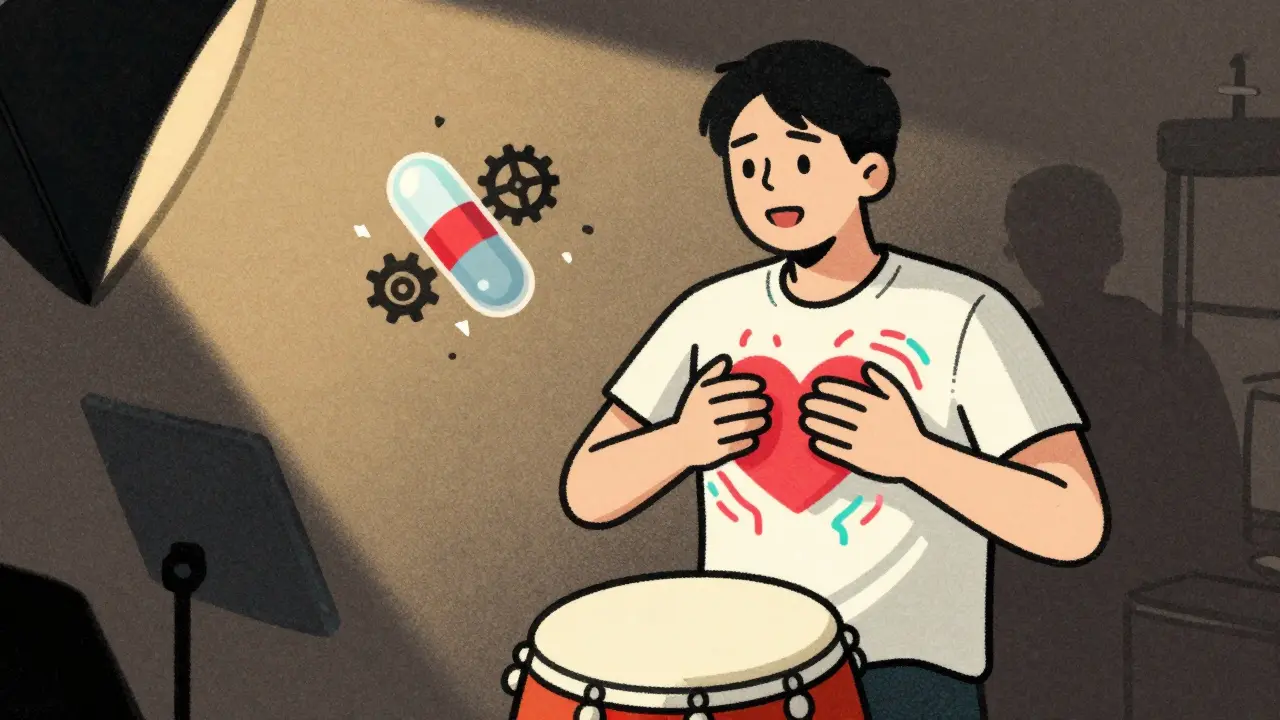
Imagine standing backstage before a presentation. Your heart pounds. Your hands shake. Your voice wavers. You know what to say-but your body betrays you. This isn’t just nerves. For over 12% of U.S. adults, this is social anxiety disorder-a real, measurable condition where the fear of being judged triggers intense physical reactions. And while therapy can change how you think, beta-blockers can change how you feel. Together, they offer a rare combination: one treats the mind, the other calms the body.
What Social Anxiety Disorder Really Feels Like
Social anxiety disorder isn’t shyness. It’s not just being nervous before a job interview. It’s a persistent, overwhelming fear of being watched, judged, or humiliated in everyday situations-talking to a coworker, eating in public, even using a restroom in a busy building. People with this condition often avoid social interactions entirely, not because they don’t want to connect, but because their body reacts like it’s under threat. The physical symptoms are brutal: racing heart, trembling hands, sweating so hard it soaks through clothes, voice cracking, blushing uncontrollably. These aren’t just uncomfortable-they’re humiliating. And they’re real. Brain scans show heightened activity in the amygdala, the part of the brain that flags danger. Even when there’s no actual threat, the body screams run.Beta-Blockers: A Quick Fix for Physical Symptoms
Enter beta-blockers. Specifically, propranolol is the most commonly used. Originally developed in the 1960s to treat heart conditions, doctors noticed something strange: musicians taking it for heart rhythm issues reported their hands stopped shaking during performances. That led to its off-label use for anxiety. Propranolol doesn’t touch your thoughts. It doesn’t make you feel calm or relaxed. Instead, it blocks adrenaline’s effect on your body. When you’re anxious, your body releases epinephrine and norepinephrine-hormones that speed up your heart, tighten your muscles, and trigger sweat. Propranolol binds to the receptors that receive those signals, effectively muting them. A single 10mg to 40mg dose, taken 60 to 90 minutes before a stressful event, can:- Reduce heart rate by 15 to 25 beats per minute
- Decrease hand tremors by 30% to 40%
- Lower sweat production by about 25%
- Steady a shaky voice
Why Beta-Blockers Aren’t a Cure
The American Psychiatric Association’s 2022 guidelines are clear: beta-blockers are not first-line treatment for social anxiety disorder. Why? Because they don’t change the underlying fear. A 2023 meta-analysis of 10 studies found no significant benefit for generalized social phobia-only for performance situations. Compare that to SSRIs like sertraline. Those take 4 to 6 weeks to work but reduce both physical symptoms and anxious thoughts. Beta-blockers? They’re like putting tape on a leaky pipe. The water stops spraying, but the crack is still there. And there are risks. People with asthma can’t use them-propranolol can tighten airways. Those with diabetes need caution: beta-blockers can hide signs of low blood sugar, like a racing heart. Fatigue, dizziness, and cold hands are common side effects. One musician I spoke with said she stopped using it because her fingers went numb, making it impossible to play. Then there’s the question of overuse. Prescription rates for anxiety-related beta-blocker use jumped 47% between 2003 and 2018. But the evidence? Thin. A 2023 review by Dr. Charlotte Archer found no strong proof that beta-blockers outperform placebo for social phobia. Still, they’re prescribed anyway-partly because therapy is hard to access.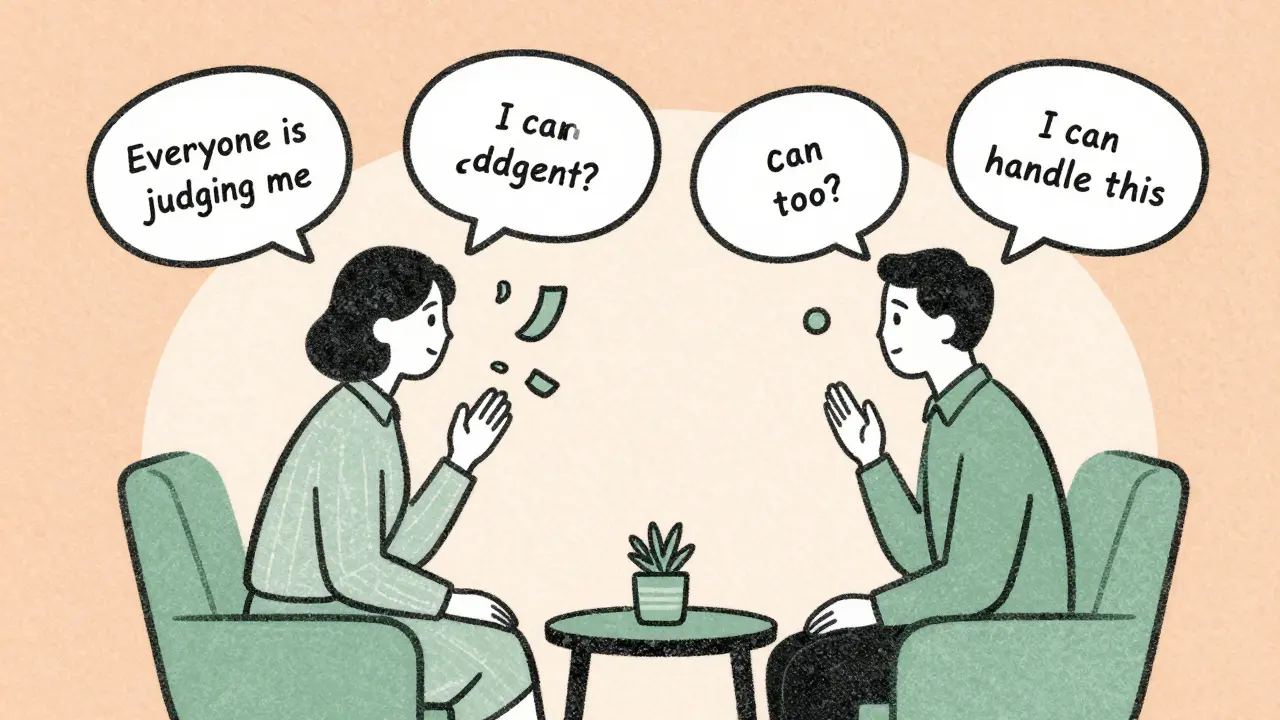
Behavioral Therapy: Rewiring the Fear
This is where cognitive behavioral therapy (CBT) comes in. Unlike medication, CBT doesn’t mask symptoms-it rewires them. A typical CBT program for social anxiety lasts 12 to 16 weeks. It includes:- Identifying irrational thoughts (e.g., "Everyone will think I’m stupid if I stumble over my words")
- Challenging them with evidence ("Have I ever seen someone else mess up and been judged harshly?")
- Gradual exposure-starting with low-stress situations (like saying hello to a cashier) and building up to high-stress ones (like giving a presentation)
The Power of Combining Them
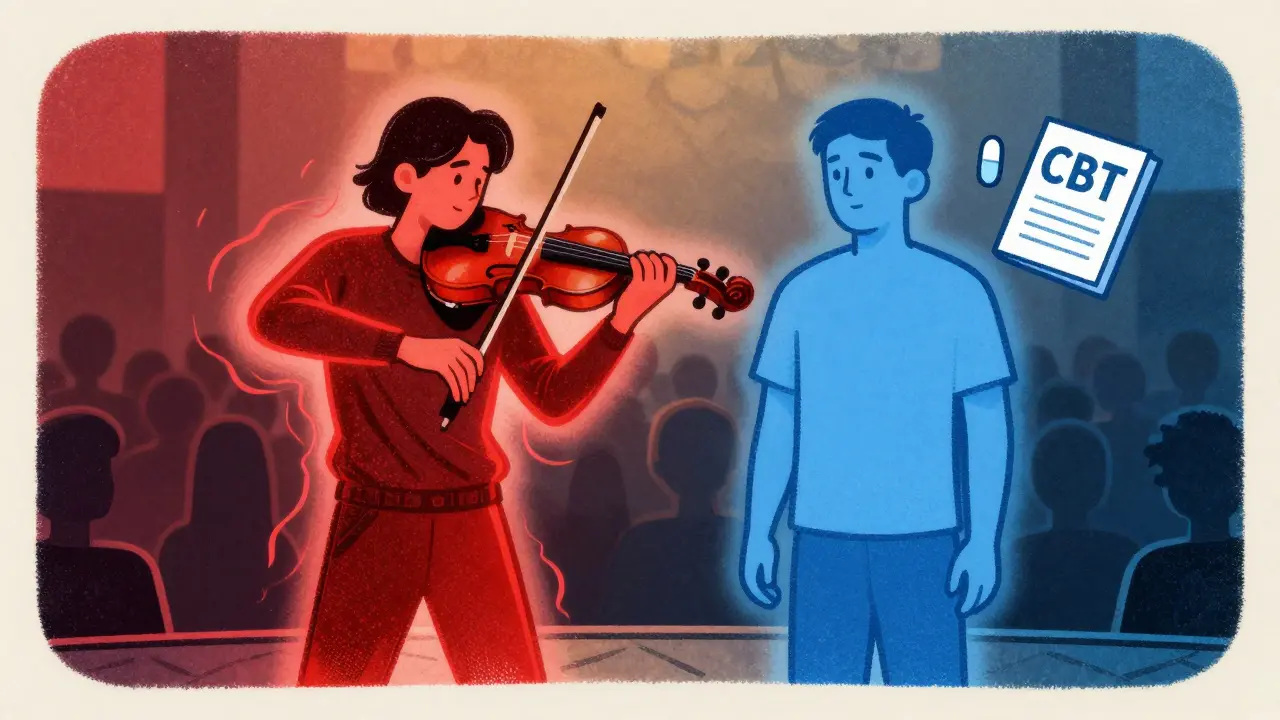
The real breakthrough isn’t choosing between beta-blockers and therapy-it’s using them together. Think of it this way: beta-blockers give you the physical stability to show up. CBT gives you the mental tools to stay. Dr. Ellen Vora puts it simply: "Beta-blockers help you get into the room. Therapy helps you stop wanting to leave." A case study from a 2023 clinic described a violinist who failed three auditions because of trembling hands. She started taking 20mg propranolol 90 minutes before each try. The shaking dropped by 40%. But she also began CBT. Within 8 weeks, she stopped needing the pill. She still felt nervous-but now, she could handle it. This combo works because they attack the problem from two angles:- Beta-blockers: reduce the body’s panic response in the moment
- CBT: teach the brain that social situations aren’t dangerous
Who Should Consider This Approach?
This combo is most helpful for people with:- Performance anxiety (public speaking, musical performances, job interviews)
- Clear, predictable triggers (not constant, pervasive fear)
- Physical symptoms that block participation (tremors, sweating, voice shaking)
- Access to therapy or willingness to try it
- Generalized social anxiety (fear of most social situations)
- Unpredictable triggers (e.g., random phone calls, unexpected small talk)
- Medical conditions like asthma or low blood pressure
The Future: Better Tools on the Horizon
The National Institute of Mental Health is funding a $2.3 million trial starting in 2024 to finally settle the debate on beta-blockers for performance anxiety. It will test 300 people across 15 sites. Meanwhile, new treatments are emerging. Brexanolone derivatives-drugs that act fast like beta-blockers but target brain chemistry-are in Phase III trials. Digital CBT is becoming more effective, more accessible, and more personalized. But for now, the best approach remains simple: if you need to get through a speech, a date, or a meeting without shaking, beta-blockers can help. But if you want to stop fearing social situations forever, therapy is the only path.One doesn’t replace the other. They complete each other.
Can beta-blockers cure social anxiety disorder?
No. Beta-blockers like propranolol only reduce physical symptoms like shaking, racing heart, and sweating. They do not change the underlying fear, negative thoughts, or avoidance behaviors that define social anxiety disorder. They offer temporary relief during specific events but do not lead to long-term recovery.
Are beta-blockers addictive?
No. Unlike benzodiazepines (e.g., Xanax), beta-blockers have no addictive potential. They don’t produce euphoria or cravings. Stopping them doesn’t cause withdrawal symptoms. This makes them safer for occasional use, especially compared to other anxiety medications.
How long does propranolol last for anxiety?
Propranolol typically lasts 3 to 4 hours after taking it. Effects begin in 30 to 60 minutes, peak around 90 minutes, and gradually fade. For events like speeches or performances, it’s best taken 60 to 90 minutes beforehand. It’s not designed for all-day use.
Is therapy better than medication for social anxiety?
Yes, for long-term results. Cognitive behavioral therapy (CBT) has a 50% to 60% remission rate after 12 to 16 weeks. Medications like SSRIs help too, but they often require ongoing use and come with side effects. CBT teaches skills that last a lifetime, even after treatment ends.
Can I use beta-blockers with therapy?
Yes, and it’s often recommended. Beta-blockers can help reduce physical symptoms enough to allow someone to fully engage in exposure exercises during therapy. Many clinicians see them as a bridge-helping patients attend feared situations until therapy reduces their fear.
What are the side effects of propranolol for anxiety?
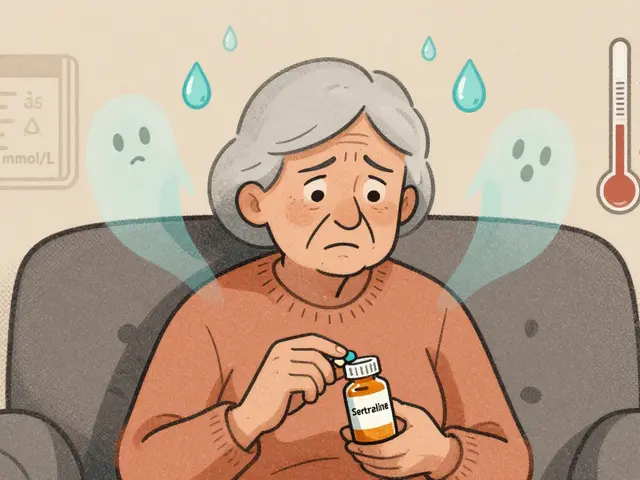
Common side effects include fatigue (reported by 35% of users), dizziness (28%), cold hands or feet (22%), and low blood pressure. Less common but serious risks include worsening asthma, masking low blood sugar in diabetics, and slowed heart rate. Always consult a doctor before starting.
Who should avoid beta-blockers for anxiety?
People with asthma, severe heart failure, low blood pressure, or untreated diabetes should avoid beta-blockers. Those with certain heart rhythm disorders or liver disease may also need caution. Always get medical clearance before use, even if prescribed off-label.



8 comments
Brad Ralph
Propranolol for stage fright? Sounds like a hack. I take it before public speaking and it’s like my body finally got the memo: 'Hey, no one’s judging you. Also, stop sweating through your shirt.' 🤷♂️
christian jon
Let me get this straight-you're telling me we've got a drug that silences the body's panic response, but we're STILL telling people to sit through 16 weeks of CBT?!?! This isn't treatment-it's a glorified band-aid on a bullet wound! We're medicating symptoms while ignoring the fact that society is the real enemy! People aren't afraid of speaking-they're afraid of being mocked, exploited, and discarded by a culture that rewards performative confidence! And don't get me started on 'digital CBT apps'-like, wow, a chatbot is gonna fix your trauma?!!!
Suzette Smith
I’ve used propranolol before. It’s not magic. I still felt like an alien in my own skin. But I showed up. And that’s half the battle. Therapy helped me realize I wasn’t broken-I was just wired differently.
Autumn Frankart
Beta-blockers are just the tip of the iceberg. Did you know the FDA approved them for anxiety because of lobbying from Big Pharma? They don't want you healing. They want you dependent. And CBT? It’s designed to make you accept your oppression. The real cure is quitting social media, moving to the woods, and learning to live without being watched. But no one’s talking about that.
Skilken Awe
You're all missing the point. Beta-blockers don't address the autonomic dysregulation caused by early childhood attachment trauma. The amygdala isn't 'overactive'-it's hyper-responsive due to chronic cortisol exposure. You need polyvagal-informed somatic therapy paired with pharmacological modulation to restore vagal tone. Also, propranolol is a non-selective beta-adrenergic antagonist-so yes, it's going to blunt your heart rate variability. You're trading one dysregulation for another. And don't even get me started on the placebo effect in those 'Reddit testimonials.'
Carla McKinney
The article mentions 'remission rates' like it's a cure. But remission doesn't mean recovery. It means you stopped showing symptoms. That's not healing. That's suppression. And using beta-blockers as a 'bridge'? That's just delaying the real work. People who use them as a crutch never actually confront the fear. They just learn to perform while terrified. And then they wonder why they still feel empty.
Ojus Save
i used propranolol for my job interview and it was a game changer. my hands stoped shaking and i even made eye contact. i still feel weird talking to people but at least i can show up now. thx for the info
Jack Havard
The whole 'therapy + beta-blockers' thing is just corporate wellness theater. You're being sold a two-step solution because the system doesn't want you to question why being normal is so terrifying. No one talks about the fact that 80% of social anxiety is just a product of late-stage capitalism. We're all just trying not to be fired, judged, or replaced. No pill fixes that.