
Hypoglycemia Risk Calculator
This calculator estimates your hypoglycemia risk based on your medications, health factors, and history. Results help you understand your personal risk level and identify potential prevention steps.
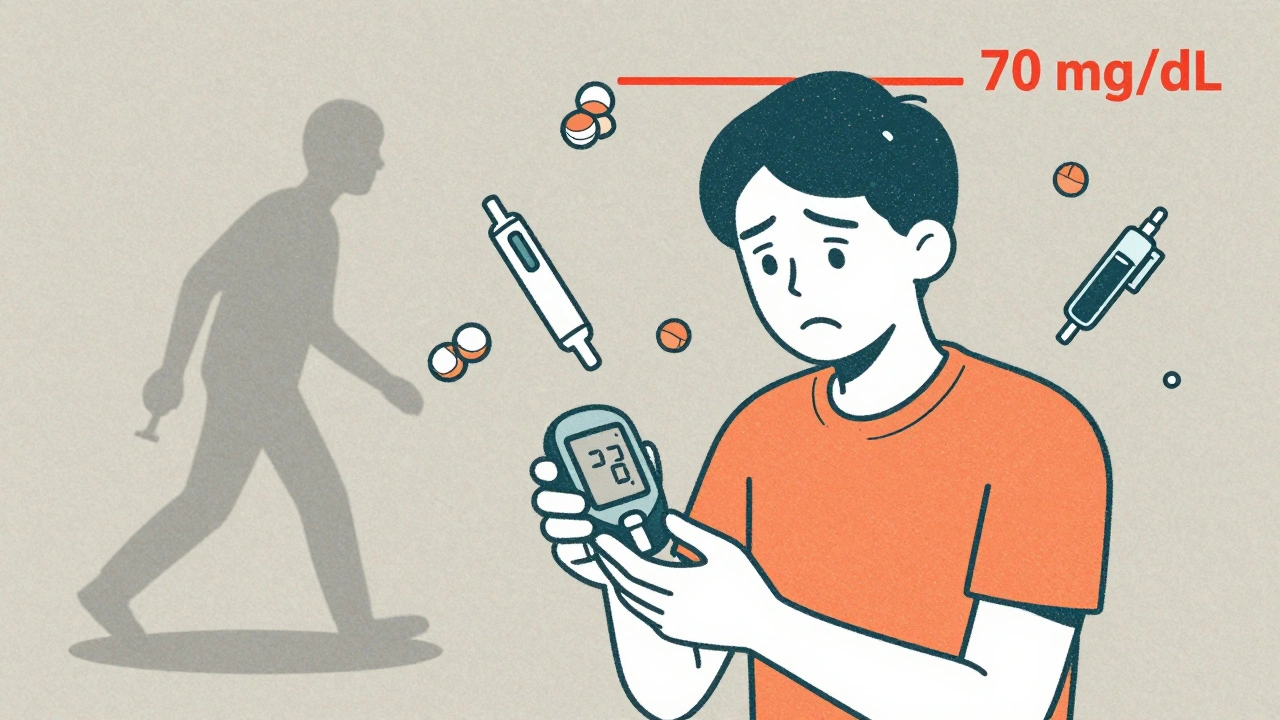
Low blood sugar isn’t just a nuisance-it can be dangerous. If you’re taking insulin, sulfonylureas, or meglitinides for diabetes, you’re at real risk of hypoglycemia. Blood glucose below 70 mg/dL triggers symptoms like sweating, shaking, and confusion. Below 54 mg/dL, you could pass out or have a seizure. And here’s the catch: many people don’t see it coming. About 25% of type 1 diabetes patients and 10% of type 2 patients develop hypoglycemia unawareness, meaning their body stops warning them. This isn’t theoretical. In 2022, hypoglycemia led to 10% of all diabetes-related hospital admissions in the U.S.
Know Which Medications Put You at Risk
Not all diabetes drugs cause low blood sugar. Some are safer than others. If you’re on insulin, your risk is 20-40% per year. That’s not a guess-it’s from the T1D Exchange Registry. Sulfonylureas like glimepiride and glyburide are next, with 15-30% annual risk. Meglitinides like repaglinide carry 10-20% risk. These drugs force your pancreas to release insulin, no matter if you’ve eaten or not. That’s why timing matters.On the other end, metformin has less than 5% risk. GLP-1 agonists like semaglutide and SGLT2 inhibitors like empagliflozin carry under 3% risk. If you’re on a combo that includes insulin or sulfonylureas, your risk multiplies. Talk to your doctor about whether you can switch to a safer option-especially if you’ve had a recent low blood sugar episode.
Recognize the Warning Signs Before It’s Too Late
Hypoglycemia hits in two stages. First, your body sends out alarms: heart racing, sweating, trembling, hunger. These are autonomic symptoms and happen around 65-70 mg/dL. If you ignore them, you hit Level 2: blood sugar below 54 mg/dL. That’s when your brain starts to starve. You feel dizzy, confused, weak, or unable to speak. You might cry for no reason. Or fall asleep at the wheel. In severe cases (Level 3), you need someone else to help you-because you can’t help yourself.Here’s the problem: beta-blockers (used for high blood pressure or heart conditions) can hide the early warning signs. If you’re on metoprolol or atenolol, your heart won’t race when your blood sugar drops. You won’t feel shaky. You might not know you’re in trouble until you’re confused or passing out. If you take beta-blockers, you need a different safety plan.
Use the 15-15 Rule-But Do It Right
When your blood sugar drops below 70 mg/dL, you need fast-acting sugar. Not a candy bar. Not a banana. Not a glass of juice you guessed at. You need exactly 15 grams of pure glucose. That’s:- 3-4 glucose tablets (each is 4g)
- 1 tube of glucose gel
- 4 ounces (1/2 cup) of regular soda (not diet)
- 1 tablespoon of honey or sugar
Wait 15 minutes. Check again. If it’s still below 70, repeat. Don’t skip the wait. Eating more too soon can send your sugar too high. And don’t use artificial sweeteners-they won’t help. A 2022 study found 63% of people tried to treat lows with diet soda, fruit, or crackers. Those don’t work fast enough. You need glucose, not fiber or fat.
Always Carry a Hypo Kit-And Keep It Everywhere
A JDRF survey showed 78% of people carry glucose tablets. But 35% admit they run out-or forget them. That’s not just careless. It’s dangerous. You need backup plans.- Keep glucose tablets in your car, purse, work desk, and bedside table.
- Use a glucagon emergency kit if you’re on insulin. Baqsimi nasal spray (newer, easier) costs about $250. Gvoke auto-injector is $350. Both work in seconds.
- Teach your family, coworker, or neighbor how to use it. Most people don’t know how.
And don’t wait until you’re in trouble. If you’ve had a low in the past 3 months, your risk of another one is 3x higher. That’s not a myth-it’s clinical fact.
Track Your Patterns-Not Just Your Numbers
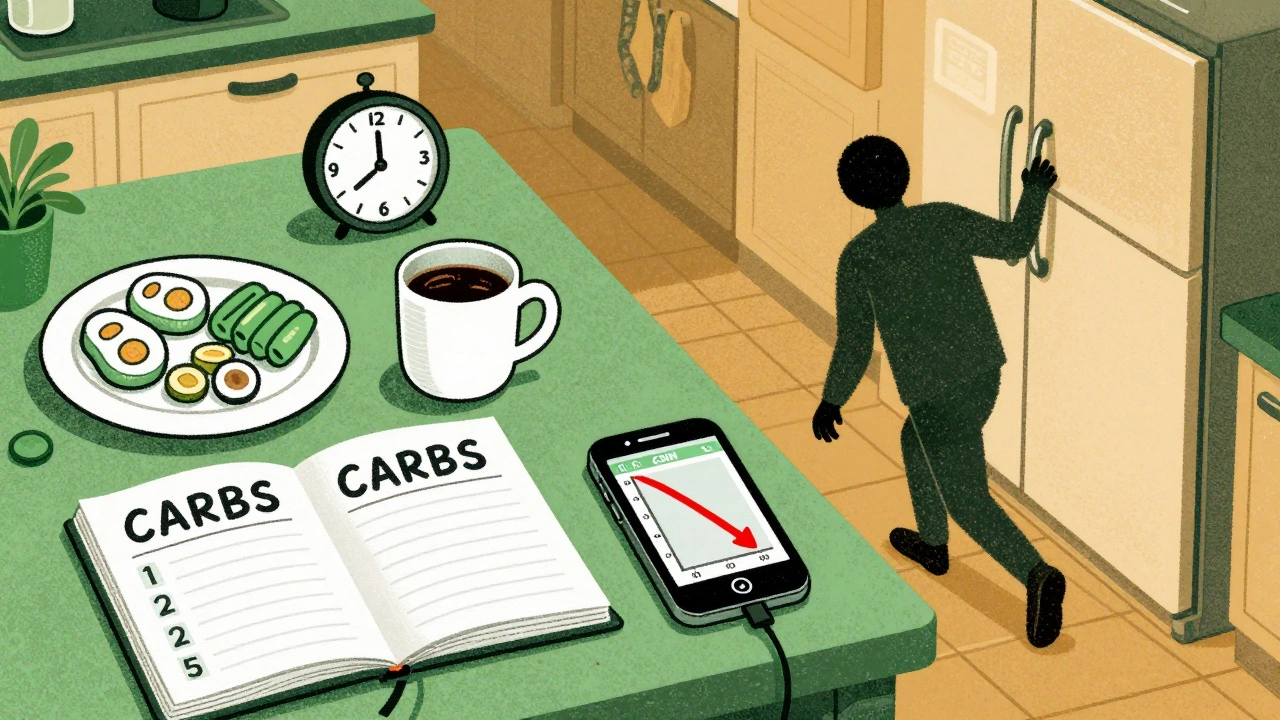
Most people check blood sugar once a day. That’s not enough. You need to see the pattern. Did you have a low every Tuesday after your walk? Every time you skipped lunch? Every night after drinking beer? That’s not coincidence-it’s data.Use a simple logbook with four columns:
- Medication taken (type and dose)
- Meal content (grams of carbs, not ‘a serving’)
- Activity (walked 30 min? lifted weights?)
- Glucose reading (before and after)
People who log this consistently for 6 weeks reduce lows by 37%. But only 28% keep it up past 6 weeks. Why? Because it’s hard. But here’s the trick: do it for 10 minutes after dinner. That’s it. Make it part of your routine, like brushing your teeth.
Technology Can Save You-If You Can Afford It
Continuous glucose monitors (CGMs) like Dexcom G7 or Freestyle Libre 3 track your sugar 24/7. They alert you when you’re dropping. The DIAMOND trial showed CGMs cut severe lows by 48%. That’s huge.But cost is a barrier. CGMs cost $89-$399 per month. Medicare now covers them for insulin users, but many still pay out-of-pocket. If you’re on a tight budget, ask your doctor about samples, patient assistance programs, or generic brands. Some pharmacies offer $25/month CGM programs.
Even better: newer insulin pens (like InPen or NovoPen 6) track your doses and sync with apps. They tell you if you’ve taken too much insulin for your meal. They’re not magic-but they’re close.
Avoid the Hidden Triggers
Some things you think are harmless are actually hypoglycemia bombs:- Alcohol: It blocks your liver from releasing glucose. 22% of severe lows in people under 40 happen after drinking. Never drink on an empty stomach. Always eat carbs with it.
- Exercise: If you walk 30 minutes without adjusting your insulin or eating extra carbs, you’re asking for trouble. Check your sugar before, during (if long workout), and after.
- Skip meals: 68% of patients on diabetes forums say they skip meals to avoid highs. That’s a trap. If you’re on sulfonylureas or insulin, skipping food = low blood sugar.
- Changing routines: Travel, shift work, or sleep loss messes with your body’s rhythm. Plan ahead. Adjust meds if needed.
Get Personalized Advice-Not Generic Rules
The old rule-‘aim for HbA1c under 7%’-is outdated and dangerous. The ADA and Endocrine Society now say: individualize your target.- Under 65, healthy? Target 70-130 mg/dL before meals.
- Over 65, with heart disease or memory issues? Target 80-150 mg/dL. Lower isn’t better if it means passing out.
- Have hypoglycemia unawareness? Your target should be higher. Your doctor might suggest 100-140 mg/dL.
Ask your doctor to use the 8-point hypoglycemia risk score from the HYPO-RESOLVE study. It’s quick, free, and predicts your chance of a severe low with 82% accuracy. Don’t guess. Know your number.
Training Works-But Only If You Do It Right
The ADA’s ‘Hypoglycemia Uncovered’ program cuts lows by 45% in six months. But you need to do it right. Not just read a handout. Not just watch a video. You need hands-on training:- Practice counting carbs with measuring cups and scales-not eyeballing.
- Role-play: What do you do if you wake up confused at 3 a.m.?
- Learn how to adjust insulin for exercise or illness.
Most clinics offer this for free. Ask. If they don’t, ask for a referral to a diabetes educator. This isn’t optional. It’s lifesaving.
What’s Coming Next
New tech is changing everything. Dasiglucagon (Zegalogue) is a liquid glucagon that works in 10 seconds-no mixing. AI-powered insulin pumps like Tandem’s Control-IQ reduce nighttime lows by 3.1 hours. The DIAMOND-2 trial (ending in 2024) is testing AI that predicts lows before they happen. By 2030, 75% of insulin users will use some form of closed-loop system.But none of this matters if you don’t know how to use today’s tools. Start with the basics: know your meds, carry glucose, log your lows, and get trained. You don’t need the latest gadget to stay safe. You just need to be prepared.


12 comments
Chase Brittingham
Just had a near-miss last week after skipping lunch. I thought I'd be fine with a protein bar, but my sugar dropped to 52. Learned the hard way that glucose tablets aren't optional. Now I keep them in my wallet, car, and gym bag. This post saved me from a hospital trip.
Heidi Thomas
Everyone keeps talking about the 15-15 rule like it's gospel but half the people doing it are using juice or candy bars and wonder why they spike then crash. If you're not using pure glucose you're not treating a hypo you're just playing with fire. Stop making excuses.
Dematteo Lasonya
I’ve been logging my lows for 8 weeks now and my numbers dropped by almost 40%. It’s not glamorous but writing down what I ate, when I moved, and what meds I took made me see patterns I never noticed. My doc was shocked at how consistent my lows were after coffee and walking the dog. Small changes matter.
Rudy Van den Boogaert
Biggest thing I didn’t realize until I got a CGM: my sugar drops fastest after 30 minutes of walking, not during. I used to think I was safe if I checked before. Now I set alerts for 20 minutes into any activity. Game changer. Also, glucagon nasal spray is way easier than the old injection. My wife can use it now without panicking.
Gillian Watson
Over here in the UK, CGMs are free on the NHS if you're on insulin. Wish more people knew that. Also, the 15-15 rule is solid but I always pair it with a snack after if it’s been more than an hour since my last meal. Don’t just fix the low, prevent the next one.
Jake Deeds
It’s ironic how people complain about the cost of CGMs while they’re still using insulin pens from 2010 and wonder why they’re having constant lows. Technology isn’t luxury-it’s survival. If you can’t afford it, you’re not trying hard enough. There are programs, samples, and even generic options. Your life isn’t cheap.
val kendra
Just got my first Baqsimi nasal spray last month and I’m telling everyone. No more fumbling with vials and syringes when I’m shaking. My husband used it on me during a night-time low and I was awake in 90 seconds. Also, if you’re on beta-blockers, talk to your doc about switching to a different BP med. It’s not just about sugar-it’s about safety.
Isabelle Bujold
One thing no one talks about enough is how alcohol affects your liver’s ability to release glucose over hours-not just while you’re drinking. I used to think having a beer after dinner was fine as long as I ate. Then I woke up at 3 a.m. with a reading of 48 and no memory of how I got there. Now I always eat 15g of carbs with alcohol and check before bed. It’s not about being paranoid, it’s about respecting how deeply alcohol messes with your metabolism. And yes, this applies even if you’re not diabetic-your pancreas doesn’t know the difference.
Emmanuel Peter
Why do people still think skipping meals is a good idea? You’re not fasting, you’re setting yourself up for a crash. If you’re on sulfonylureas and you skip lunch, you’re not being disciplined-you’re being reckless. I’ve seen people post about ‘intermittent fasting for diabetes’ like it’s a hack. It’s not. It’s a death wish with extra steps.
Ashley Elliott
For anyone new to this-don’t wait until you pass out to learn this stuff. Start small: keep glucose in your purse. Set a daily reminder to check your meter. Talk to your diabetes educator. They’re not there to judge you, they’re there to help you live. I used to think I was fine until I had a seizure in the grocery store. Now I carry my glucagon everywhere. You don’t need to be perfect, just prepared.
Chad Handy
I’ve had hypoglycemia unawareness for 8 years. I don’t feel anything until I’m confused or crying for no reason. I used to think I was just ‘stressy’. Then I got a CGM and realized I was crashing 3-4 times a week without knowing. My husband says I look like a ghost. I didn’t believe him until I saw the graph. This isn’t about willpower. It’s about biology breaking down. If you think you’re fine because you ‘don’t feel it’, you’re already in danger. Please get tested. Your body isn’t lying-you’re just not listening.
Jenny Rogers
It is imperative to underscore that the foundational paradigm of modern diabetes management remains anchored in the principle of individualized glycemic targets, as promulgated by the American Diabetes Association and the Endocrine Society in their 2023 consensus statement. To advocate for a uniform HbA1c threshold of 7% constitutes a gross misapplication of clinical guidelines, particularly in populations exhibiting hypoglycemia unawareness or advanced age. The HYPO-RESOLVE risk score, while statistically robust, must be contextualized within the broader biopsychosocial framework of patient autonomy, cognitive function, and socioeconomic access to technology. To reduce this complex physiological phenomenon to a checklist of glucose tablets and CGMs is to commit epistemic reductionism-a disservice to the lived experience of those navigating this condition daily.