Struggling to pay for your prescriptions is a reality for millions of people, and it's often a choice between buying groceries or getting the medicine you need to survive. Whether it's a sudden spike in insulin prices or a lifelong heart medication, the cost can be overwhelming. The good news is that you don't have to figure this out alone. Between federal initiatives and state-specific safety nets, there are government medication assistance programs designed to bridge the gap for seniors, people with disabilities, and low-income households.
To start, you need to know about State Pharmaceutical Assistance Programs, often called SPAPs. These are state-run initiatives that provide financial help to eligible residents to lower the out-of-pocket cost of prescriptions. While the federal government provides a baseline, SPAPs allow individual states to tailor their help based on local needs. For example, as of 2025, 32 states operate some version of an SPAP, with budgets varying wildly-from Wyoming's $15 million to Pennsylvania's massive $215 million PACE program.
Understanding the Federal Safety Net: Medicare Extra Help
Before looking at your state's specific rules, you should check if you qualify for the federal heavy hitter: Medicare Extra Help. This program is a lifesaver for those with limited income and resources. In 2025, the income limits were bumped up to $23,475 for individuals and $31,725 for married couples. If you're under these limits and your resources (like bank accounts) are below $17,600 for a single person, you could be paying almost nothing for your meds.
What does "almost nothing" actually look like? For those on Extra Help, plan premiums and deductibles are often $0. You'll typically pay no more than $4.90 for a generic drug and $12.15 for a brand-name one. Plus, thanks to the Inflation Reduction Act, anyone on this program now benefits from a $2,000 annual out-of-pocket cap on Medicare Part D costs, which is a huge drop from previous years.
How State Programs Differ: A Look at PAAD and PACE
State programs aren't one-size-fits-all. They act more like "top-offs" or alternatives to federal aid. Let's look at two prime examples: New Jersey and Pennsylvania.
In New Jersey, the PAAD (Pharmaceutical Assistance to the Aged and Disabled) program has been around since 1967. It's incredibly direct: you pay a $5 co-pay for generics and $7 for brand-names. One unique twist is that PAAD helps pay the monthly premiums for standard Medicare Part D plans if they are at or below the regional benchmark (which was around $34.70 in 2025).
Then there's Pennsylvania's PACE (Pharmaceutical Assistance Contract for the Elderly). PACE is more comprehensive in some ways, covering not just the premiums but also medications that Medicare might not even cover. However, PACE has a specific rule: you generally have to apply for Medicare Extra Help first, and PACE steps in to cover the remaining costs. This can make the application process feel like a marathon, sometimes taking up to 120 days to finalize.
| Feature | Medicare Extra Help | NJ PAAD | PA PACE |
|---|---|---|---|
| Generic Co-pay | Up to $4.90 | $5.00 | Varies (Low) |
| Brand Co-pay | Up to $12.15 | $7.00 | Varies (Low) |
| Income Limit (Indiv.) | $23,475 | State-specific | $27,470 |
| Annual Out-of-Pocket Cap | $2,000 | N/A | N/A |
The Medicaid Connection and Formulary Gaps
If you have Medicaid, you're often automatically enrolled in Extra Help. But the real complexity starts with the "formulary"-the list of drugs the program actually agrees to pay for. This is where state programs can either be a godsend or a headache.
Take Medi-Cal Rx in California. It's designed to be flexible, covering about 127 specialty drugs that are completely missing from standard Medicare Part D lists. This is vital for people with rare or complex conditions who can't use standard generics.
But there's a catch. When a doctor switches your medication to something not on the approved list, you enter the "appeals process." In some state programs, this can take 6 to 8 weeks. That's a terrifying gap for someone who can't afford to miss a single dose of heart or diabetes medication.
The Application Struggle: How to Actually Get Help
Let's be honest: the paperwork is a nightmare. Some eligible people spend over 8 hours just filling out forms. For Extra Help, you'll need the SSA-1020 form, tax records, and proof of assets. The average processing time is about 90 days, which means you might have to pay full price for a few months before the help kicks in.
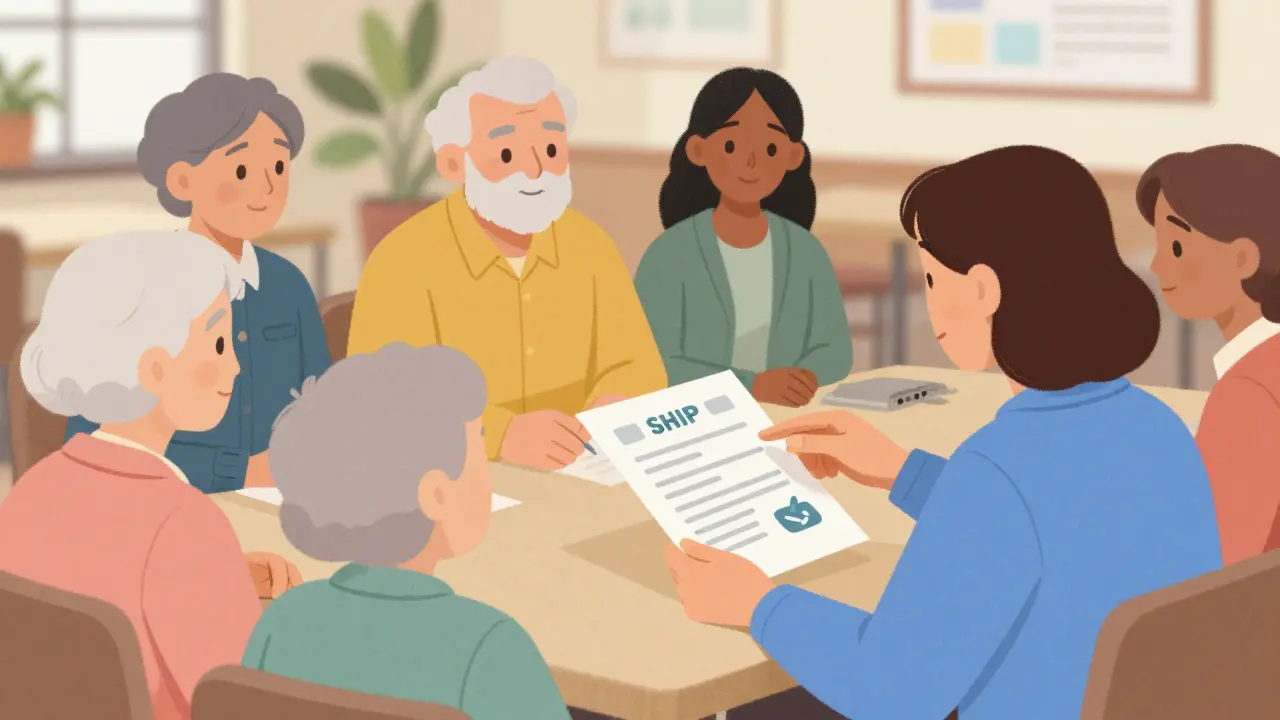
If you're feeling overwhelmed, don't try to do this alone. Every state has a SHIP (State Health Insurance Assistance Program). These are free, certified counselors who know exactly which boxes to check. With 14,000 counselors nationwide, they are the best shortcut to getting your application approved without the guesswork.
Looking Ahead: What's Changing in 2026?
The landscape is shifting. By January 2026, the government is rolling out new standardized application forms for Extra Help to cut processing times by 30%. This is a direct response to complaints about people waiting months for life-saving meds.
We're also seeing a trend where more states-especially California, Texas, and Florida-are expanding their SPAPs to handle the rising cost of specialty drugs. However, it's a race against time. Some reports suggest that as specialty drug costs grow by over 12% annually, some state budgets are starting to crack, which could lead to stricter "prior authorization" rules (meaning your doctor has to jump through more hoops to get a drug approved).
What happens if I move to a different state?
This is a major pitfall. Because SPAPs are state-run, your coverage does not move with you. If you move from New Jersey to Pennsylvania, your PAAD coverage ends, and you must apply for PACE or another local program. Many people experience coverage gaps during this transition, so it's best to start the application in your new state at least 60 days before you move.
Can I use both Medicare Extra Help and a state SPAP?
Yes, in many cases. They are often designed to work together. For example, in Pennsylvania, PACE is specifically designed to wrap around Extra Help, covering the costs that the federal program doesn't reach. However, the rules vary by state, and some may require you to exhaust federal options first.
How do I know if my medication is covered?
You need to check the program's "formulary." This is the official list of covered drugs. If your drug isn't listed, you can ask your doctor to file a "formulary exception" or an appeal, though be aware that this process can take several weeks.
What counts as a "resource limit" for Extra Help?
Resources generally include money in bank accounts, stocks, and bonds. They typically do not include the value of the home you live in or your primary car. For 2025, the limit was $17,600 for individuals and $35,130 for couples.
How often do I need to re-apply for these programs?
Most state programs, like PAAD, require annual re-certification to prove you still meet the income and residency requirements. Federal programs like Extra Help may also require periodic reviews, though some are automatic if you already receive Supplemental Security Income (SSI).