NSAIDs and Blood Thinners: Risks, Interactions, and What You Need to Know
When you take NSAIDs, nonsteroidal anti-inflammatory drugs like ibuprofen or naproxen used for pain and swelling. Also known as anti-inflammatory meds, they help with everything from headaches to arthritis—but they can quietly increase your risk of bleeding, especially when mixed with blood thinners, medications like warfarin, apixaban, or rivaroxaban that prevent dangerous clots. These are essential for people with atrial fibrillation, deep vein thrombosis, or after heart valve surgery. This isn’t just a theoretical warning. It’s a real, daily risk for millions.
NSAIDs don’t just add to the thinning effect—they mess with your stomach lining and platelet function, making it harder for your blood to clot even before the blood thinner kicks in. That’s why someone on warfarin who pops an ibuprofen for a sore knee might end up in the ER with internal bleeding. The risk isn’t just about dosage—it’s about timing, frequency, and your age. Older adults, especially those with kidney issues or a history of ulcers, are at the highest risk. Even a single daily dose of naproxen can turn a manageable situation into a medical emergency. And here’s the twist: many people don’t realize they’re taking NSAIDs. They’re in cold medicines, menstrual relief pills, and even some topical creams. You might think you’re safe because you only take your blood thinner once a day, but if you’re using an OTC pain reliever every afternoon, you’re stacking the danger.
It’s not all bad news. You don’t have to give up pain relief entirely. Acetaminophen is often a safer choice for people on anticoagulants, though it’s not perfect—it can still stress the liver if overused. Some doctors will switch you from an NSAID to a different kind of pain control, like physical therapy, heat wraps, or even low-dose antidepressants for nerve pain. But the real key? Communication. Tell every doctor, pharmacist, and even your dentist that you’re on a blood thinner. Don’t assume they’ll check your med list. Bring a printed list or a screenshot of your pharmacy app. Ask: "Is this safe with my blood thinner?" If the answer isn’t clear, walk away and call your provider. This isn’t about being paranoid—it’s about being smart.
Below, you’ll find real-life guides on how these drugs interact, how to spot warning signs before it’s too late, and what alternatives actually work. You’ll see how herbal teas can sneak in and make things worse, how aging changes your body’s reaction, and why a simple refill mistake can turn into a crisis. These aren’t theory pieces—they’re stories from people who’ve been there, and the advice that helped them get back on track.
- Dec 5, 2025
- Posted by Cillian Osterfield
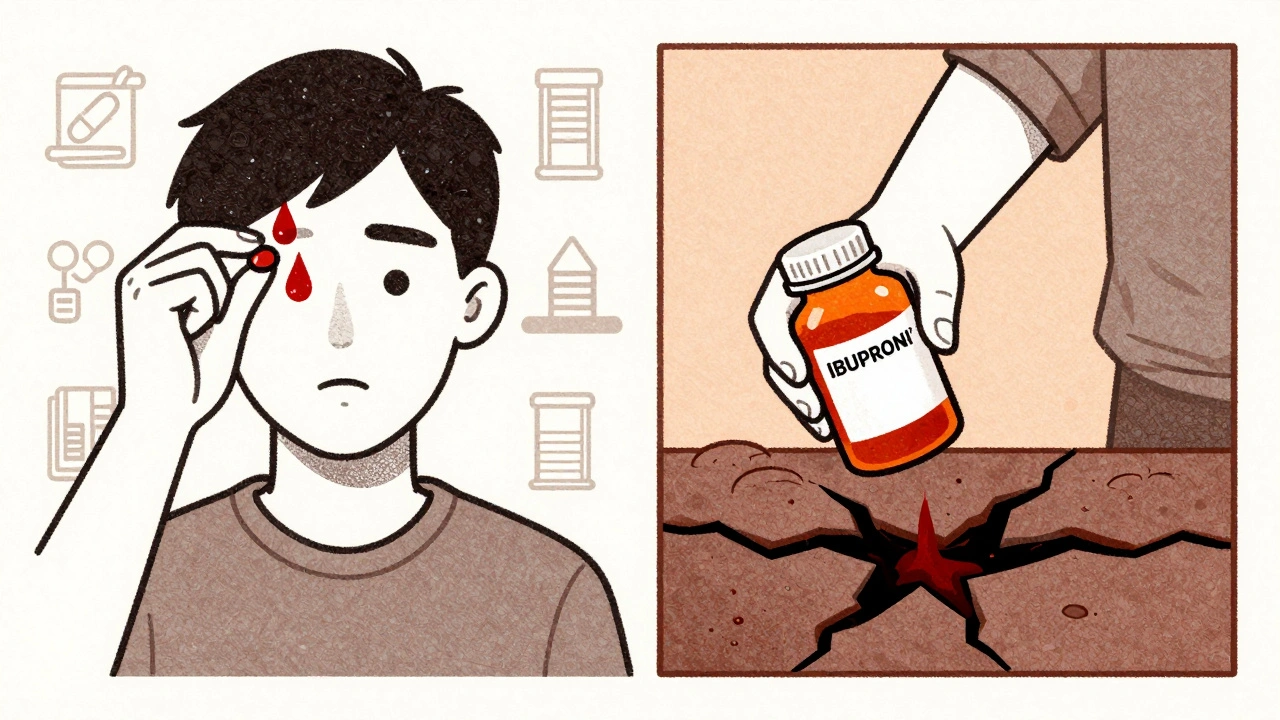
Warfarin and NSAIDs: Why Combining Them Increases Bleeding Risk
Combining warfarin and NSAIDs can more than quadruple your risk of serious bleeding. Learn why this interaction is dangerous, which painkillers are safest, and what to do if you need pain relief while on blood thinners.