
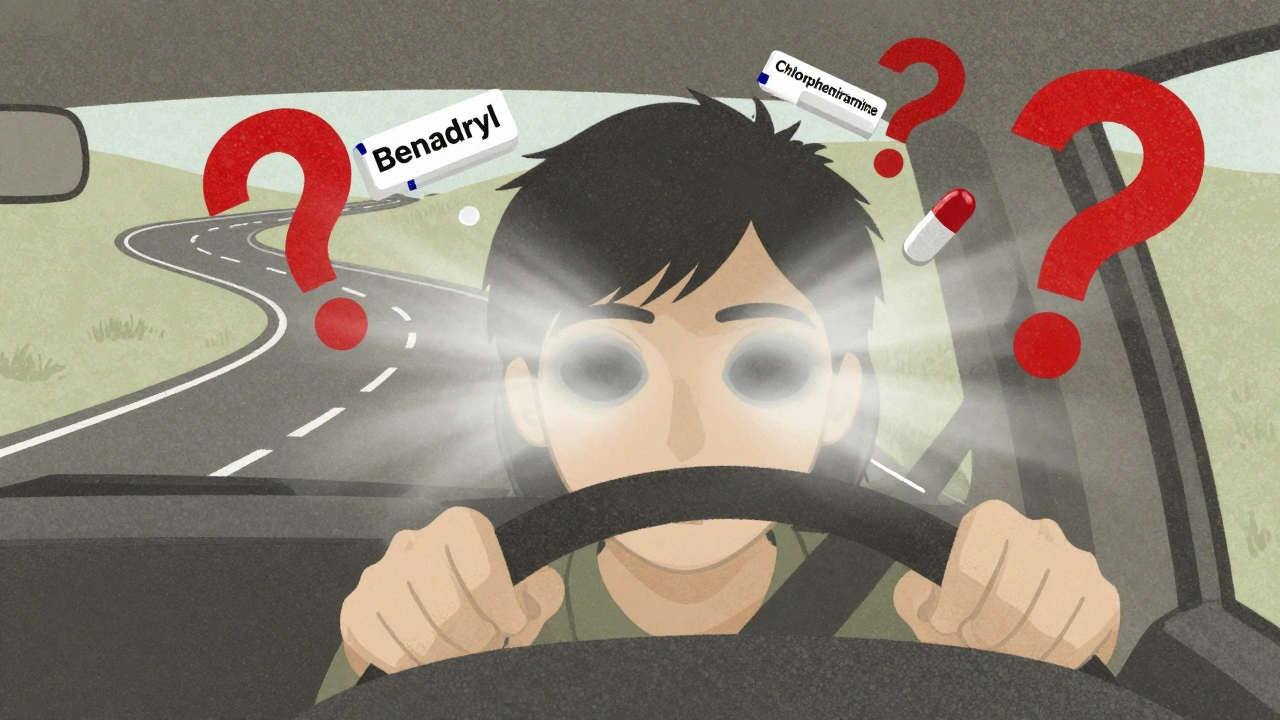
Antihistamine Driver Safety Checker
Select your antihistamine and click "Check Safety" to see your risk level.
Every year, thousands of people take antihistamines to fight allergies-runny nose, itchy eyes, sneezing. But if you’re driving after taking one, you might be putting yourself and others at risk without even realizing it. Many assume that because these pills are sold over the counter, they’re harmless. That’s not true. Some antihistamines can slow your reactions, blur your vision, and make you drowsy-just like alcohol. And unlike alcohol, few people check the label before getting behind the wheel.
Not All Antihistamines Are Created Equal
There are three generations of antihistamines, and the difference between them matters a lot when you’re driving. First-generation antihistamines-like diphenhydramine (Benadryl), chlorpheniramine, and clemastine-are the most dangerous behind the wheel. They cross the blood-brain barrier easily, causing strong sedation. Studies show these drugs can impair driving as much as a blood alcohol level of 0.05% to 0.08%, which is the legal limit in many places. In on-road driving tests, drivers taking diphenhydramine showed 30-50% more lane deviation than those who didn’t take anything. Second-generation antihistamines like cetirizine (Zyrtec) and loratadine (Claritin) were designed to be less sedating. But don’t be fooled by the “non-drowsy” label. Cetirizine still causes noticeable impairment in 15-20% of users, especially at higher doses. Loratadine is generally safer, but even it can affect reaction time in sensitive individuals. The key is: “non-drowsy” doesn’t mean “no effect.” Third-generation antihistamines-fexofenadine (Allegra) and levocetirizine (Xyzal)-are the safest choice for drivers. Multiple clinical trials using real-world driving tests found no significant impairment compared to placebo. These drugs barely enter the brain, so they don’t cause drowsiness, slowed thinking, or delayed reflexes. If you drive regularly and need allergy relief, switching to one of these is the smartest move you can make.The Hidden Danger: You Don’t Feel Drowsy, But You’re Still Impaired
One of the biggest risks isn’t feeling sleepy-it’s thinking you’re fine when you’re not. Research shows 70% of people who take first-generation antihistamines can’t accurately judge how impaired they are. You might feel alert, but your brain isn’t processing information as quickly. Your reaction time is slower. Your ability to track moving objects or make split-second decisions is reduced. You might not notice it until you’re in a dangerous situation. A driver in New Zealand reported pulling over three times on a road trip after taking Benadryl. “I didn’t feel like I was falling asleep,” they said. “But I kept missing exits and forgetting where I was going.” That’s not just fatigue-it’s cognitive fog. The same thing happens with second-generation drugs in vulnerable people. Even if you’ve taken the same pill for years, your body’s response can change. Stress, lack of sleep, or alcohol can make the sedative effect worse.Alcohol + Antihistamines = Dangerous Mix
Combining antihistamines with alcohol is a recipe for disaster. Studies show the combination multiplies impairment by 200-300% compared to either substance alone. A single drink with a first-generation antihistamine can bring your driving performance down to the level of someone legally drunk. This isn’t theoretical. Traffic accident data shows a high rate of antihistamine-alcohol co-use among drivers involved in crashes. If you’ve taken any antihistamine, avoid alcohol completely-even one beer can tip the balance.Legal Risks Are Real
In many countries, driving while impaired by medication is illegal-even if the drug was prescribed or bought over the counter. In Europe, 22 countries ban driving for 8-12 hours after taking first-generation antihistamines. Some classify them as controlled substances, requiring special permits. In the U.S., while there’s no federal law targeting antihistamines specifically, drivers can be charged with DUI if they’re found to be impaired by medication. Police can request blood tests, and if antihistamines are detected along with signs of impairment, you can face fines, license suspension, or even jail time. In New Zealand, the law is clear: you must not drive if you’re affected by any drug that impairs your ability to control a vehicle. That includes antihistamines. The Ministry of Transport warns that “medication-induced impairment is just as dangerous as alcohol.” And if you’re in a crash and an antihistamine is found in your system, your insurance could be voided.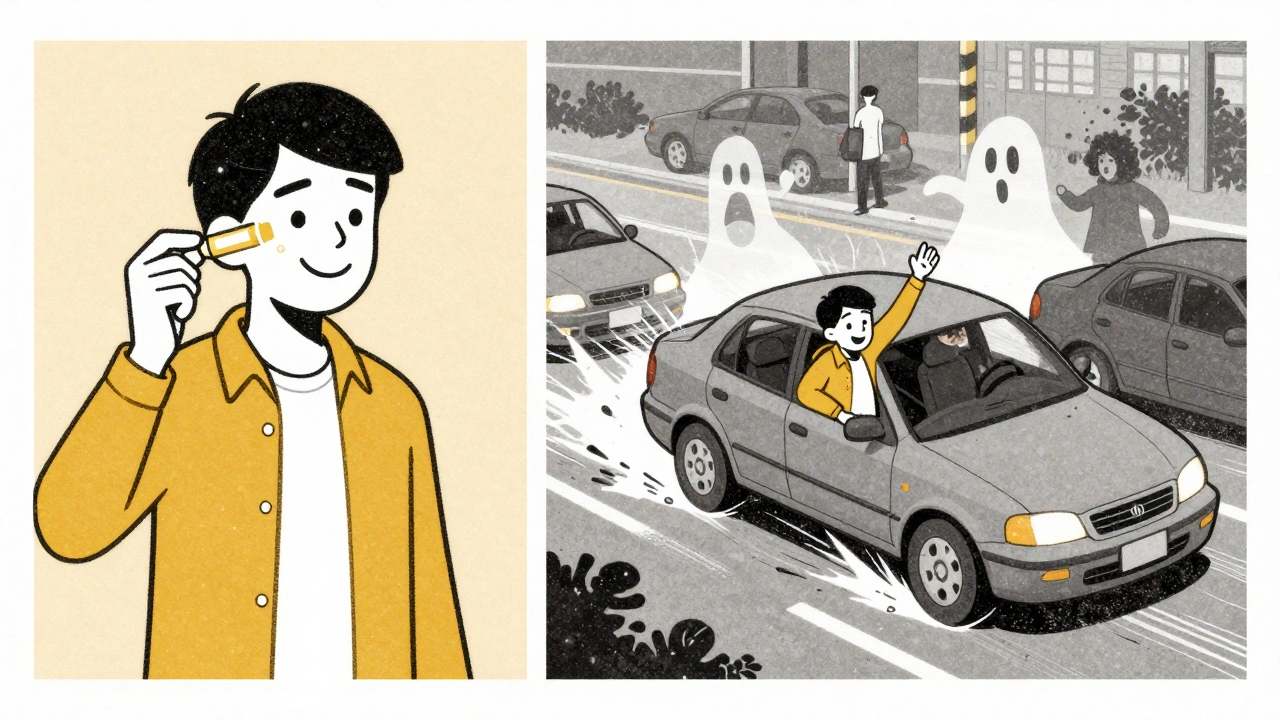
Who’s Most at Risk?
Some people are more sensitive than others. Older adults, those with liver or kidney problems, and people taking multiple medications are at higher risk. Women may experience stronger sedative effects due to differences in metabolism. And if you’re already tired, stressed, or haven’t slept well, even a low dose of an antihistamine can push you into dangerous territory. Drivers who use antihistamines regularly often develop a false sense of security. “I’ve taken this for years,” they say. “I’m fine.” But tolerance doesn’t eliminate impairment-it just makes you less aware of it. Studies show even after 4-5 days of daily use, drivers still show 15-20% more impairment than baseline.What Should You Do?
If you take antihistamines and drive, follow these steps:- Switch to fexofenadine or levocetirizine. These are the only antihistamines proven safe for drivers in multiple clinical trials.
- Never drive after taking diphenhydramine, chlorpheniramine, or promethazine. Even if you think you’re okay, you’re not.
- Read every label. Look for “may cause drowsiness” or “avoid operating machinery.” If it’s not clear, ask your pharmacist.
- Test new medications at home. Take your first dose on a day when you don’t need to drive. Wait at least 48 hours to see how you react.
- Avoid alcohol completely. No exceptions.
- Don’t rely on how you feel. If you’re unsure, don’t drive. Use public transport, call a ride, or wait until the next day.
Real People, Real Consequences
A Reddit thread from October 2022 had 147 comments from people sharing their experiences. Over 60% said they’d felt drowsy or slowed down while driving after taking first-generation antihistamines. Twelve percent reported near-miss accidents. One user wrote: “Took Benadryl before a 3-hour drive. I woke up in a ditch. Didn’t remember how I got there.” On the flip side, a Drugs.com survey of 1,245 users found that 82% reported no impact on driving with fexofenadine. Only 18% mentioned mild issues like trouble concentrating during heavy traffic. That’s a huge difference.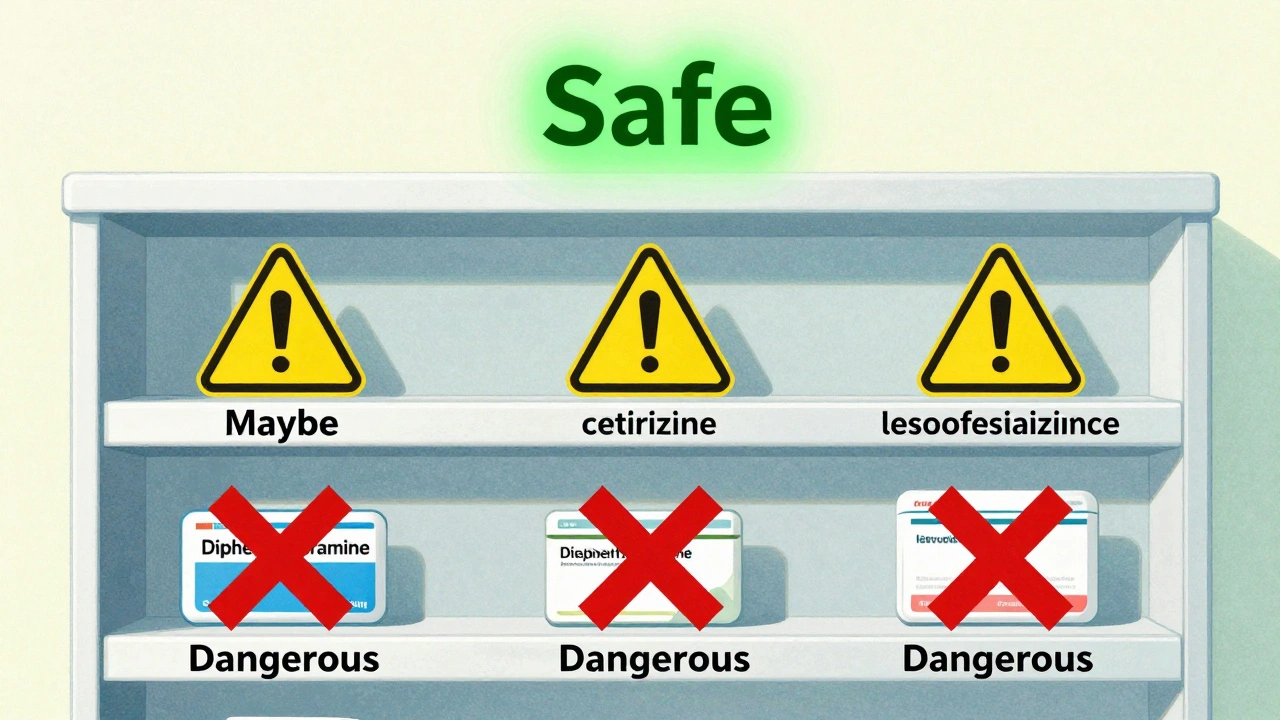
Cost vs. Safety
One reason people stick with older antihistamines is price. Diphenhydramine costs about $4 a month. Fexofenadine or levocetirizine can cost $35. But compare that to the cost of a traffic ticket, a suspended license, or worse-a crash that injures someone. Insurance companies estimate that widespread use of third-generation antihistamines could reduce medication-related crashes by 40-50% over the next decade. The money you save on pills is nothing compared to the cost of a single accident.What’s Changing Now?
Regulations are catching up. In 2023, the European Medicines Agency required all antihistamine manufacturers to clearly label driving risks by generation and chemical class. The FDA approved levocabastine nasal spray in 2021, which showed no driving impairment in trials. More third-generation options are in development, with seven candidates currently in late-stage testing. Doctors are also changing their habits. A 2022 survey of 1,200 U.S. allergists found that 78% now prescribe fexofenadine or levocetirizine as first-line treatment for patients who drive. That’s up from just 15% in 2000.Final Word: Your Life Is Worth More Than a Cheap Pill
Allergies are annoying. But they’re not life-threatening. Driving while impaired is. There’s no excuse to risk your life or someone else’s just to save a few dollars on medicine. If you drive, choose fexofenadine or levocetirizine. Avoid the old-school antihistamines entirely. And if you’re unsure, talk to your pharmacist or doctor. They’ve seen the data. They know the risks. They’ll tell you the truth.Don’t wait for a near-miss. Don’t wait for a police report. Don’t wait for a crash to change your habits. The safest choice is right there on the shelf-just not the one you think it is.




10 comments
Jack Appleby
Let’s be unequivocally clear: the pharmacokinetic profile of first-generation H1 antagonists renders them fundamentally incompatible with motor vehicle operation. Diphenhydramine, with its high lipophilicity and potent central anticholinergic activity, induces a state of neurocognitive attenuation indistinguishable from legal intoxication. The 30–50% increase in lane deviation observed in controlled trials isn’t anecdotal-it’s statistically robust, peer-reviewed, and replicated across jurisdictions. To equate ‘over-the-counter’ with ‘safe’ is not merely erroneous-it’s a catastrophic misapplication of risk assessment logic.
Furthermore, the fallacy of self-assessment bias is well-documented in neuropsychological literature; individuals under sedative pharmacologic influence consistently overestimate their cognitive capacity. This isn’t ignorance-it’s neurochemical deception. The brain doesn’t register impairment because the very structures responsible for metacognition are suppressed.
Second-generation agents like loratadine are not inert, but their blood-brain barrier penetration is quantitatively lower-approximately 1/10th that of diphenhydramine. Cetirizine, however, retains clinically relevant CNS effects in metabolically slow phenotypes, particularly CYP2C9 poor metabolizers. Hence, blanket ‘non-drowsy’ labeling is a regulatory failure.
Fexofenadine, by contrast, is a substrate for P-glycoprotein efflux pumps, actively excluded from cerebral tissue. Its clinical safety profile in driving simulations is statistically equivalent to placebo. The cost differential? A pittance compared to liability exposure, insurance premium hikes, or wrongful death litigation. This isn’t about preference-it’s about bioethical responsibility.
And yes, the FDA’s 2021 approval of levocabastine nasal spray was a watershed moment. Topical delivery bypasses systemic circulation entirely. Why are we still debating this in 2025?
Raj Rsvpraj
India has been warning about this for decades! In our Ayurvedic texts, sedative herbs like Brahmi were never mixed with travel-why? Because wisdom was never sold in pill bottles! Americans think ‘OTC’ means ‘free from consequences’-but your roads are littered with the corpses of people who trusted a label over their own senses!
And now you want to pay $35 for fexofenadine? Ha! In Delhi, we use neem leaves and tulsi tea-no pills, no drowsiness, no lawsuits. Your pharmaceutical cartel is robbing you blind! Why not just sleep? Or drive slower? Or better yet-don’t drive at all if you’re allergic to pollen! Nature is your medicine-not Big Pharma’s profit margins!
And don’t get me started on ‘third-generation’-that’s just marketing jargon to sell more pills! The real solution? Stop driving so much! Your car culture is the disease, not the antihistamine!
Rebecca Dong
Okay but what if the whole ‘antihistamine danger’ thing is just a government ploy to make you buy expensive pills? 🤔 I mean, think about it-why would they suddenly care about your driving safety? Why now? Did someone in the FDA get fired for not selling enough Zyrtec? 😏
And why is it only these ‘third-gen’ drugs that are ‘safe’? What if they’re just putting microchips in them to track your location? I read on a blog that Allegra is linked to satellite surveillance programs. 🛰️
Also, I took Benadryl last week and drove 400 miles. I felt fine. I even sang along to Taylor Swift. So maybe… the real danger is… other drivers? 🤷♀️
And what if the ‘studies’ are funded by the same companies selling fexofenadine? 😏 #DeepStatePharma
Michelle Edwards
I just wanted to say thank you for writing this. I’ve been taking Benadryl for years because it’s cheap and my doctor never mentioned the risks. Last month, I almost drifted into oncoming traffic on I-95-didn’t even realize I’d been zoning out until I heard a horn. I switched to Allegra the next day. No more fog. No more fear. Just peace.
If you’re reading this and you drive-please, just try one week of the safer option. It’s not about being perfect. It’s about being safe. And you deserve that.
You’re not alone. I’ve been there too.
Doris Lee
My grandma used to say, ‘If it makes you sleepy, it’s not for the road.’ She never read a study, but she knew more than most doctors. I switched to fexofenadine after my dad had that close call on the highway. He didn’t even remember turning off the exit. Just… gone.
It’s not expensive. It’s not complicated. Just read the label. If it says ‘may cause drowsiness’-don’t drive. Simple. No drama. No debate.
And if you’re not sure? Wait. Rest. Call an Uber. Your kids, your partner, your dog-they all need you home.
Frank Nouwens
While I appreciate the thoroughness of the exposition, I must respectfully note that the assertion regarding the equivalence of diphenhydramine-induced impairment to a BAC of 0.05–0.08% is derived from a 2014 meta-analysis by the National Highway Traffic Safety Administration, which employed a limited sample size of 127 participants under controlled laboratory conditions. Real-world variability-such as metabolic rate, concurrent medication use, and circadian rhythm-may significantly modulate the observed effect.
Moreover, the claim that ‘third-generation antihistamines are completely devoid of CNS effects’ is an overgeneralization. While fexofenadine exhibits negligible penetration of the blood-brain barrier in healthy adults, case reports of sedation exist in elderly patients with renal impairment.
That said, the recommendation to avoid first-generation agents remains prudent. The precautionary principle, in this instance, is both scientifically and ethically justified.
Kaitlynn nail
It’s funny how we treat drugs like they’re magic wands. You take something to feel better, and suddenly you think you’re invincible. But your brain? It’s not a machine you can reboot. It’s a fragile, sleepy, overworked thing. And antihistamines? They’re just the quietest kind of thief.
They don’t knock you out. They just… steal your focus. One second you’re on the highway, the next you’re wondering why the trees are moving so fast.
Don’t wait for a crash to learn that. Just switch. It’s not a sacrifice. It’s a small act of self-respect.
Sarah Clifford
OMG I took Benadryl last night and drove to the gas station this morning and I swear I saw a unicorn on the side of the road. I think it was a raccoon but my brain was like ‘NOPE THAT’S A UNICORN’ and I screamed and almost hit a mailbox. I’m never doing it again. I switched to Zyrtec and now I just cry a little when I sneeze. Worth it.
Nikki Smellie
Have you considered that the FDA, CDC, and pharmaceutical companies are all secretly working with the Department of Transportation to install GPS trackers in every antihistamine pill? That’s why they’re pushing fexofenadine-it’s the only one with a microchip that logs your driving patterns. They want to know who’s sleeping at the wheel so they can raise your insurance rates. I read it on a forum. It’s all connected. 🕵️♀️
Also, why is there no warning about how antihistamines interact with 5G towers? I think the drowsiness is caused by electromagnetic radiation amplifying the drug’s effect. I stopped using all OTC meds and now I only breathe raw honey. I feel 100% better. And my car doesn’t have a chip. ✨
Neelam Kumari
You people are pathetic. You spend your whole lives scared of a pill, but you’ll sit in traffic for two hours because you’re too lazy to ride a bike. You pay $35 for a drug so you can keep driving like it’s your god-given right. Meanwhile, in India, we ride scooters through monsoons with a cold and no meds-and we don’t cry about it.
Stop pretending you’re at risk. You’re just lazy. And entitled. And you think the world owes you comfort. It doesn’t.
Take the Benadryl. Drive. If you crash? Good. Maybe then you’ll learn to live with discomfort.