Bleeding Risk: What Medications and Conditions Increase Your Chances
When you take a medication that affects how your blood clots, you're dealing with bleeding risk, the chance that your body can't stop bleeding normally, even from minor injuries or internal sources. Also known as hemorrhagic risk, it’s not something you see coming—it sneaks up through bruising, nosebleeds, or worse, internal bleeding that can be life-threatening. This isn’t just about warfarin or aspirin. It’s about what happens when your body’s natural clotting system gets thrown off by drugs, diseases, or even herbal teas you think are harmless.
Blood thinners, medications like warfarin, apixaban, or rivaroxaban used to prevent clots in people with atrial fibrillation or artificial heart valves are the most obvious culprits. But even common drugs like NSAIDs, pain relievers such as ibuprofen or naproxen that reduce inflammation but also interfere with platelet function can pile on the risk when taken long-term. And it doesn’t stop there. Conditions like liver disease, where the organ can’t make enough clotting factors, or kidney failure, which alters how drugs are cleared and platelets work, make bleeding risk worse. Even something as simple as mixing herbal teas—like green tea or ginkgo—with your prescriptions can tip the balance.
You don’t need to panic, but you do need to pay attention. A small bruise that won’t fade, blood in your stool or urine, or a headache that gets worse after a minor bump aren’t normal. These aren’t just side effects—they’re warning signs. The posts below show you exactly how medications like anticoagulants, antidepressants, and even diabetes drugs can quietly raise your bleeding risk. You’ll see real examples of dangerous interactions, how aging changes your body’s response, and what to do when you’re on multiple meds. No fluff. No guesswork. Just what you need to know to stay safe.
- Dec 5, 2025
- Posted by Cillian Osterfield
Warfarin and NSAIDs: Why Combining Them Increases Bleeding Risk
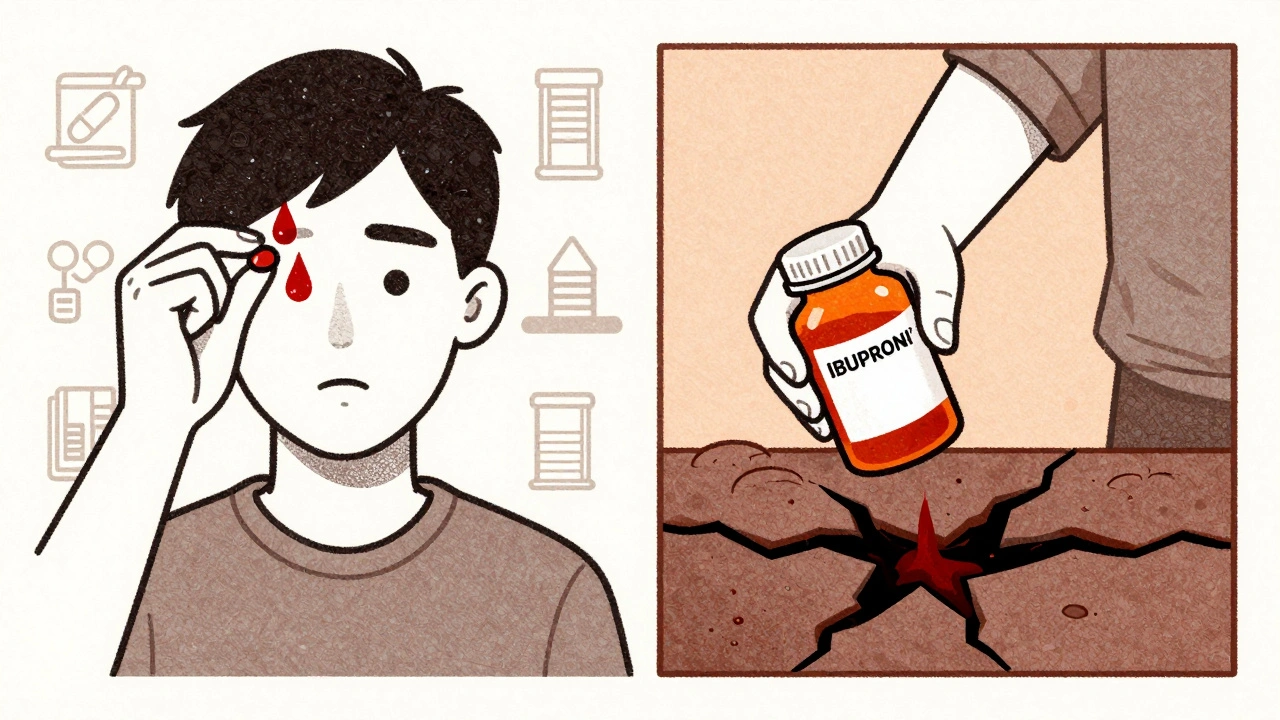
Combining warfarin and NSAIDs can more than quadruple your risk of serious bleeding. Learn why this interaction is dangerous, which painkillers are safest, and what to do if you need pain relief while on blood thinners.