
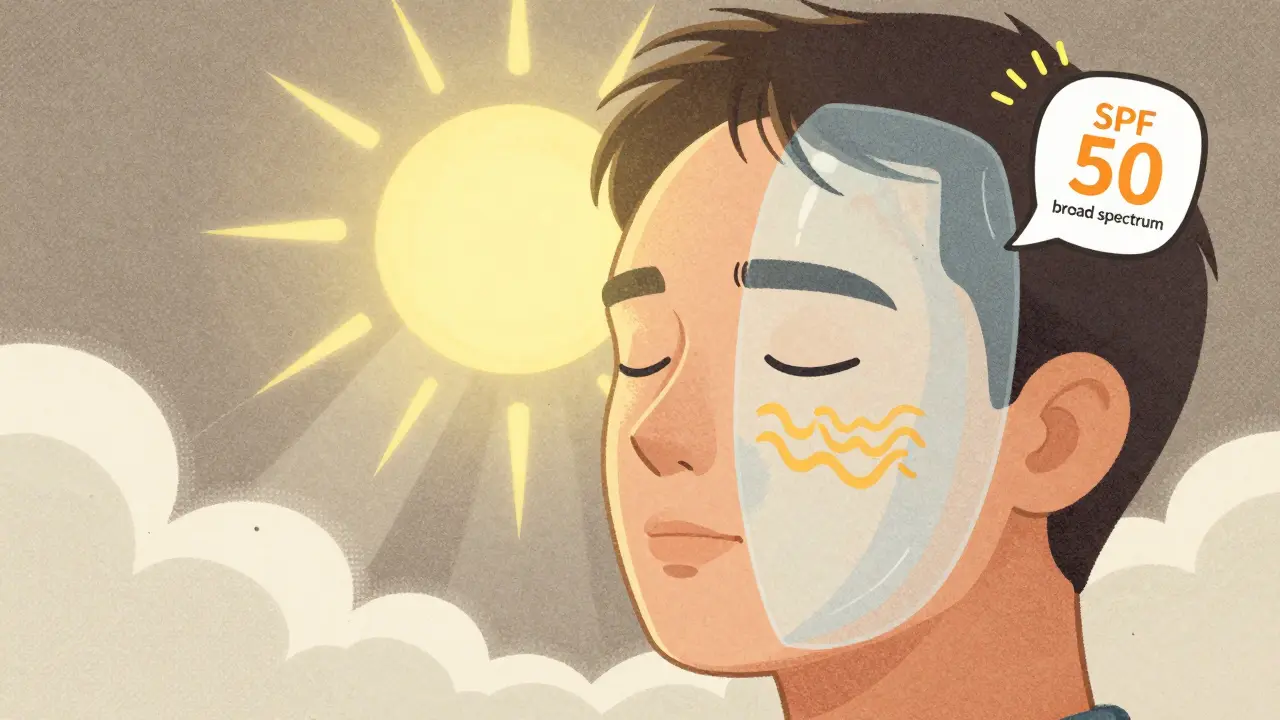
Every day, whether it's sunny or cloudy, your skin is being hit by invisible radiation that can change it forever. You don't feel it. You don't see it. But it’s there - and it’s building up. This isn’t just about getting a tan or avoiding sunburn. It’s about stopping damage before it turns into something worse: premature aging, dark spots, and even skin cancer. The key? Understanding what’s actually in your sunscreen - not just the number on the bottle.
What SPF Really Means (And What It Doesn’t)
SPF stands for Sun Protection Factor. It tells you how long it takes for UVB rays to burn your skin when you’re wearing sunscreen versus when you’re not. If your skin normally burns in 10 minutes without protection, an SPF 30 product should theoretically let you stay out for 300 minutes (10 × 30) before burning. Sounds simple, right? But here’s the catch: no one applies sunscreen the way they should.
Studies show that 90% of people use only a quarter to half the amount they need. That means an SPF 30 sunscreen, applied thinly, might only give you the protection of SPF 7 or 15. That’s not a typo. It’s science. The number on the bottle only works if you use enough - about a quarter teaspoon for your face alone. Most people smear on a thin layer, think they’re covered, and walk away. That’s why dermatologists recommend going higher than you think. SPF 30 blocks 96.7% of UVB rays. SPF 50 blocks 98%. That extra 1.3% matters - especially when you’re underapplying.
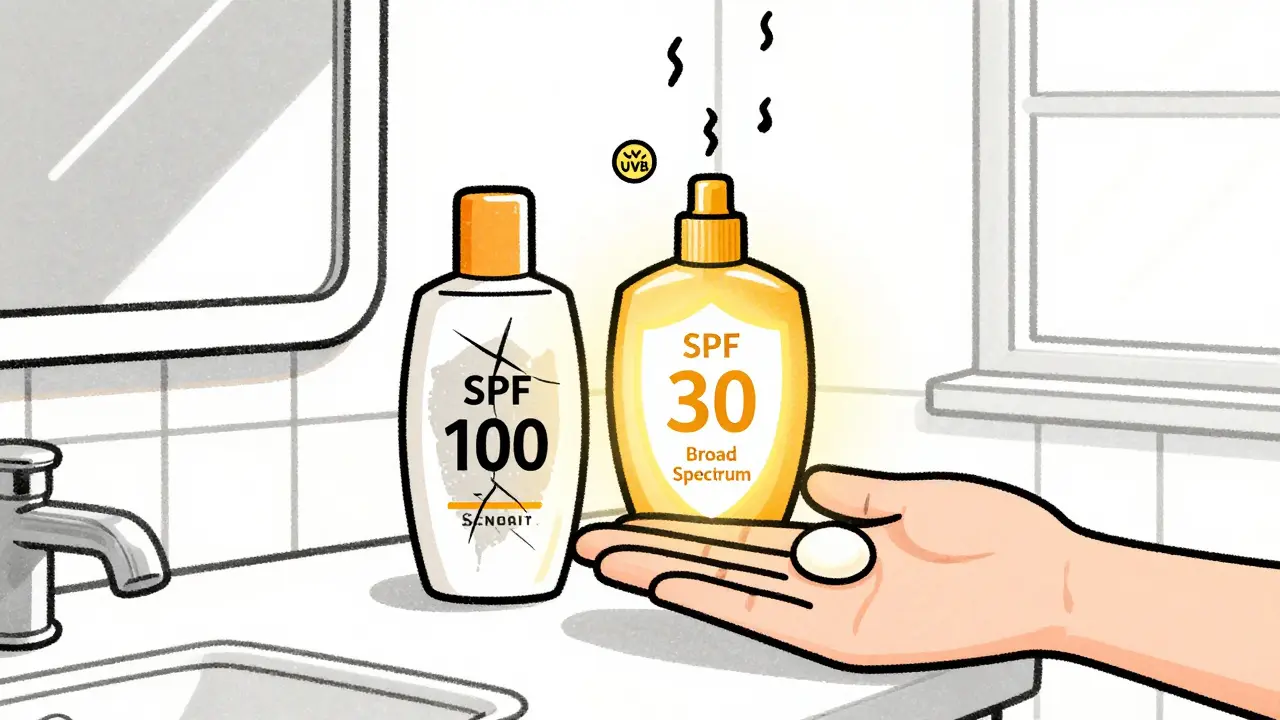
And here’s another myth: SPF 100 isn’t twice as good as SPF 50. It’s not even close. SPF 50 already blocks 98% of UVB. SPF 100 blocks 99%. The difference is tiny. What’s more important is whether the product actually protects against UVA - and whether you reapply it every two hours.
UVA vs. UVB: The Two Types of Damage
Not all sun damage is the same. There are two main types of ultraviolet radiation that reach your skin: UVA and UVB. They attack differently, and most sunscreens don’t handle both equally.
UVB rays are the ones that cause sunburn. They’re shorter wavelengths (290-320 nm) and mostly get absorbed by the top layer of your skin, the epidermis. That’s why you turn red, peel, and feel the sting. These rays are also the main cause of direct DNA damage that leads to skin cancers like melanoma and squamous cell carcinoma. UVB intensity changes with the season and time of day - strongest between 10 a.m. and 4 p.m., especially in summer.
UVA rays are sneakier. They’re longer wavelengths (320-400 nm), making up 95% of the UV radiation that hits Earth. They penetrate deeper into the dermis, where collagen and elastin live. That’s why they cause wrinkles, sagging, and dark spots - the signs of photoaging. UVA doesn’t burn you. You don’t feel it. And it doesn’t care if it’s cloudy, winter, or you’re sitting by a window. It gets through glass. That’s why dermatologists say: daily sunscreen isn’t optional - it’s non-negotiable.
Broad Spectrum Isn’t Just a Marketing Term
If a sunscreen says “broad spectrum,” it means it protects against both UVA and UVB. But not all broad spectrum sunscreens are equal. In 2011, the FDA set rules: to earn that label, a product must pass a critical wavelength test. That means it must absorb UV rays up to at least 370 nanometers. That’s the minimum bar.
Now, here’s what’s new. In 2023, the Skin Cancer Foundation updated its Seal of Recommendation. For a product to get the seal, UVA protection must be proportional to the SPF. So if a sunscreen says SPF 50, its UVA protection can’t be half as strong. It must be at least one-third of the SPF value - and for SPF 50+, that means UVA-PFdx scores of 20 or higher. That’s a big upgrade from older standards.
What does this mean for you? Look for “broad spectrum” on the label - and don’t assume a high SPF means full protection. A product could be SPF 70 but still offer weak UVA coverage. That’s why you need both labels: SPF and broad spectrum.
Mineral vs. Chemical: What’s Really Different
There are two main types of sunscreen: mineral (physical) and chemical. They work in opposite ways.
Mineral sunscreens use zinc oxide and/or titanium dioxide. These sit on top of your skin and reflect UV rays like tiny mirrors. They start working immediately. They’re less likely to irritate sensitive skin - which is why so many people with acne or rosacea swear by them. But they can leave a white cast, especially on deeper skin tones. Some newer formulas use micronized particles to reduce this, but it’s still a common complaint.
Chemical sunscreens use ingredients like avobenzone, octinoxate, octocrylene, and oxybenzone. These absorb UV rays like a sponge, converting them into harmless heat. They tend to blend in more easily and feel lighter. But some people react to them - stinging eyes, breakouts, redness. Oxybenzone, in particular, has been flagged for potential hormone disruption (though evidence in humans is still limited) and is banned in some places like Hawaii because it harms coral reefs.
Here’s what users say: On Reddit’s r/SkincareAddiction, 78% of 1,245 respondents said switching to mineral sunscreen reduced their breakouts. But 63% said the white cast made them stop using it. On Amazon, top-rated sunscreens like La Roche-Posay Anthelios SPF 50 have over 8,700 reviews - many praising “no white cast” formulas. That’s the real win: technology that works for your skin tone and type.
How to Actually Use Sunscreen (So It Works)
Here’s the truth: sunscreen doesn’t work if you don’t use it right.
- Use a quarter teaspoon for your face and neck. That’s about the size of a nickel.
- Apply it as the last step in your skincare routine - after moisturizer, before makeup.
- Wait 15 minutes before going outside. Chemical sunscreens need time to absorb. Mineral ones work right away, but waiting ensures full coverage.
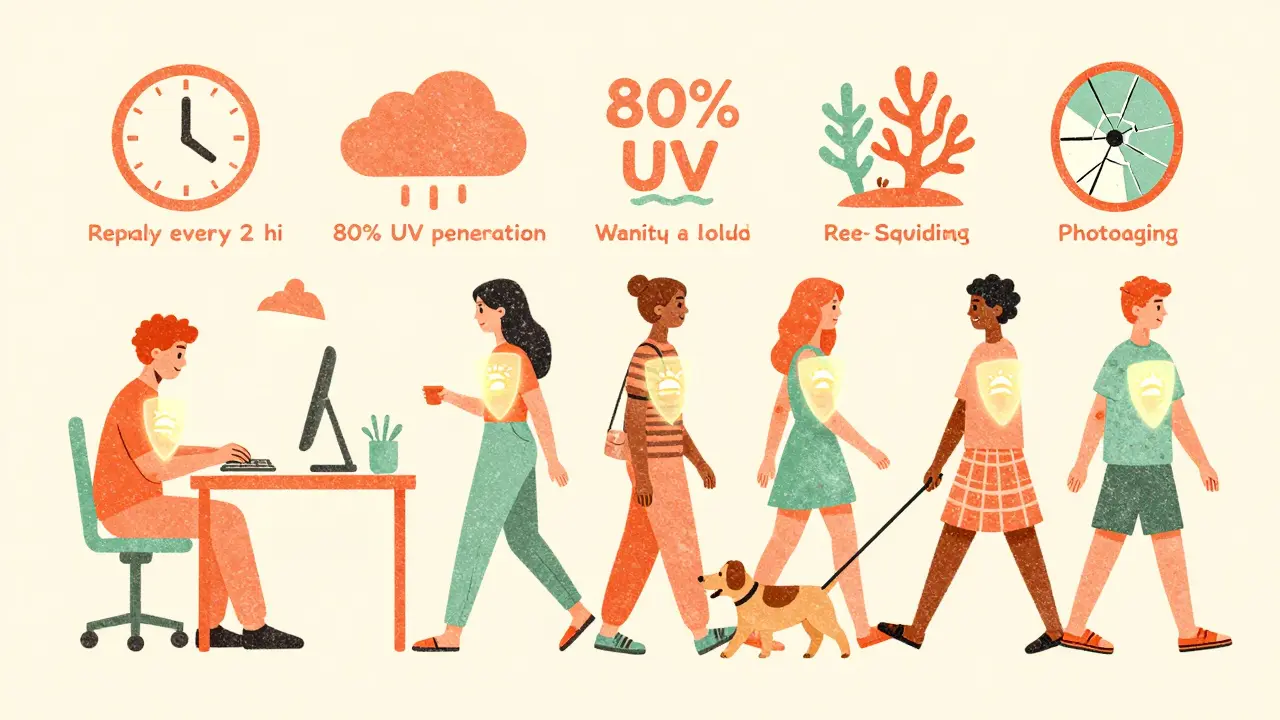
- Reapply every two hours. If you’re sweating, swimming, or wiping your face, reapply immediately - even if it’s labeled “water resistant.” That label means it lasts 40 or 80 minutes in water - not all day.
- Don’t forget your ears, lips, neck, hands, and feet. These areas get hit hard and often get skipped.
And yes - you need it on cloudy days. Up to 80% of UV rays penetrate clouds. UVA doesn’t care if it’s winter. If you’re outside during daylight, you need protection. That’s why dermatologists in New Zealand, where UV levels are among the highest in the world, recommend daily use even in June.
What to Look for (and What to Avoid)
Not all sunscreens are created equal. Here’s what to check for:
- SPF 30 or higher - the minimum for daily use, according to the Skin Cancer Foundation.
- Broad spectrum - non-negotiable. If it’s not on the label, skip it.
- Water resistance - if you sweat or swim, choose 40 or 80-minute protection.
- Non-comedogenic - means it won’t clog pores. Good for acne-prone skin.
- Reef-safe - if you swim in oceans, avoid oxybenzone and octinoxate. These chemicals are banned in places like Hawaii and the Virgin Islands because they kill coral.
Avoid products with alcohol as the first ingredient - they dry out skin. Skip fragranced sunscreens if you have sensitive skin. And don’t trust “SPF 100” claims unless you’re also checking for broad spectrum coverage. High numbers can be misleading.
The Future of Sunscreen
The FDA is moving toward capping SPF labels at “SPF 60+” because higher numbers don’t offer meaningful extra protection - and they can make people feel falsely safe. Starting in December 2025, all sunscreens sold in the U.S. must clearly display “broad spectrum” on the front label. Products that don’t meet the standard will be pulled.
Meanwhile, research is expanding. Dermatologists are starting to look at blue light from screens and infrared radiation from heat. Some new sunscreens now include antioxidants like vitamin C or ferulic acid to fight free radicals from pollution and screen exposure. In five years, multi-spectrum protection might be the new standard.
For now, stick with the basics: broad spectrum, SPF 30+, daily use, and proper application. You don’t need the fanciest bottle. You just need to use it - and use it right.
Do I really need sunscreen if I’m indoors all day?
Yes. UVA rays penetrate windows - glass blocks UVB but not UVA. If you sit near a window at home or in the office, you’re still getting exposure. Daily sunscreen prevents cumulative damage that leads to wrinkles and dark spots over time.
Is a higher SPF always better?
Not really. SPF 30 blocks 96.7% of UVB rays. SPF 50 blocks 98%. That’s just a 1.3% improvement. The real issue is how much you apply. Most people underapply, so using SPF 50 instead of 30 gives you more safety margin. But SPF 100 isn’t twice as protective - it’s practically the same as SPF 50. Focus on broad spectrum and reapplication instead of chasing numbers.
Why does my mineral sunscreen leave a white cast?
Traditional mineral sunscreens use zinc oxide and titanium dioxide in larger particles that sit on top of the skin and reflect light - which makes them look white. Newer formulas use micronized or tinted particles that blend better. Look for products labeled “sheer,” “tinted,” or “for dark skin tones.” Applying a thin layer and blending well helps too.
Can I use last year’s sunscreen?
Check the expiration date. Most sunscreens last 3 years unopened. Once opened, they lose effectiveness after 12 months. If the texture changes - becomes watery, grainy, or smells off - toss it. Expired sunscreen won’t protect you.
Do I need sunscreen if I have dark skin?
Yes. While darker skin has more melanin, which offers some natural protection, it doesn’t prevent DNA damage or skin cancer. UVA damage still causes aging and hyperpigmentation. People of color are often diagnosed with melanoma later - when it’s more dangerous. Daily sunscreen is essential for everyone.





15 comments
Amrit N
I live in India and use sunscreen daily, even when it's cloudy. My mom always said, 'Sun doesn't take a day off,' and she was right. I've noticed fewer dark spots since I started. Just don't forget your ears and neck - I used to skip those and now I pay for it.
Greg Scott
SPF 30 and reapplying is all you really need. I used to buy SPF 100 thinking I was getting super protection, then realized I was just wasting money and it felt greasy. Now I use a good broad spectrum SPF 50 and just make sure to put on enough. Game changer.
Marie Crick
If you're not using sunscreen daily, you're basically asking your skin to age faster and get cancer. No excuses.
Nina Catherine
OMG YES I switched to mineral and the white cast was killing me until I found a tinted one! Now I don't look like a ghost at my desk job 😅 also, I apply it after moisturizer and before makeup and it doesn't pill anymore! #sunscreenwin
Ashley Paashuis
It's amazing how many people think sunscreen is only for beach days. I work from home near a window, and I’ve been using SPF 30 every morning for three years now. My skin tone is more even, and my dermatologist said I’ve slowed down my photoaging significantly. It’s not glamorous, but it’s one of the best habits I’ve ever picked up.
Scott Dunne
Ireland gets more UV than you think. Even in January, the reflection off the wet pavement and clouds can be brutal. I’ve been using sunscreen since I was 16 - my skin is still clear, no wrinkles. You’re not being dramatic if you protect yourself.
Jonathan Rutter
Look, I get it - people think sunscreen is just for vacation. But here's the thing: if you're not applying a full teaspoon to your face and neck every single day, you're not getting the SPF you paid for. And if you're using expired product? That's not laziness - that's negligence. I've seen clients with melasma and hyperpigmentation from skipping reapplication. It's not a myth. It's math. And you're failing the equation.
Caleb Sciannella
I grew up in Nigeria where sunscreen was considered unnecessary - we had darker skin, so we thought we were immune. Then I moved to the States and started getting dark spots on my cheeks from sitting by the window at work. It took me two years and a dermatologist to realize UVA doesn't discriminate. Now I use a tinted mineral SPF 50 and it’s life-changing. I wish someone had told me this sooner. This isn't vanity - it's longevity.
Freddy King
SPF is just a marketing construct designed to sell more product. The real issue is that chemical filters like oxybenzone are endocrine disruptors. We're all basically lab rats in a sunscreen experiment. And don't get me started on 'broad spectrum' - it's a regulatory loophole. The FDA doesn't even require UVA-PF testing for most products. You're being sold a placebo wrapped in a bottle. Wear a hat. Stay in the shade. That's the only real protection.
Laura B
I used to think I didn’t need sunscreen because I tan easily. Then I noticed I had this one dark spot on my left cheek - right where my desk window is. Turns out, UVA goes through glass. I started using SPF 30 daily and within three months, it stopped getting darker. Now I don’t even think about it. It’s just part of my routine, like brushing my teeth. I’m not a skincare nerd - I’m just smart.
Jana Eiffel
The fundamental error in public perception lies in the conflation of photoprotection with aesthetic concern. The biological imperative for daily sunscreen use transcends cosmetic considerations; it is a neuroprotective, immunomodulatory, and genoprotective measure. The dermis, as the primary target of UVA-induced matrix metalloproteinase activation, undergoes irreversible collagen degradation absent exogenous barrier augmentation. One cannot ethically advocate for photoprotection as optional when the cumulative DNA damage is quantifiable, cumulative, and carcinogenic.
Oana Iordachescu
I read somewhere that sunscreen causes vitamin D deficiency. I looked it up. The study was funded by a tanning bed company. 🤡 Also, the FDA is hiding the truth about nanoparticles. They're in your bloodstream. I don't trust them. I use a hat and stay indoors after 10am. 🙃
Benjamin Fox
SPF 30 is all you need 😎 just slap it on and go. I don't measure teaspoons. I don't reapply. I just don't get sunburned. I'm 37 and look 28. Science says I'm lucky. I say I'm just chill.
aine power
SPF 50 is for the uneducated. True sun protection requires zinc oxide, no fragrance, and a minimum of 20% concentration. Anything less is performative skincare.
John Cena
I used to hate sunscreen. Then I got a bad sunburn on my nose and it peeled for weeks. Now I use a tinted mineral one. It doesn't feel like I'm wearing a mask. And yeah, I use it even when it's raining. I'm not trying to look perfect - I'm trying to not look like a raisin in 10 years.