

Why a pill’s color can make someone refuse their medicine
Imagine you’ve been prescribed a pill to manage your blood pressure. It’s a small, white capsule. But when you pick it up from the pharmacy, it’s now a large, blue tablet. You’ve taken the same drug before-this is just the generic version. Still, something feels off. You’ve heard stories from your community: "Generics don’t work like the real thing." Your cousin refused hers because the pill was green-"green means poison" in her culture. Your aunt won’t touch anything with gelatin because it’s not halal. You’re not being irrational. You’re responding to years of lived experience, cultural messaging, and sometimes, real gaps in how medicine is explained to people who don’t look like the ones in the brochures.
Generics make up 70% of all medicines sold in Europe by volume, and nearly 90% in the U.S. They’re cheaper, just as effective, and approved by regulators. But for many patients from culturally diverse backgrounds, the switch from brand to generic isn’t just a cost change-it’s a trust issue. And it’s not about ignorance. It’s about culture.
What’s really in the pill? Excipients matter more than you think
When you think of a medicine, you focus on the active ingredient: the part that treats your condition. But what’s on the outside? The color, shape, coating, and fillers? Those are called excipients. And they’re where cultural conflicts start.
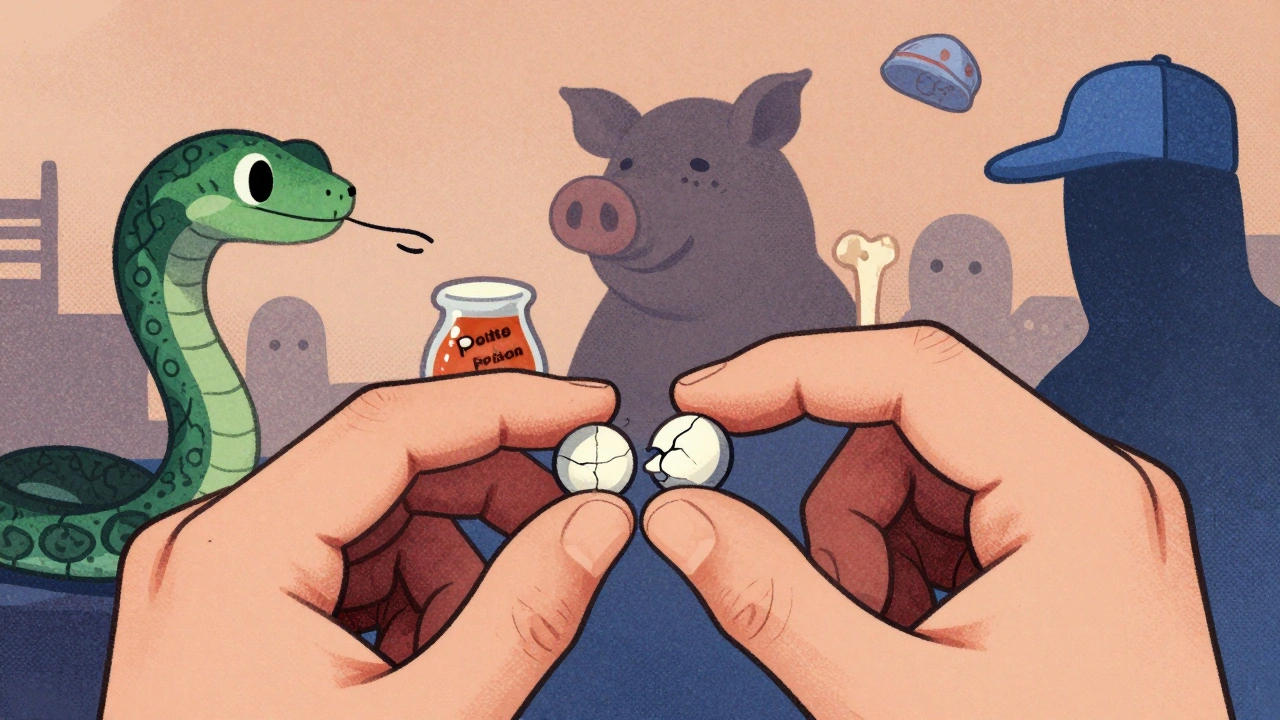
Some Muslim patients won’t take capsules made with pork-based gelatin. Jewish patients avoid anything not certified kosher. In parts of Asia, red pills are seen as powerful and healing. In some African communities, white pills are associated with death or hospitalization. In Latin American cultures, large, brightly colored pills are often trusted more than small, plain ones-because they look "stronger."
A 2023 study in the U.S. found that 63% of pharmacists in urban areas get asked weekly about gelatin, alcohol, or animal-derived ingredients in medications. One pharmacist spent two hours calling manufacturers just to find a liquid version of a drug without gelatin for a Muslim patient. Another had to switch a diabetic patient’s pill from one generic to another because the original had a shellac coating derived from insects-something the patient’s cultural beliefs forbade.
Here’s the problem: most generic drug labels don’t list excipients clearly. Only 37% of generic packages in the U.S. include full ingredient details. In the EU, it’s 68%. That gap isn’t just bureaucratic-it’s dangerous. Patients who can’t verify what’s in their medicine may stop taking it altogether.
Appearance = effectiveness in many cultures
It’s not just about religion or diet. It’s about perception.
Studies show that African American and Hispanic patients are more likely than non-Hispanic White patients to believe generics are less effective. In one FDA survey, 28% of African American patients doubted generics, compared to 15% of White patients. Why? Because in many cultures, the way a medicine looks tells you how strong it is. Big pill? Strong. Colorful? Powerful. White and small? Weak.
One woman from Mexico told her pharmacist: "My doctor gave me the blue pill before. Now I get the white one. It’s the same name, but it doesn’t work the same. I feel it in my body." She wasn’t imagining it. She was responding to a system that never explained why the pill changed.
Pharmacists in New Zealand, Australia, and Canada report similar stories. A patient from Samoa refused a generic version of their asthma inhaler because the new one didn’t have the same blue cap. "That’s the one my cousin used," she said. "This one isn’t the real thing."
When patients don’t understand why the pill changed, they assume the medicine changed. And when they don’t trust the medicine, they don’t take it. That’s not non-compliance. That’s cultural logic.
Language isn’t just translation-it’s cultural context
Say you’re given a leaflet that says: "Take one tablet daily with food." Simple, right?
But what if "with food" means something different in your culture? In some Southeast Asian communities, taking medicine with rice is a sign of respect. In others, eating before taking medicine is avoided because it’s believed to weaken the effect. In parts of Africa, "food" means a heavy, cooked meal-not a snack. If the instructions aren’t adapted to local eating habits, patients might skip doses.
And translation isn’t enough. A study in Toronto found that Spanish-speaking patients understood "take on an empty stomach" better when it was explained as "take before breakfast," not "take without food." One phrase, two cultural meanings.
Many pharmacies still use generic, one-size-fits-all printed materials. They don’t have versions in Mandarin, Tagalog, Arabic, or Samoan. Even when they do, the tone is often clinical. No warmth. No connection. No trust.
What’s being done-and what’s not
Some companies are waking up.
Teva Pharmaceutical launched a "Cultural Formulation Initiative" in 2023 to track excipients in all their generics. Sandoz is building a Global Cultural Competence Framework. Both aim to make ingredient data clearer and easier to access by 2024.
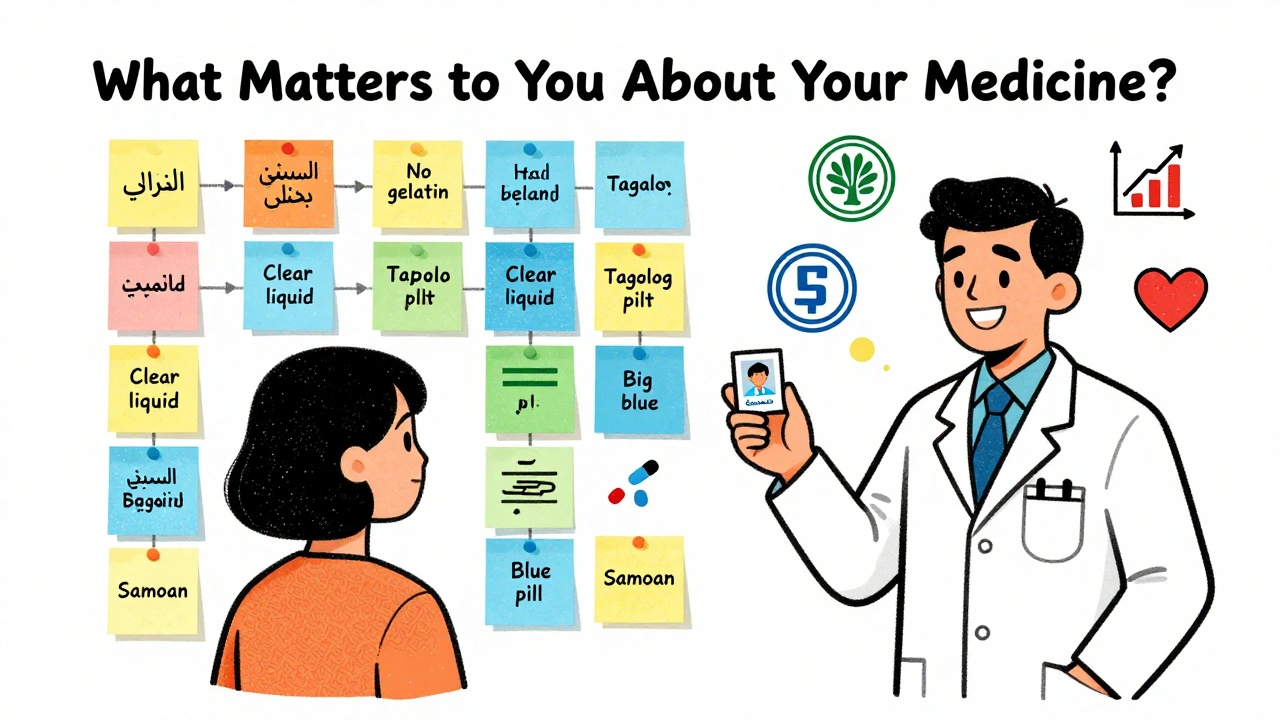
In New Zealand, a few community pharmacies have started keeping a simple list: "Halal-certified generics," "Kosher options," "No gelatin," "Liquid alternatives." One pharmacy in Wellington now keeps a printed binder with photos of pills and their ingredients. Patients can flip through it and say, "That’s the one I had before."
But these are exceptions. Only 22% of U.S. community pharmacies have any formal training on cultural considerations for generics. Most staff never learn about halal certification, kosher standards, or color symbolism in medication. They’re expected to know-but no one taught them.
Meanwhile, the market is shifting. The U.S. minority population is growing fast. By 2030, nearly half of all Americans under 18 will be from non-White backgrounds. Hypertension and diabetes-conditions where generics are most used-are already more common in these communities. Yet, the system isn’t adapting.
What patients and providers can do today
You don’t need a corporate policy to start making a difference.
- Ask patients: "Has this medicine worked for you before?" or "Is there anything about the pill you’re uncomfortable with?" Don’t assume they’ll volunteer concerns.
- Check ingredients: If a patient asks about gelatin, alcohol, or dyes, look it up. Use resources like the Halal Drug Database or Kosher Medication List-many are free online.
- Offer alternatives: If a generic has pork gelatin, ask if a liquid, tablet, or vegetarian capsule version is available. Many manufacturers make them-just not always advertised.
- Use pictures: Show patients a photo of the branded version and the generic. Say: "This is the same medicine. The inside is the same. Only the outside changed to make it cheaper."
- Train your team: Even 90 minutes of cultural awareness training-covering religious restrictions, color meanings, and communication styles-can cut non-adherence by 30%.
One pharmacy in Auckland started giving every new patient a small card: "Tell us what matters to you about your medicine." They got responses like: "No pork," "Must be clear liquid," "I need it in a bottle, not a blister pack." Within six months, refill rates for generics rose by 22%.
The future isn’t just cheaper medicine-it’s better medicine
Generics are essential. They save billions. They keep people alive. But if we treat them as just a cost-saving tool, we’ll keep losing patients who don’t trust them.
Cultural competence isn’t a bonus. It’s a medical necessity. A patient who refuses a pill because of gelatin isn’t being difficult. They’re being faithful-to their beliefs, their community, their body.
The companies making these drugs know this. Regulators are starting to require more transparency. Patients are demanding better. The only thing missing is consistent action.
Next time you hand someone a generic pill, don’t just say: "It’s the same."
Say: "I know this looks different. Let me tell you why it’s still the same medicine-and what’s in it, so you can decide if it’s right for you."
That’s not marketing. That’s care.
Frequently Asked Questions
Why do some cultures distrust generic medications more than others?
Distrust often comes from past experiences with unequal healthcare, lack of clear communication, and cultural beliefs about medicine appearance. For example, African American and Hispanic patients are more likely to associate pill size and color with potency. If a generic looks smaller or paler than the brand they used before, they may believe it’s weaker-even if it’s chemically identical. Historical discrimination in medicine also plays a role, making some communities skeptical of new or unexplained changes.
Are there generic medications that are halal or kosher certified?
Yes, but they’re not always labeled clearly. Some manufacturers produce versions without gelatin, alcohol, or animal-derived ingredients. Companies like Teva and Sandoz are starting to mark these options. You can check databases like the Halal Drug Database or contact pharmacies that specialize in culturally adapted medications. Pharmacists can often order these versions upon request-even if they’re not on the shelf.
What should I do if my patient refuses a generic because of the color or shape?
Don’t dismiss it. Ask why. Is it because it looks different? Do they believe color affects strength? Offer to check if another generic version is available with a similar appearance. Show them the active ingredient is the same. Use visuals-photos, side-by-side comparisons. If needed, contact the manufacturer for ingredient details. Sometimes, switching to a liquid form or vegetarian capsule solves the issue without changing the treatment.
How can pharmacies improve cultural competence around generics?
Start with training: 8-12 hours on religious restrictions, color symbolism, and communication styles. Keep a simple reference list of halal, kosher, and gelatin-free generics. Use multilingual materials with simple visuals. Train staff to ask open questions: "What matters to you about your medicine?" Partner with community leaders or cultural liaisons. Small changes-like keeping a binder of pill photos-can dramatically improve trust and adherence.
Is there a global standard for labeling excipients in generics?
No, not yet. The European Union requires more detailed labeling than the U.S. In the U.S., only 37% of generic packages list all excipients clearly. But regulatory pressure is growing. The 2022 Food and Drug Omnibus Reform Act (FDORA) now requires more transparency around social determinants of health, including cultural factors. Major manufacturers are starting to voluntarily improve labeling, but it’s inconsistent. Patients and providers should advocate for full ingredient disclosure on all packaging.



15 comments
Nnaemeka Kingsley
This is so real. In Nigeria, we say white pills are for hospital people, not for home use. My uncle stopped his blood pressure med because it looked like 'sickness medicine'. He only took the blue one even though same drug. No one asked him why.
Kshitij Shah
India has the same issue. Red pills = strong. White pills = weak. My grandma refused her generic statin because it was 'too pale'. She'd take the brand even if she had to skip meals to afford it. Culture isn't ignorance-it's survival logic.
Sean McCarthy
This is just another case of people being irrational. Pills are pills. If the active ingredient is the same, it works. Stop coddling cultural superstitions. Medicine isn't a cultural artifact-it's science.
Jaswinder Singh
Bro. You think this is new? We’ve been fighting this since the 90s. My cousin’s aunt in Punjab refused her diabetes meds because the capsule had gelatin. She died because no one listened. This isn’t about 'culture'-it’s about lazy healthcare systems that don’t care enough to ask.
Shashank Vira
Ah yes, the noble myth of cultural relativism in pharmacology. Let me get this straight-we’re now validating belief systems that equate color with potency? Next we’ll be prescribing amulets alongside metformin. This isn’t cultural sensitivity-it’s epistemological surrender.
Eric Vlach
I work in a pharmacy in Ohio. We started keeping a binder with pill pics and ingredient notes. One guy from Syria cried because he found his old meds. We didn't change the drug. We changed how we talked. Trust isn't built in labs. It's built in conversations.
Souvik Datta
The real tragedy isn't the lack of halal capsules-it's that we treat cultural beliefs as an add-on instead of core to patient care. Medicine isn't neutral. It's embedded in identity. If we ignore that, we're not just failing patients-we're failing humanity.
Jack Arscott
This is why I love pharmacists who actually listen. 🙏 My mom’s asthma inhaler changed color and she thought it was fake. The pharmacist showed her the batch number, the active ingredient, and even pulled up the manufacturer’s website. She cried. Not because she was wrong. Because she finally felt seen.
Irving Steinberg
I get it but like... why do we have to make everything so complicated? Can't people just take the pill? It's the same stuff. I mean come on. I'm diabetic and I don't care if it's blue or pink as long as it lowers my sugar
Lydia Zhang
People stop taking meds because they don't understand. Not because of color.
Kay Lam
The problem goes way deeper than excipients or color symbolism. It's about systemic neglect. For decades, clinical trials excluded non-white populations. Drug labels were written for middle-class white patients. Now when generics look different, it’s not superstition-it’s trauma. We’re not talking about preferences. We’re talking about a healthcare system that has consistently treated marginalized communities as afterthoughts. Until we fix that, no binder or photo will fix the root.
Matt Dean
This is why America is falling apart. We’ve turned medicine into a cultural sensitivity seminar. Next thing you know, we’ll be requiring prayer before insulin. Science doesn’t care about your beliefs. Your body does. Take the pill.
patrick sui
The excipient transparency gap is a regulatory failure dressed as cultural sensitivity. We need mandatory, standardized, machine-readable excipient labeling across all jurisdictions-preferably linked to global halal/kosher databases. The FDA’s current approach is pre-industrial. We’re in 2024. Why are we still relying on pharmacists manually calling manufacturers? This isn’t compassion-it’s operational negligence. 🤷♂️
Declan O Reilly
I think we’re missing the point here. It’s not about the pill. It’s about control. When you’re constantly told your body doesn’t matter, your beliefs don’t matter, your language doesn’t matter… the only thing left that you can control is whether you swallow the damn pill. That’s not irrational. That’s dignity. And if we can’t see that, then we’re not healers-we’re technicians.
Conor Forde
OH MY GOD. I just realized-this whole thing is basically the pharmaceutical version of 'I don't trust the new iPhone because it's not black anymore'. We've turned medicine into a status symbol. And now we're rewarding people for refusing science because their pill looks 'too basic'. I mean, come on. Next they'll be demanding the same bottle shape as their 2018 version. 🤡