
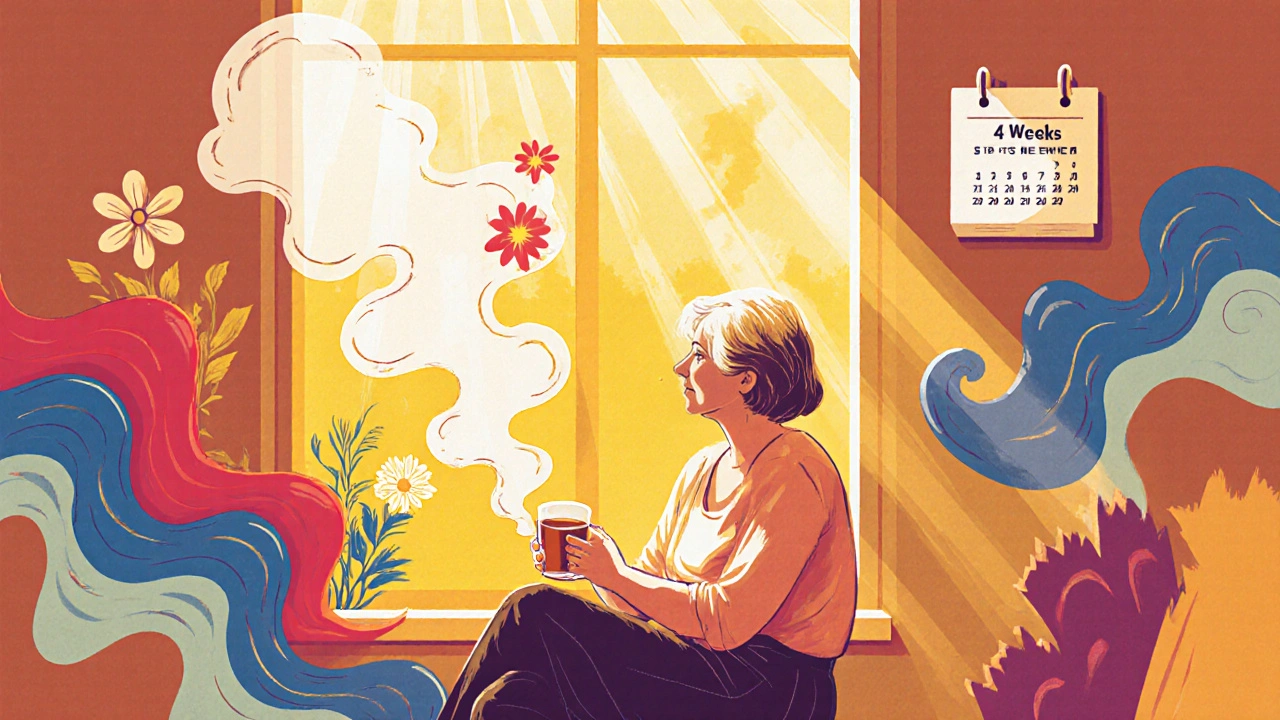
If you’re going through menopause and still smoking, you’re not just adding years to your life-you’re adding risk. Every cigarette you light up during this phase doesn’t just harm your lungs. It makes hot flashes worse, speeds up bone loss, raises your chance of heart disease, and can even bring on early menopause. The good news? Quitting now gives you back control-fast.
Smoking Makes Menopause Symptoms Worse
Hot flashes aren’t just annoying-they can be crippling. If you smoke, they’re likely more frequent and more intense. A 2023 study from the North American Menopause Society found that women who smoked reported hot flashes nearly twice as often as non-smokers. Why? Nicotine messes with your body’s temperature regulation. It tightens blood vessels and disrupts the hypothalamus, the part of your brain that controls body heat. When you quit, many women notice a drop in hot flash frequency within just four weeks.
Smoking also worsens night sweats, sleep problems, and mood swings. The chemicals in cigarettes interfere with serotonin and dopamine, the same brain chemicals that already dip during menopause. That’s why smokers are more likely to feel anxious or depressed during this time. Quitting doesn’t just help your body-it helps your mind reset.
Your Bones Are at Risk
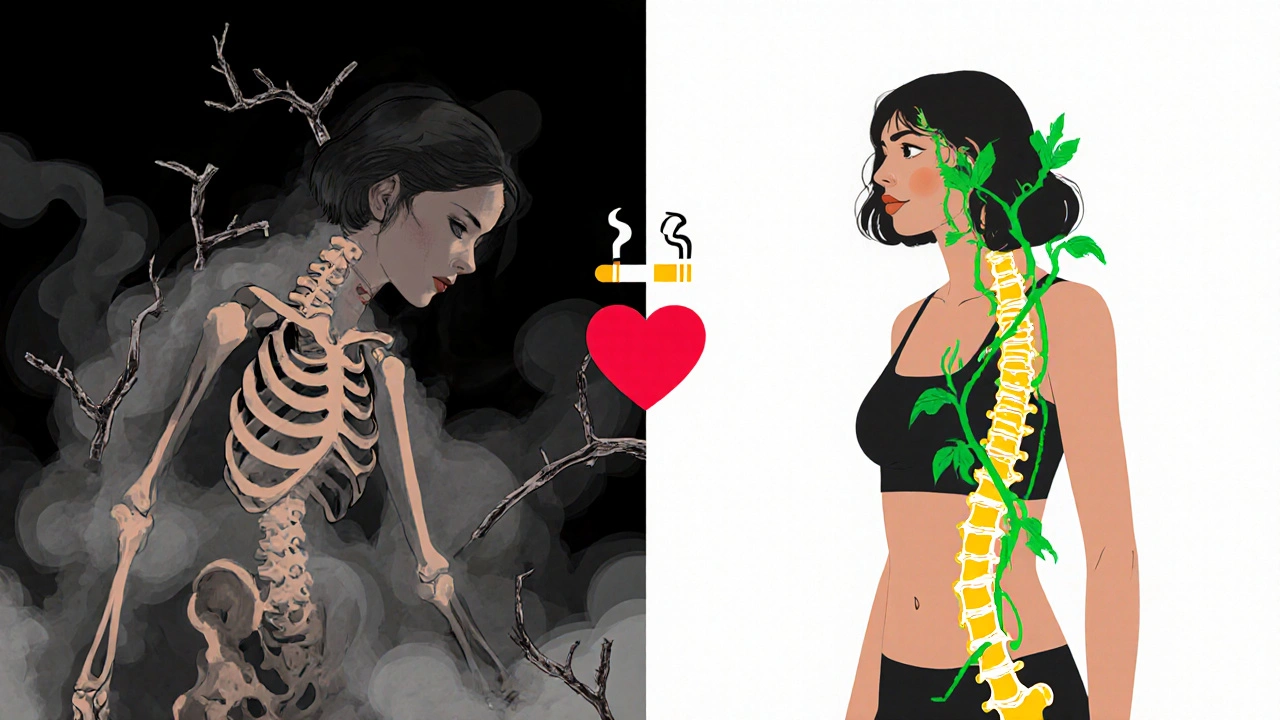
After menopause, your estrogen levels fall. That’s normal. But smoking turns that normal change into a danger zone. Estrogen helps keep your bones strong. Smoking slows down the cells that build bone and speeds up the ones that break it down. The result? Faster bone loss. Women who smoke during menopause lose bone density up to 30% faster than non-smokers.
One in two women over 50 will break a bone because of osteoporosis. If you smoke, your risk goes up even more. Hip fractures after 65 can change your life forever-leading to long-term care, loss of independence, or even death. Quitting smoking at any age helps slow bone loss. Studies show that women who quit before 50 reduce their fracture risk to nearly the same level as women who never smoked.
Heart Disease Is the Real Killer
Many women think cancer is the biggest threat after menopause. It’s not. Heart disease kills six times more women than breast cancer. Smoking is one of the top three causes of heart disease in postmenopausal women. When you smoke, your arteries stiffen. Your blood pressure rises. Your cholesterol gets worse-bad LDL goes up, good HDL goes down.
And here’s the kicker: after menopause, your natural protection against heart disease fades. Smoking removes the last bit of that shield. Women who smoke and go through menopause are three times more likely to have a heart attack than non-smokers their age. Quitting cuts that risk in half within one year. After five years, it’s almost the same as someone who never smoked.
Quitting Slows Early Menopause
If you started smoking in your 20s or 30s, you might have already hit menopause earlier than you should have. Smokers tend to reach menopause one to two years sooner than non-smokers. That’s because smoking damages your ovaries and lowers estrogen faster. Early menopause means more years living with low estrogen-which means more time at risk for heart disease, osteoporosis, and cognitive decline.
Quitting won’t bring back your periods, but it can stop the clock from ticking faster. Even if you’ve already entered menopause, stopping smoking slows down how quickly your body loses its remaining hormones and protective functions.
What Happens When You Quit?
You don’t have to wait for the perfect time. Quitting during menopause isn’t harder-it’s more important. Here’s what you can expect:
- Within 20 minutes: Your heart rate drops.
- Within 12 hours: Carbon monoxide leaves your blood-oxygen levels rise.
- Within 2 weeks: Circulation improves. Breathing gets easier.
- Within 4 weeks: Hot flashes begin to ease for many women.
- Within 6 months: Your sense of taste and smell return. Sleep gets better.
- Within 1 year: Heart disease risk drops by 50%.
And the benefits keep growing. After 10 years, your risk of lung cancer drops by half. After 15 years, your heart disease risk matches that of a lifelong non-smoker.
What Works When You’re in Menopause
Quitting is harder when you’re dealing with mood swings, sleep trouble, or cravings. But you’re not alone. Here’s what actually works for women in menopause:
- Low-dose nicotine patches: These are safe during menopause and help reduce cravings without the toxins in smoke. Avoid nicotine gum if you have jaw pain or dental work.
- Behavioral therapy: Talking to a counselor who understands menopause helps you find new ways to cope with stress-without a cigarette.
- Exercise: Even 20 minutes of walking a day reduces cravings and improves mood. Yoga and tai chi help with hot flashes too.
- Non-nicotine meds: Varenicline (Chantix) and bupropion (Wellbutrin) are proven to help. Talk to your doctor-especially if you’re on hormone therapy.
Don’t try to quit cold turkey unless you’ve done it before. Menopause already stresses your body. Add withdrawal on top, and you’re setting yourself up to fail. Use support. Use tools. Use time.
What to Avoid
Some things sound helpful but actually make quitting harder:
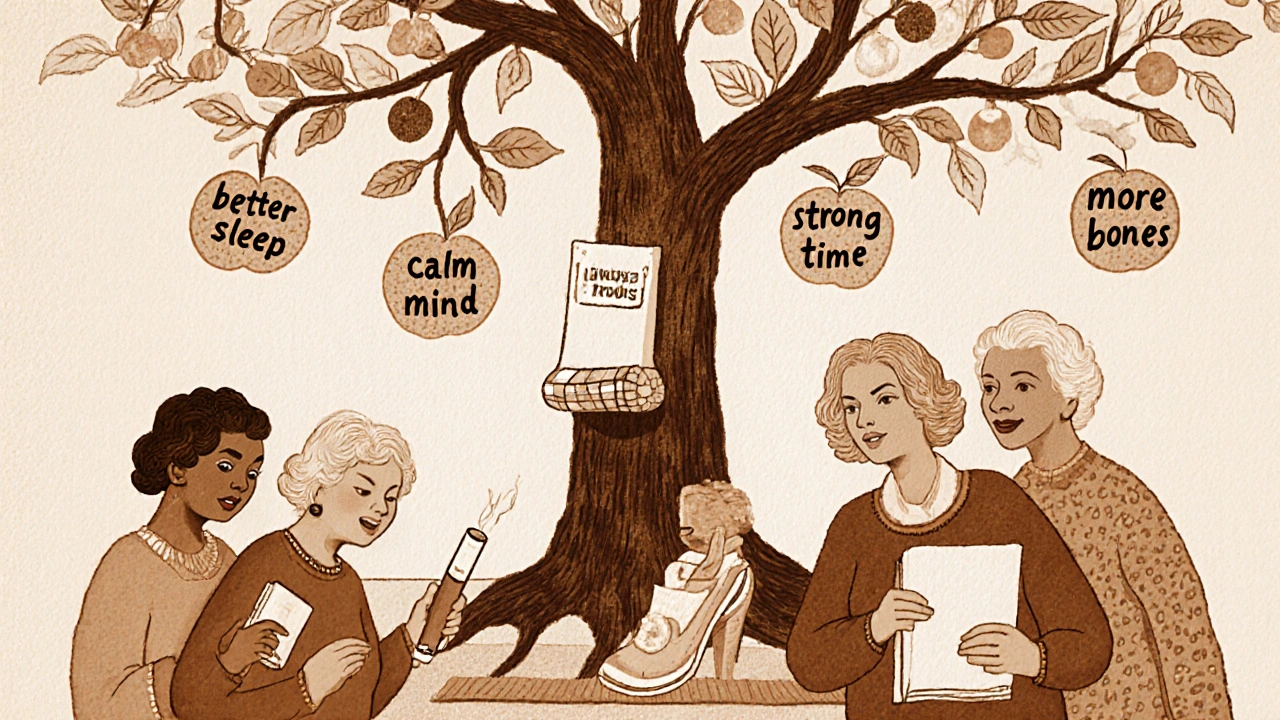
- Alcohol: It lowers your willpower and triggers cravings. Skip the wine at dinner.
- High-sugar snacks: They give a quick energy boost but crash your mood. Swap them for nuts, fruit, or yogurt.
- Trying to quit alone: Women who join support groups are twice as likely to succeed. Online communities, local programs, or even a friend who’s also quitting-find your people.
It’s Never Too Late
Some women think, ‘I’ve smoked for 30 years. What’s the point now?’ The point is this: every day without smoke gives your body a chance to heal. A 2024 study in The Lancet followed 12,000 women over 60 who quit smoking after menopause. Those who quit lived, on average, 5 years longer than those who kept smoking. They had fewer hospital visits, less pain, better mobility, and more energy to enjoy time with family.
You don’t need to be perfect. Miss a day? Start again tomorrow. Crave a cigarette? Drink water. Walk outside. Call someone. You’ve survived menopause so far. You can survive quitting too.
Does quitting smoking help with hot flashes?
Yes. Many women notice fewer and less intense hot flashes within 3 to 4 weeks after quitting. Smoking disrupts your body’s temperature control, so removing nicotine helps your hypothalamus reset. A 2023 study showed that women who quit smoking reported a 40% drop in hot flash frequency within one month.
Can I use nicotine patches during menopause?
Yes, low-dose nicotine patches are safe and recommended for women going through menopause. They deliver nicotine slowly without the toxins in smoke. Avoid nicotine gum if you have jaw pain or dental issues. Always check with your doctor if you’re on hormone therapy or have heart conditions.
Does smoking make osteoporosis worse during menopause?
Absolutely. Smoking cuts bone density faster after menopause by lowering estrogen and harming bone-building cells. Women who smoke lose bone up to 30% faster than non-smokers. Quitting slows this loss, and within a year, bone loss rates begin to normalize. The earlier you quit, the more bone you save.
Is it harder to quit smoking during menopause?
It can feel harder because mood swings, sleep issues, and stress are already high. But quitting now gives you the biggest payoff. Support tools like counseling, exercise, and non-nicotine medications (like bupropion) work well during this time. You’re not fighting your body-you’re helping it recover.
Will quitting smoking delay menopause?
No, quitting won’t bring back your periods or delay menopause if it’s already started. But if you haven’t reached menopause yet, quitting can help you reach it closer to the average age of 51. For women already in menopause, quitting slows the speed at which your body loses remaining hormone protection.
Next Steps
Start today. Write down why you want to quit. Is it to sleep better? To stop the hot flashes? To be around for your grandchildren? Keep that note where you can see it.
Call your doctor. Ask about nicotine replacement or medications like varenicline. Ask if they can refer you to a quit-smoking program designed for women over 50.
Find one person to tell. A friend, a sister, a support group. Saying it out loud makes it real. And when you slip? Don’t give up. Just restart. Every day without smoke is a win.



12 comments
Herbert Scheffknecht
Smoking during menopause is like trying to fix a leaky roof with a blowtorch. You think you’re solving something, but you’re just making the whole house burn down faster. The body doesn’t care about your excuses-it just responds to what you feed it. Nicotine isn’t a stress reliever, it’s a stress amplifier disguised as a crutch. And when your hormones are already throwing a tantrum, why add another villain to the party?
I’ve seen women quit at 58 and suddenly sleep through the night. Not because they got lucky, but because their hypothalamus finally got a break. Your brain isn’t broken-it’s just been poisoned. Clean the poison, and the system recalibrates. It’s not magic. It’s biology.
People say ‘it’s too late.’ No. It’s never too late to stop digging the hole you’re in. You don’t need to be perfect. You just need to stop making it worse. One day without smoke is one day your bones thank you. One day your heart forgets it’s supposed to be scared. One day your hot flashes whisper instead of scream.
Abdula'aziz Muhammad Nasir
Thank you for this clear, science-backed breakdown. In many parts of the world, including my home in Nigeria, menopause is still treated as a private embarrassment rather than a physiological transition requiring care. The link between smoking and accelerated bone loss is especially critical-many women here rely on traditional remedies without understanding how toxins like nicotine directly interfere with calcium metabolism.
I encourage every woman reading this to speak with a healthcare provider about nicotine replacement therapy. It is not a replacement for willpower, but a tool to restore balance. The body heals faster than we assume, given the right conditions. Quitting is not surrender-it is reclamation.
Tara Stelluti
Okay but can we talk about how everyone acts like quitting is just a matter of ‘deciding’? Like, I’ve been through this. My therapist said ‘just breathe.’ My mom said ‘stop being dramatic.’ My husband said ‘you’re not dying yet.’ Meanwhile, I’m sweating through three shirts a day and craving cigarettes like they’re oxygen. And now they want me to ‘use yoga’? I need a damn IV of nicotine and a nap.
Also-why is it always women’s fault? Who made smoking sexy in the first place? Advertisements. Men. The patriarchy. Now we’re supposed to fix it alone while our hormones are on a rampage? No. We need systemic support. Not guilt.
Danielle Mazur
Let’s be real-this whole ‘quit smoking for menopause’ narrative is a distraction. Big Pharma wants you to believe nicotine patches are safe, but they’re just another gateway. The real enemy? Hormone therapy. They’re pushing estrogen patches while telling you to quit cigarettes? Coincidence? I don’t think so. The FDA approved these drugs decades ago without long-term studies. And now you’re being told to swap one chemical dependency for another?
What they won’t tell you: smoking might be bad, but the real danger is losing control over your own body. The system wants you dependent on their solutions. Don’t be fooled. Find natural ways. Cold showers. Herbal teas. Walk barefoot. That’s real healing. Not pills. Not patches. Not corporate-approved fixes.
Margaret Wilson
OMG I QUIT!! 🎉💃 And guess what? My hot flashes went from ‘I’m melting in the freezer aisle’ to ‘oh, that’s just a little warm.’ Like, I can now wear a sweater in July. I cried. Not because I was sad. Because I finally felt like me again. Also, I started eating almonds instead of cookies and now I don’t hate my reflection. Who knew?!
Also-thank you to the person who said ‘find your people.’ I joined a Reddit group for women 50+ quitting smoking and holy crap, it’s the only place I don’t feel like a failure. We post memes about nicotine withdrawal and call each other ‘cigarette survivors.’ It’s beautiful. And weird. And perfect.
Freddy Lopez
There is a profound irony in the way society treats women’s health: we are told to endure menopause in silence, then suddenly expected to perform perfect self-care as if it were a moral obligation. Quitting smoking is not a personal failure if you’ve smoked for decades-it is an act of reclamation, yes, but one that must be supported by systems, not shamed into existence.
The body is not a machine to be optimized. It is a living archive of choices, trauma, joy, and survival. To demand that a woman who has lived through war, poverty, abuse, or neglect now simply ‘quit’ is to ignore the context of her life. Compassion, not coercion, is the only ethical path forward.
Brad Samuels
I’m a guy, so I don’t go through menopause, but I’ve watched my mom quit after 40 years. It wasn’t pretty. She cried. She snapped. She ate a whole pizza at 2 a.m. But she kept going. And now? She’s hiking with her grandkids. She remembers what coffee tastes like. She doesn’t wake up gasping anymore.
My point? It’s not about being strong. It’s about being stubborn. You don’t have to believe in miracles. Just keep showing up. Even if you slip, you’re still ahead of where you were yesterday. That’s enough. That’s everything.
Will Phillips
They want you to quit smoking? Fine. But don’t you dare tell me it’s about health. It’s about control. The government wants you dependent on their ‘safe’ patches, their ‘approved’ meds, their ‘professional’ counselors. Who profits? Pharma. Who loses? You. Your autonomy. Your right to choose your own poison. They’ll tell you it’s for your own good. But you know what? I’d rather die on my own terms than live on theirs.
And don’t even get me started on ‘exercise.’ Like walking is going to undo 30 years of nicotine damage? Please. You think a yoga mat fixes bone density? It’s all a distraction. The real solution? Stop listening to the noise. Smoke if you want. Die if you want. Either way, they’ll still tax you for it.
Tyrone Luton
It’s interesting how we frame quitting as a victory. But what if the real victory is not needing to quit at all? What if we lived in a world where women weren’t pressured to smoke in the first place? Where stress wasn’t monetized into addiction? Where healthcare focused on prevention instead of damage control?
We talk about willpower like it’s a muscle. But willpower is a luxury. You can’t will your way out of poverty, trauma, or loneliness. And yet, here we are, blaming women for smoking during menopause while ignoring the systems that made smoking feel like the only comfort left.
Maybe the real question isn’t ‘how do we quit?’ but ‘how do we stop making life so unbearable that we need a cigarette to get through it?’
Jeff Moeller
I quit last year. 56. 30 years. Hot flashes vanished in 3 weeks. Bones stopped crumbling. Heart rate down. No patches. No meds. Just stopped. No drama. No fanfare. Just didn’t light up anymore. Done.
Greg Knight
Look, I know quitting sounds impossible. I’ve coached dozens of women through this, and I’ve seen the same pattern every time: they think they need to be perfect. They think they have to go cold turkey. They think they need to be ‘strong.’ But here’s the secret-no one is strong enough to fight withdrawal alone.
What works? Start small. One day without smoke. Then two. Then a week. Use the patches. Go to the group. Walk around the block when you crave one. Drink water. Chew gum. Call your sister. Don’t try to fix everything at once. Just fix the next step.
And when you slip? Don’t punish yourself. Don’t call yourself weak. Say, ‘Okay, that happened. Now what’s the next step?’ That’s resilience. That’s progress. That’s how you win-not by being perfect, but by never letting the next cigarette be the last one you ever take.
Every woman who quits after 50 doesn’t just save her health. She rewrites her future. She gives herself permission to live longer. To dance. To travel. To hug her grandkids without gasping for air. That’s worth every single day of discomfort.
You’ve survived menopause so far. Now let’s help you survive the next 30 years. One breath at a time.
darnell hunter
It is regrettable that the article fails to adequately address the socioeconomic disparities inherent in cessation programs. The recommendation of nicotine patches, behavioral therapy, and pharmaceutical interventions presupposes access to healthcare, disposable income, and time off work-luxuries not universally available. Furthermore, the emphasis on individual responsibility obscures structural failures in public health policy. Women in low-income communities, particularly those without insurance, are systematically disadvantaged in achieving cessation outcomes. The burden of health maintenance should not be placed solely upon the individual, particularly when systemic inequities remain unaddressed.