
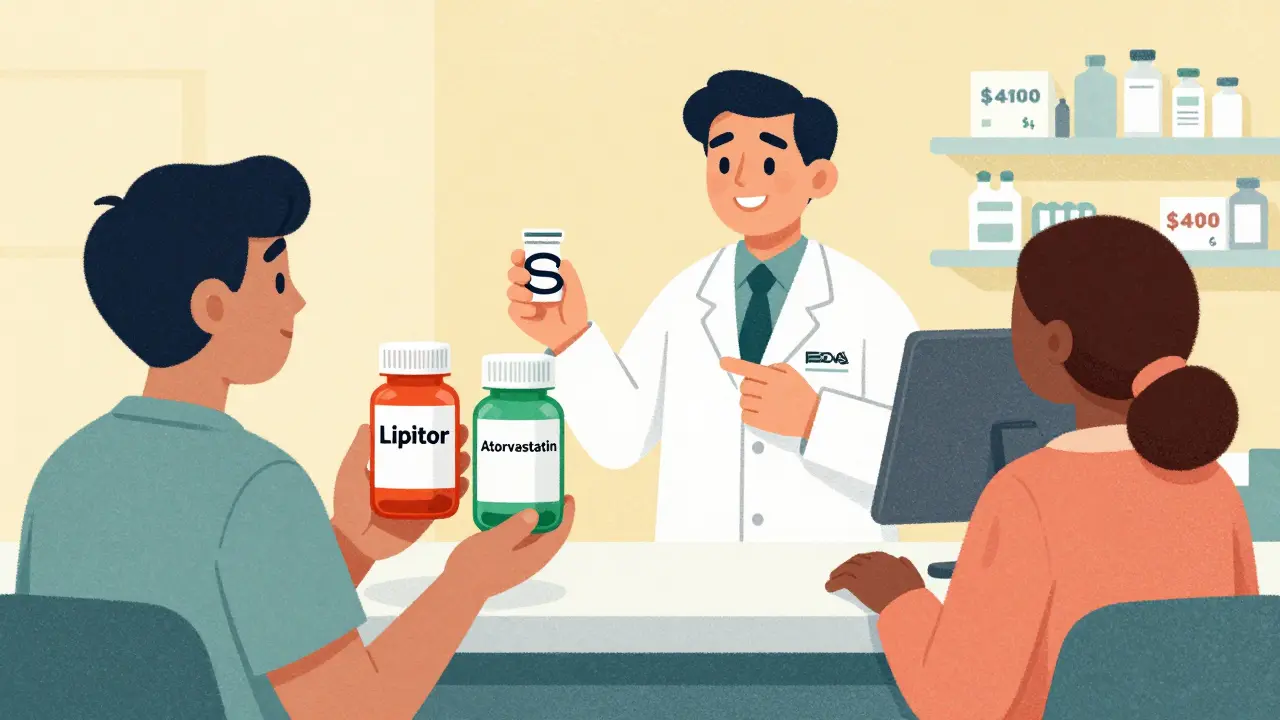
Every year, millions of people in the U.S. face a simple but powerful choice at the pharmacy counter: take the brand-name drug their doctor prescribed, or switch to the much cheaper generic version. For many, the decision comes down to cost. But should it? When you’re managing a chronic condition like high blood pressure, depression, or diabetes, the wrong choice can mean skipped doses, worse symptoms, or even hospital visits. The truth is, most of the time, generics work just as well. But not always. Understanding the real differences-and knowing when to push back-can save you money, stress, and maybe even your health.
What Exactly Is a Generic Drug?
A generic drug isn’t a copy. It’s the same medicine. By law, it must contain the exact same active ingredient, in the same strength, and work the same way in your body as the brand-name version. The FDA requires that generics meet the same strict standards for purity, stability, and dosage form. That means if your doctor prescribes atorvastatin for cholesterol, the generic version has the same molecule, the same dose, and the same effect as Lipitor. The only things that can be different are the color, shape, size, and the inactive ingredients-like fillers, dyes, or preservatives. These don’t affect how the drug works, but they can cause rare allergic reactions in sensitive people.Why Are Generics So Much Cheaper?
Brand-name drugs cost a lot because the company that developed them had to pay for years of research, clinical trials, and marketing. Once the patent expires-usually 20 years after the drug was first filed-other companies can make the same drug without repeating those expensive steps. They don’t need to prove the drug works again. Instead, they prove it behaves the same in the body. That’s called bioequivalence. The FDA requires that the generic delivers the same amount of active ingredient into your bloodstream within the same time frame as the brand. Studies show the difference in absorption is typically just 3.5%, far less than the 20% allowed by law. This is why a 30-day supply of sertraline (generic Zoloft) costs about $4, while the brand version runs $400. That’s not a marketing trick. It’s the result of competition.Do Generics Work as Well?
Yes-98.5% of the time. A major 2019 review in JAMA Internal Medicine looked at 47 studies involving nearly 10,000 patients. It found no meaningful difference in effectiveness or safety between generics and brand-name drugs across heart disease, mental health, and diabetes medications. The same holds true for antibiotics, blood pressure pills, and most common prescriptions. The American College of Physicians says generics should be the default choice unless there’s a specific reason not to. The only exceptions are drugs with a narrow therapeutic index-where even tiny changes in blood levels can cause harm. These include warfarin (a blood thinner), levothyroxine (for thyroid disease), and phenytoin (for seizures). For these, doctors often recommend sticking with one brand to avoid even small variations. But even here, research shows most patients do fine switching, as long as their levels are monitored.When Should You Stick With the Brand?
There are real cases where brand-name drugs make sense. First, if you’ve had a bad reaction to a generic’s inactive ingredients-like a rash, stomach upset, or dizziness-you should ask your doctor to note “dispense as written” on the prescription. Second, if you’re on a drug with a complex delivery system, like an inhaler or a patch, the device matters. A 2016 study found that 12% of patients switching from Advair Diskus to a generic version had trouble using the new inhaler properly, even though the medicine inside was identical. Third, some extended-release pills, like Wellbutrin XL, have had documented cases where patients felt less effective on certain generics. The FDA issued a warning about this in 2012. If you notice your symptoms returning after a switch, don’t assume it’s all in your head. Talk to your pharmacist or doctor.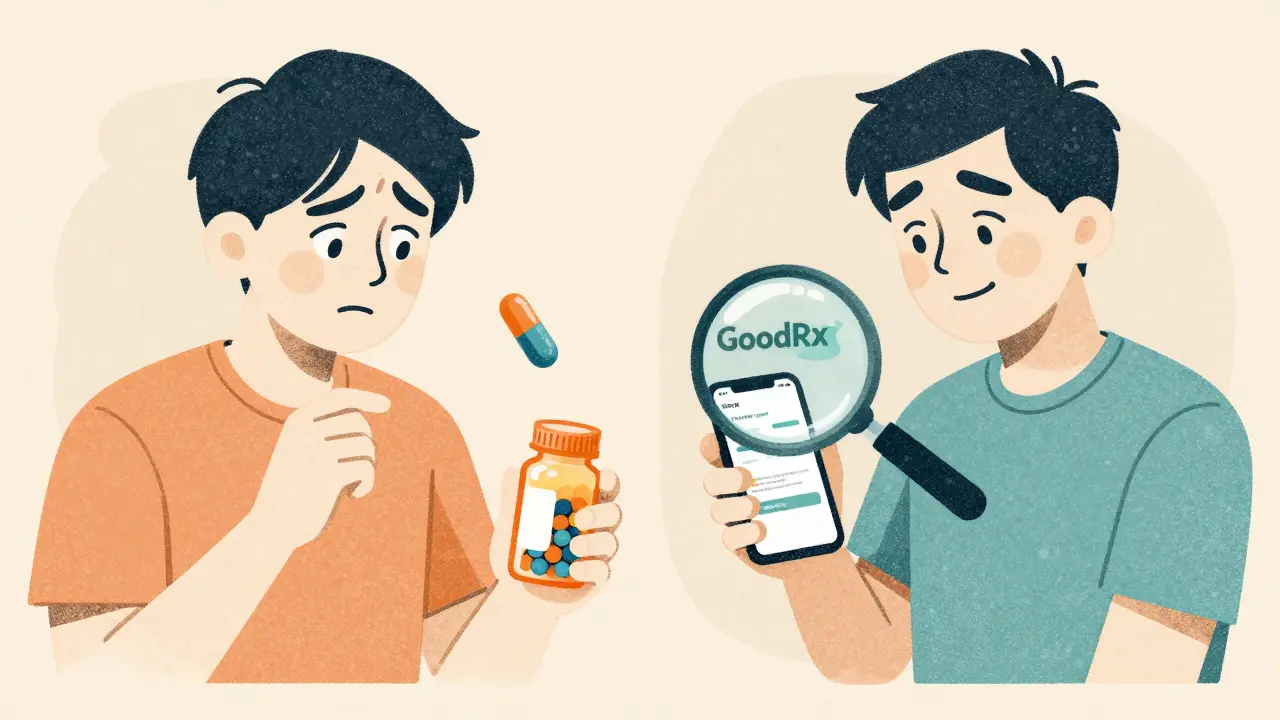
Cost Isn’t Just a Number-It’s a Health Issue
The biggest reason to choose generic isn’t just savings. It’s adherence. People who can’t afford their meds skip doses, cut pills in half, or stop taking them altogether. A Kaiser Family Foundation study found that patients on brand-only drugs were nearly twice as likely to stop taking them because of cost. That’s dangerous. For example, skipping your blood pressure pill for a week can spike your risk of stroke. Generic drugs cut that risk by making treatment affordable. The average generic prescription costs $15. The average brand-name? $145. Over a year, that’s $1,500 saved. That’s rent. That’s groceries. That’s gas to get to your doctor’s office. The Generic Pharmaceutical Association says generics saved Americans $1.67 trillion between 2010 and 2019. That’s not a statistic. That’s millions of people who stayed healthy because they could afford their meds.What You Need to Know Before You Switch
Not all generics are created equal. There are dozens of manufacturers. One company’s version of metformin might look different from another’s. That’s normal. But if you switch between manufacturers and suddenly feel off, it’s worth asking your pharmacist: “Did the maker change?” Many pharmacies track this and can tell you. Use the FDA’s Drugs@FDA database to look up your medication and see which companies make it. Also, check the pill identifier tool on GoodRx-it shows pictures of pills so you know what to expect. If your pill suddenly looks different and you’re confused, don’t guess. Call your pharmacist. A 2023 study found that giving patients visual guides reduced medication errors by 37% during generic switches.State Laws and What You Can Control
In 49 states, pharmacists can automatically switch you to a generic unless your doctor writes “dispense as written.” In 28 states, they must notify you if you’re being switched for a narrow therapeutic index drug like levothyroxine. You have rights. If you’re uncomfortable with a switch, say so. Ask your doctor to write “dispense as written” on the prescription. You can also ask your pharmacist to fill your prescription with the same generic manufacturer every time. That consistency helps avoid small variations. And if your insurance forces you to switch and you’re not feeling well, file a formulary exception. Many plans will approve the brand if you can prove the generic isn’t working.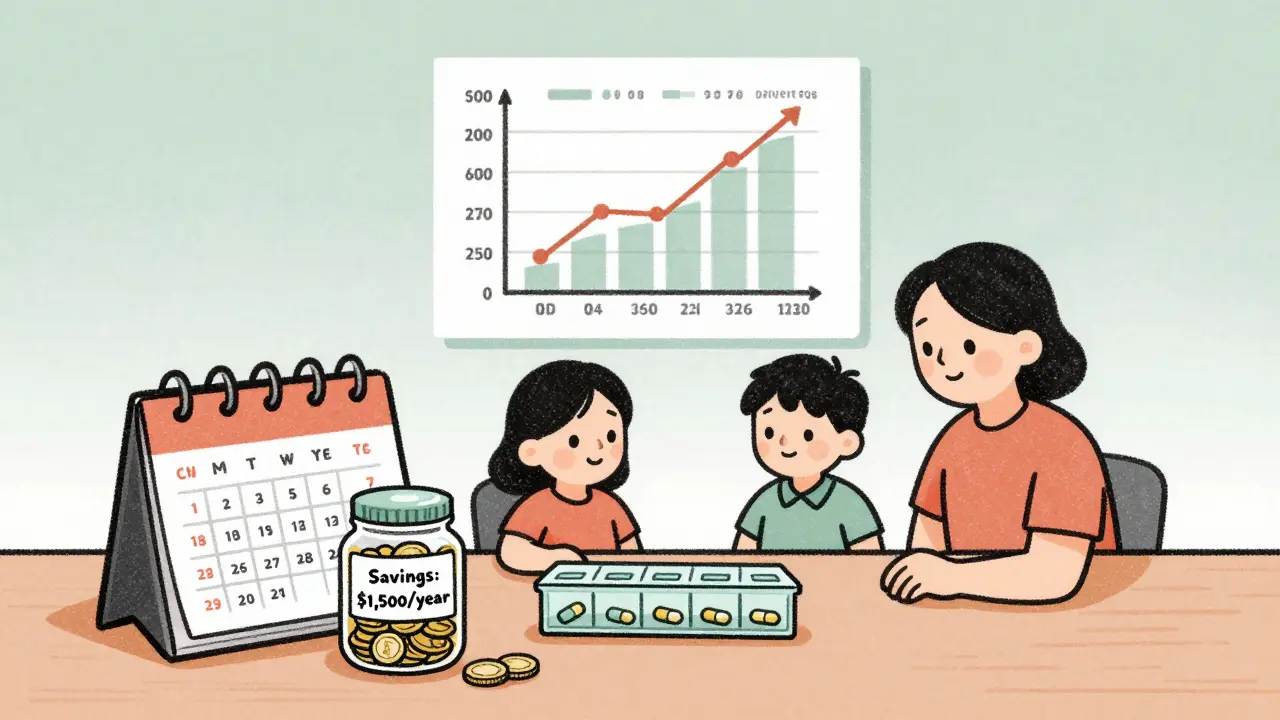
What’s Changing in 2026?
The Inflation Reduction Act, passed in 2022, will let Medicare negotiate prices on 10 high-cost drugs starting in 2026. That could push more brand-name drugs to go generic sooner. At the same time, the FDA is speeding up approval of complex generics-like inhalers and eye drops-that have been slow to enter the market. Right now, only 35% of off-patent complex drugs have generic versions. That’s changing. More options mean more competition, which means lower prices. But it also means more variety in how the drugs are delivered. That’s why patient education is more important than ever.Real Stories, Real Results
On Drugs.com, a user wrote: “Switched from Lyrica ($650/month) to generic pregabalin ($15/month). My nerve pain? Same. My bank account? Better.” Another said: “I was scared to switch my antidepressant. But after three months, I felt just as good-and saved $400 a month.” Then there’s the flip side: Reddit users in r/pharmacy report confusion when pills change color. One man said he stopped taking his generic thyroid pill because it looked “wrong,” even though his doctor assured him it was fine. He ended up with a heart rhythm issue because his TSH levels drifted. He didn’t know to get his blood tested after the switch.What Should You Do?
Start by asking your pharmacist: “Is there a generic for this?” If yes, ask: “Which manufacturer makes it?” Then ask your doctor: “Is this a drug where switching could be risky?” If you’re on a blood thinner, thyroid medicine, or seizure drug, get your levels checked after a switch. For everything else, try the generic. If you feel worse, don’t ignore it. Go back to your doctor. But don’t assume the brand is better just because it’s more expensive. Most of the time, it’s not.Are generic drugs as safe as brand-name drugs?
Yes. The FDA requires generics to meet the same strict standards for safety, strength, quality, and performance as brand-name drugs. They use the same active ingredients and must prove they work the same way in your body. The only differences are in color, shape, or inactive ingredients-which rarely cause issues.
Why do some people say generics don’t work for them?
In rare cases, people notice changes after switching-like feeling less effective or having side effects. This usually happens with drugs that have a narrow therapeutic index (like warfarin or levothyroxine) or complex delivery systems (like inhalers). It can also happen if you’re sensitive to an inactive ingredient in a specific generic version. If you notice a change, talk to your doctor and pharmacist. Don’t assume it’s all in your head.
Can I ask my doctor to prescribe only brand-name drugs?
Yes. You can ask your doctor to write “dispense as written” or “no substitutions” on your prescription. But unless you have a documented reason-like an allergy or a proven reaction to a generic-you’re likely paying more than necessary. Most doctors will support using generics to keep your care affordable.
How do I know if my generic is from a different manufacturer?
Check the pill’s appearance-color, shape, and imprint code. If it looks different from your last refill, ask your pharmacist if the manufacturer changed. You can also look up your medication on the FDA’s Drugs@FDA database or use GoodRx’s pill identifier tool to see what different versions look like.
Are there any drugs where generics aren’t available yet?
Yes. Biologics-like insulin, rheumatoid arthritis drugs, and cancer treatments-are more complex and don’t have true generics. Instead, they have “biosimilars,” which are highly similar but not identical. These are still much cheaper than the brand, but not as low-cost as traditional generics. Many biosimilars are now entering the market, and prices are dropping fast.
If you’re managing a long-term condition, your medication isn’t just a pill-it’s part of your daily life. Choosing the right version isn’t about brand loyalty. It’s about making sure you can afford to take it, that it works for you, and that you understand what you’re taking. Generics aren’t a compromise. For most people, they’re the smarter, safer, and more responsible choice.





13 comments
bob bob
Just switched my blood pressure med to generic last month. No difference in how I feel, and I saved $120 a month. That’s a whole extra grocery trip. Why pay more when it’s the same stuff?
mark etang
It is imperative to underscore that the regulatory framework governing generic pharmaceuticals in the United States is among the most rigorous in the world. The Food and Drug Administration mandates bioequivalence thresholds that are not only statistically significant but clinically irrelevant in the vast majority of cases. To suggest otherwise is to misunderstand the science underpinning modern pharmacology.
josh plum
Yeah right. The FDA? Big Pharma’s puppet. Generics are cut-rate junk made in shady labs overseas. You think they really test every batch? Nah. They just stamp ‘FDA Approved’ on the box and laugh while you get sick. I’ve seen people crash after switching - they don’t tell you that on TV.
John Ross
Let’s clarify the pharmacokinetic parameters here: bioequivalence is defined as 80–125% AUC and Cmax confidence intervals relative to the reference product. That’s not ‘close enough’ - that’s statistically validated equivalence. The 3.5% variability cited in the post? That’s within the intra-subject variation observed even in brand-name trials. The real issue isn’t efficacy - it’s psychological anchoring and placebo-driven perception.
Brendan F. Cochran
generic? lol. they just make it look diff and charge less. i got my thyroid med switched and felt like a zombie for weeks. my doc said it was 'all in my head' - nah bro, it was the cheap crap. now i pay extra and sleep better. america needs to stop pushing this scam.
jigisha Patel
Statistical equivalence does not equate to clinical equivalence in patients with comorbidities. The JAMA review you cite excluded patients with polypharmacy, renal impairment, and elderly populations - precisely those most vulnerable to minor pharmacokinetic deviations. Your assertion that generics are universally safe is dangerously reductive.
Catherine HARDY
Ever notice how every time a new generic hits the market, the brand-name company starts a new ad campaign? Coincidence? Or are they paying off the FDA to delay generics? I’ve read the documents - they’re hiding data on dissolution rates. They don’t want you to know how much they’re skimming off the top.
Vicki Yuan
I’m a nurse, and I’ve watched patients switch from brand to generic every day. The vast majority do fine - but I always check in at the 2-week mark. If someone says they feel off, I don’t dismiss it. I check labs, review pill appearance, and confirm the manufacturer. Consistency matters. And yes, sometimes a different filler causes GI upset. It’s not all in their head - it’s just not always the active ingredient.
Uzoamaka Nwankpa
I don’t trust this system. My mother died because they switched her heart med to a cheaper version and no one told her. Now I don’t take anything unless it’s the brand. I know what they’re doing. They don’t care if you live or die - as long as the profit margin is high.
Chris Cantey
Is the pill not just a symbol of our alienation from nature? We reduce the body to a chemical equation, then outsource its repair to multinational corporations who optimize for shareholder value, not human flourishing. The generic is the ultimate commodity - stripped of identity, meaning, and care. What does it mean to be healed by something you cannot name?
Abhishek Mondal
...And yet, you fail to account for the inter-manufacturer variability in dissolution profiles, particularly for BCS Class II drugs... which, by definition, exhibit solubility-limited absorption... and thus, even minor excipient changes can significantly alter bioavailability... which, statistically, is negligible in healthy adults... but catastrophic in those with gastroparesis... or post-bariatric surgery... or... well, you get the point... right?
Oluwapelumi Yakubu
Man, in Nigeria, we don’t even have generics - just fake pills with sugar and chalk. You think America’s got it bad? Here, if your medicine changes color, you call the police. We don’t trust no ‘FDA’ - we trust our granny’s herbs. But you folks? You’re so busy arguing about 3.5% absorption you forget half the people can’t even afford the generic. That’s the real crisis.
Terri Gladden
OMG I switched my antidepressant and my cat started hissing at me and I swear the sky turned gray for three days?? I know it was the generic. I’m never going back. I cried for 45 minutes after the first pill. My therapist said I was ‘projecting’ - but I KNOW it was the pill. #GenericTrauma