
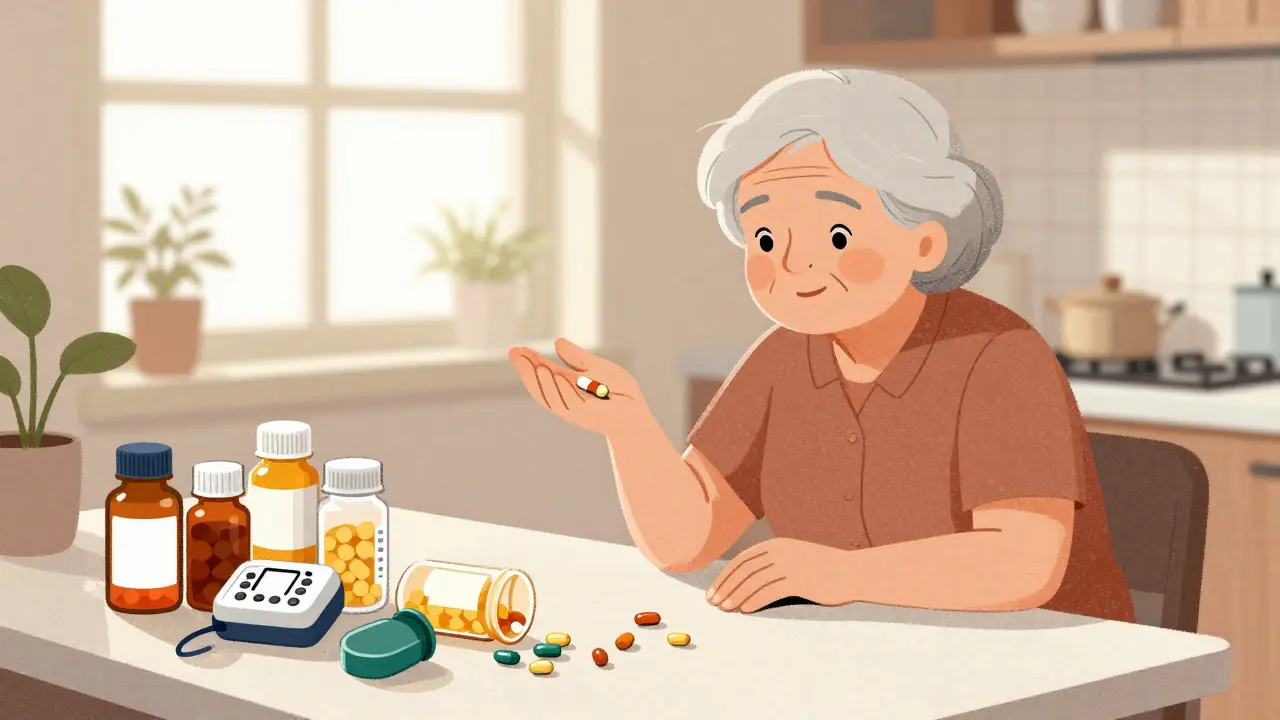
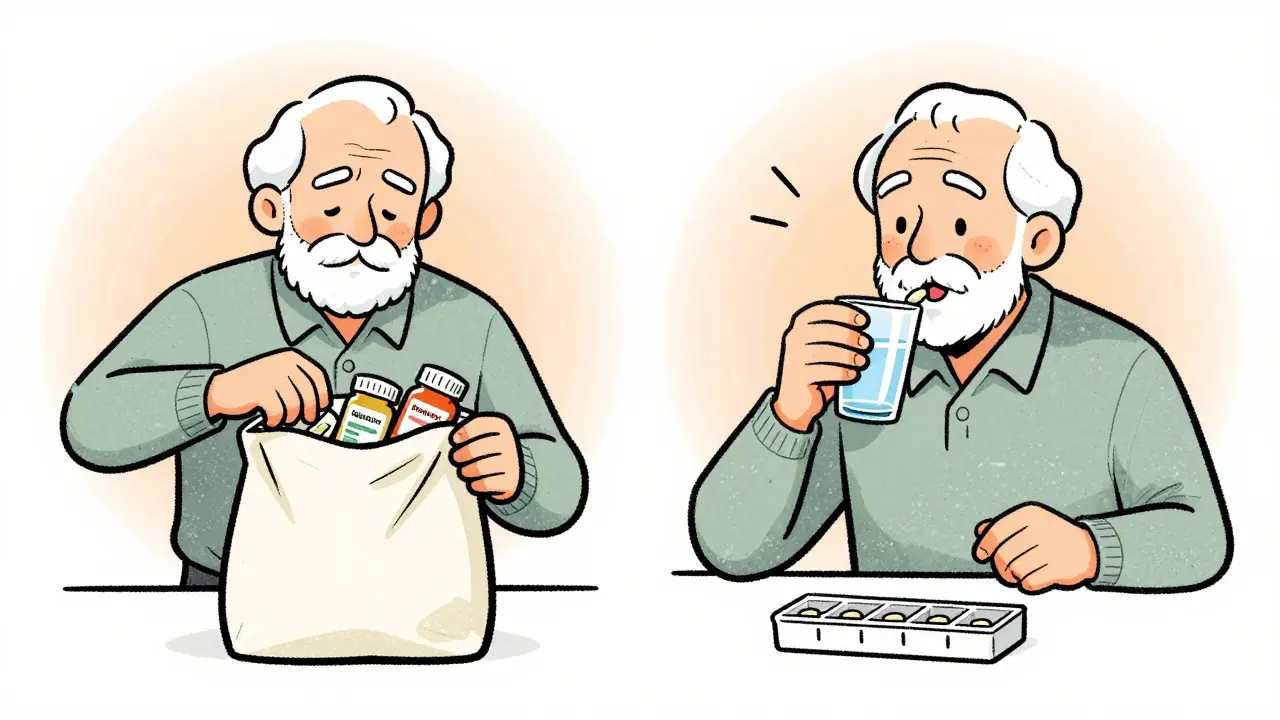
Imagine this: You wake up, make your coffee, and then spend 15 minutes sorting through a dozen pills - some in the morning, some at night, some with food, some without. Your partner helps you keep track. Your pharmacy bag looks like a mini pharmacy. This isn’t unusual. For many seniors managing multiple chronic conditions, this daily ritual is normal. But it’s also dangerous. Taking too many pills increases the chance of mistakes, side effects, and hospital visits. The good news? There’s a smarter way: combination medications.
What Is Pill Burden, and Why Does It Matter?
Pill burden isn’t just about how many pills you swallow. It’s about how hard it is to keep up with them. When someone takes five, six, or even ten different medications a day, it becomes overwhelming. Memory slips. Pills get mixed up. Side effects pile up. Missing just one dose can throw off blood pressure, blood sugar, or heart rhythm. For seniors, this isn’t a small problem - it’s a major health risk. Studies show that nearly 40% of older adults in the U.S. take five or more prescription drugs. That number jumps to over 60% for those with multiple chronic conditions like high blood pressure, diabetes, or heart disease. And here’s the kicker: up to half of these patients don’t take their meds as prescribed. Why? Too many pills. Too much confusion. Too much cost.How Combination Medications Cut the Pill Count
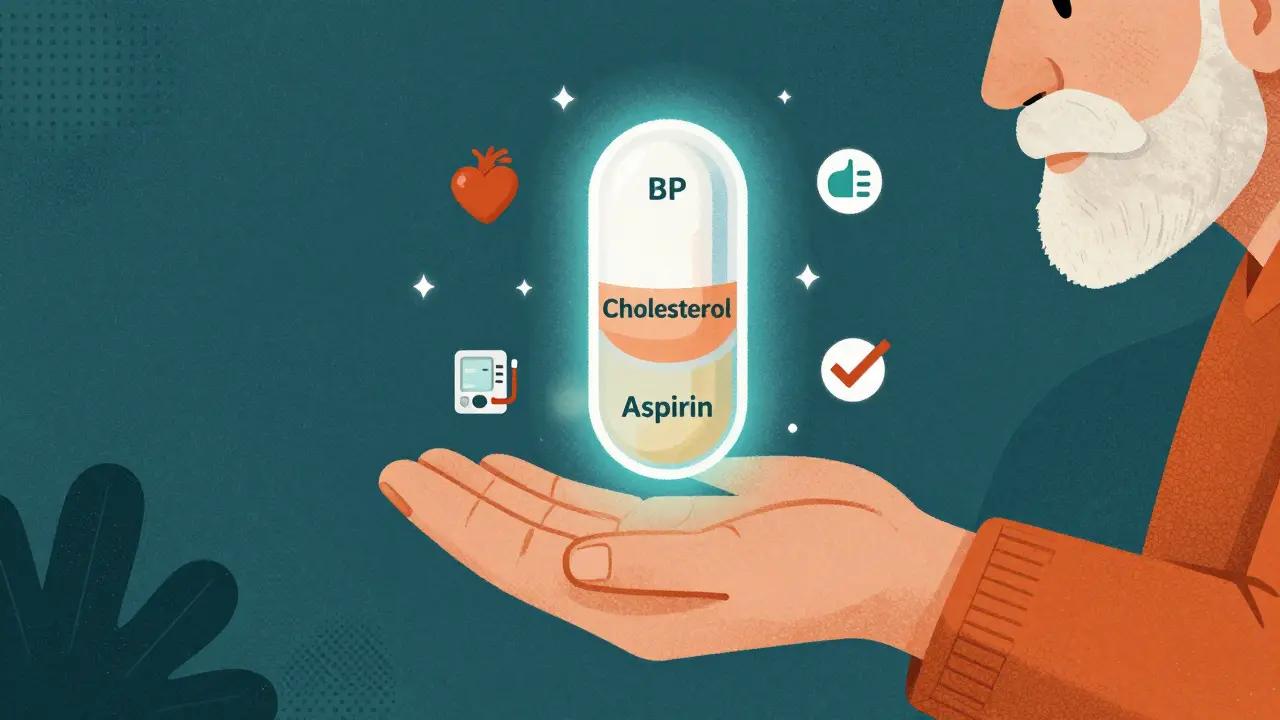
Combination medications - also called fixed-dose combinations (FDCs) or single-pill combinations (SPCs) - put two or more drugs into one tablet or capsule. Instead of taking a blood pressure pill, a cholesterol pill, and a diabetes pill separately, you might take one pill that does all three. That’s not magic. It’s science. These pills aren’t just convenience. They’re clinically proven. A 2007 meta-analysis in the American Journal of Medicine found that patients on combination pills were 26% more likely to stick to their regimen than those taking the same drugs separately. Why? Simpler routines mean fewer missed doses. Less stress. Fewer trips to the pharmacy. For example, a common combination for high blood pressure might include an ACE inhibitor and a diuretic. Instead of two pills, you take one. Same effect. Half the pills. Same cost. Better outcomes.Real Benefits: More Than Just Fewer Pills
The advantages go deeper than just reducing the number of pills you handle. Here’s what actually changes when you switch to a combination pill:- Higher adherence: Patients on SPCs are more likely to keep taking their meds long-term. One study showed a 12-week adherence rate 20% higher than with separate pills.
- Better control: Blood pressure drops more consistently. In a 2023 review of 86 studies, single-pill combinations lowered systolic pressure by nearly 4 mmHg more than taking the same drugs separately.
- Lower costs: Even if the combination pill costs more upfront, you save on co-pays, pharmacy trips, and avoidable hospital visits. One analysis found that SPCs saved up to 18% in overall healthcare spending.
- Less confusion: No more wondering if you took your morning pill. No more mismatched pillboxes. One pill, one time, one routine.
Where Combination Pills Work Best
Not every condition is a good fit. But for certain chronic diseases, combination pills are the gold standard:- Hypertension: The European Society of Cardiology recommends SPCs as first-line treatment for stage 2 high blood pressure. Over 23 of the 86 major studies on combination meds focused on blood pressure.
- Heart disease: Combining statins with blood pressure meds helps reduce heart attack risk. Some new “polypills” even include aspirin and folic acid.
- Diabetes: Some pills now combine metformin with SGLT2 inhibitors or DPP-4 inhibitors - one pill for two mechanisms of action.
- HIV: Single-tablet regimens have revolutionized HIV care. Missing a dose can lead to drug resistance. One pill a day makes that nearly impossible.
What You Need to Watch Out For
Combination pills aren’t perfect. They’re powerful - but not always flexible.- No dose adjustments: If your doctor needs to raise your blood pressure med but lower your diuretic, you can’t do that with a combo pill. You’re stuck with the fixed ratio.
- One side effect can ruin it: If you get a rash from one component, you may have to stop the whole pill - even if the other drugs are working fine.
- Not for everyone: If you’re still adjusting to a new medication, or if your needs change often, starting with separate pills might be smarter.
How to Talk to Your Doctor About It
Most doctors know about combination pills. But they don’t always bring them up. You have to ask. Here’s how:- Count your pills. Write down exactly what you take, when, and why.
- Ask: “Are any of my medications available in a combination pill?”
- Ask: “Would switching reduce my pill count without losing effectiveness?”
- Ask: “What if I have a side effect? Can I still take part of the combo?”
- Ask: “Is there a generic version? How much would it save me?”
What’s Next? The Future of Single-Pill Therapy
The next wave is even more promising. Researchers are testing “polypills” - single tablets with three or four drugs. One in development combines a statin, a blood pressure pill, and aspirin. Early trials show it cuts heart attack risk by 30% in high-risk patients. The CDC and the American Heart Association now recommend combination pills as part of a broader strategy - not just for convenience, but for survival. They say: “Simplify. Consolidate. Stick to it.” It’s not about taking fewer pills for the sake of it. It’s about taking the right pills - simply, safely, and consistently. That’s how you stay healthy longer.Can combination medications be used for all seniors?
No, not for everyone. Combination pills work best for seniors with stable conditions like hypertension, diabetes, or heart disease who are already taking multiple drugs. They’re less ideal if your doses need frequent adjustment, if you have allergies to one component, or if you’re still finding the right treatment. Your doctor should review your full medical history before switching.
Are combination pills more expensive than taking separate drugs?
Sometimes they cost more per pill, but overall, they often save money. You pay fewer co-pays, have fewer pharmacy visits, and reduce the risk of hospitalizations from missed doses. Many generic combinations now cost less than buying the individual pills separately. Always ask your pharmacist to compare the total monthly cost.
Can I split a combination pill if I need a lower dose?
Only if the pill is specifically designed to be split - and your doctor approves it. Many combination pills are not scored and shouldn’t be split. Splitting can change how the drug is absorbed, especially if it’s a time-release formula. If you need a lower dose, ask your doctor about a different combination or switching back to individual pills temporarily.
Do combination pills have more side effects?
Not necessarily. In fact, lower-dose combinations often cause fewer side effects because each component is given at a reduced amount. For example, a low-dose diuretic combined with a low-dose blood pressure pill may reduce dizziness compared to a high dose of one drug alone. But if you react to one component, you may need to stop the whole pill. Always report new symptoms to your doctor.
How long does it take to see benefits from switching to a combination pill?
You’ll notice the difference in routine almost immediately - fewer pills to manage, fewer reminders. But clinical benefits like better blood pressure or cholesterol control usually show up within 4 to 12 weeks. Your doctor will likely schedule a follow-up to check your numbers and make sure the combo is working as expected.



11 comments
Amber Gray
finally someone gets it 😍 i was taking 8 pills a day and my husband had to draw me a chart 🤦♀️ switched to combo meds and now it’s just 2 pills. life changed. no more pillbox chaos. also saved $200/month. thank u science 🙌
J. Murphy
lol yeah right. next theyll tell us to swallow a whole pharmacy in one gulp. sounds like big pharma's way to lock us in. dont trust em.
Jesse Hall
this is the kind of info we need more of 💪 i helped my mom switch last year and she says she finally feels like she can breathe again. no more panic when she sees that giant pill tray. small change = huge peace of mind. anyone else notice how much less stress there is?
Donna Fogelsong
combination pills? yeah right. thats just the government and big pharma pushing monoculture meds so they can track your biometrics. you think they care about your health? they care about your data. theyll add microchips next. dont fall for it.
Sean Bechtelheimer
i saw this on tiktok. someone said if u take combo pills u become part of the vaccine tracking network. i dont trust this. 👁️🗨️
Seth Eugenne
i love that this post doesn't sugarcoat the risks. my dad tried a combo pill and got a rash from one component - had to go back to separate meds. but the point is: talk to your doc. dont assume. ask. i wish more people did.
rebecca klady
i switched my mom to a combo for her bp and diabetes. she still forgets sometimes but now it's one forgettable pill instead of five. small win. still makes me feel better.
Namrata Goyal
this is such a western first world problem. in india we take 1 pill a day and still live till 90. you guys overmedicate everything. this isn't innovation. it's dependency.
Alex Arcilla
so let me get this straight - you’re telling me i can take my heart med, my bp med, and my cholesterol med… in one pill? like a superhero capsule? 🤯 i’m all in. also i just asked my pharmacist and he said the generic combo costs less than my coffee. that’s a win.
Jefferson Moratin
The reduction of pill burden is not merely a logistical convenience; it is an epistemological reconfiguration of therapeutic adherence. When the act of ingestion becomes singular, the cognitive architecture of compliance is simplified, thereby reducing the entropy of non-adherence. This is not pharmaceutical marketing - it is phenomenological optimization.
Caroline Dennis
SPCs = single-pill combinations. They reduce pill burden, improve adherence metrics, and lower 30-day readmission rates. But only if dosing is stable. Always check for drug interactions. Ask for a med rec. Your pharmacist can run a full profile in 5 mins. Do it.