
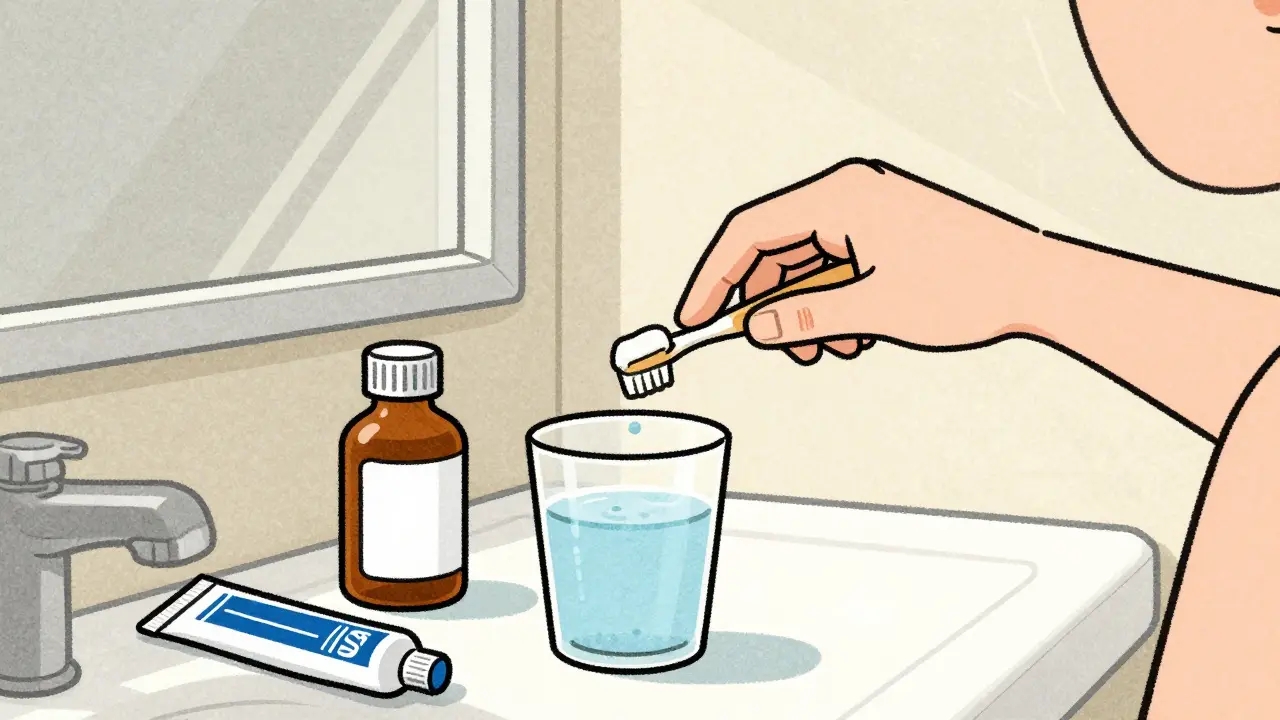
Missing a dose of your medication isn’t always forgetfulness. Sometimes, it’s just that your brain never linked the pill to something you already do every day. If you’ve ever looked at your medicine bottle and thought, “When was I supposed to take this?”, you’re not alone. About 60 to 70% of missed doses happen because people don’t have a reliable trigger - not because they’re careless or unmotivated. The fix isn’t another app, alarm, or pill organizer. It’s something simpler: pairing your medication with a daily habit.
Why Habit Pairing Works
Your brain loves routines. Brush your teeth every morning? Check your mail before coffee? Eat lunch at the same time? These aren’t just habits - they’re neural pathways your brain has wired over time. When you attach a new behavior - like taking a pill - to an existing one, your brain starts doing it automatically. No effort. No thinking. Just action. This isn’t just theory. A 2015 NIH study of 1,247 people with chronic conditions showed that habit pairing reduced missed doses by 30 to 50%. The American Heart Association, American Diabetes Association, and CDC all recommend it. And here’s the kicker: it costs nothing. No subscription. No gadget. Just your existing routine.The Seven Best Ways to Pair Medication with Daily Habits
Not all habits work equally well. Some are stronger anchors than others. Based on data from over 20,000 patients tracked by pharmacies and clinics, here are the most effective pairings:- Brushing your teeth - Especially powerful for morning medications. A 2023 Central Pharmacy analysis found that pairing morning pills with toothbrushing led to a 92% adherence rate. It’s consistent, happens daily, and usually takes place at the same time.
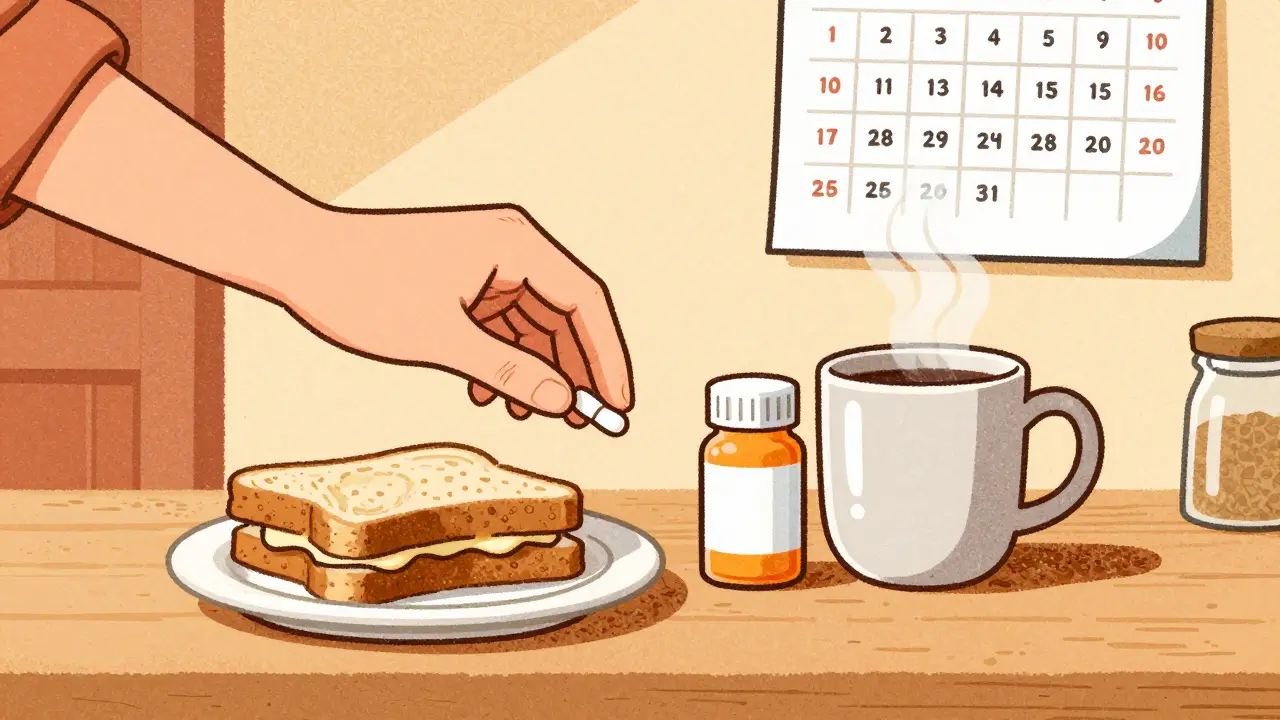
- Having breakfast - Ideal for medications that need food (like some diabetes or cholesterol drugs). The routine is predictable, and most people eat at roughly the same time. The American Diabetes Association recommends this for insulin and metformin users.
- Checking your mail - Surprisingly effective for daytime doses. People who check their mailbox after lunch or right after coming home from work naturally create a reliable cue. Central Pharmacy’s data shows 78% of users who used this method stuck with it for over a year.
- Drinking your morning coffee - If you brew coffee at the same time every day, use that moment. One Reddit user reported going from 12 missed doses a month to just 2 after linking their 8 a.m. pill to coffee-making.
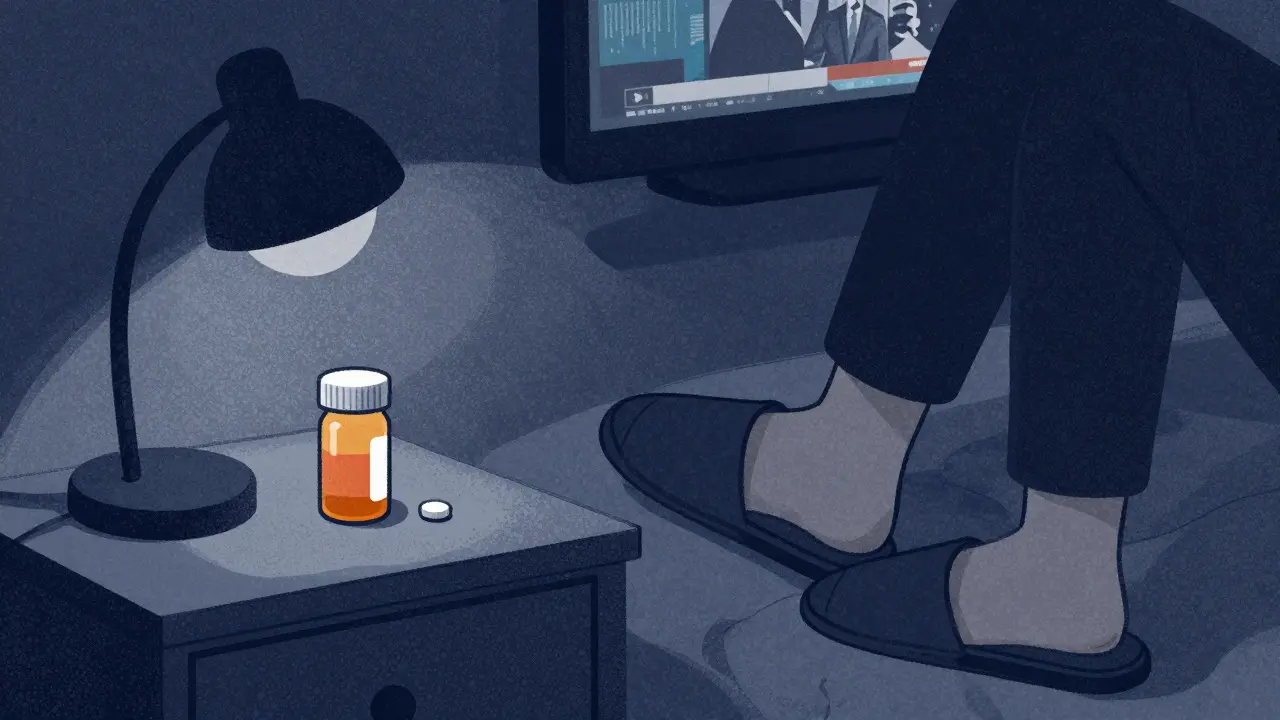
- Putting on your shoes - Great for evening or nighttime medications. If you always put on slippers or shoes before bed, that’s your cue. Works well for blood pressure meds or sleep aids.
- Washing your hands - A subtle but powerful trigger. Whether it’s before eating, after using the bathroom, or after coming inside, handwashing happens multiple times a day. Use one of those moments to take a pill.
- Watching the news or your favorite show - If you sit down at 7 p.m. every night for 10 minutes of TV, use that as your anchor. This works best for people with stable evening routines.
Where to Keep Your Medication
It’s not enough to just link the pill to a habit. You also need to make it visible. If your meds are tucked in a drawer, you’ll forget. Place them where the habit happens.- Keep your morning pills next to your toothbrush.
- Put your lunchtime pills right on the kitchen counter - not in the cabinet.
- Store nighttime meds in the bathroom, near the sink or on the nightstand.
Timing Matters More Than You Think
It’s not just about pairing - it’s about consistency. Taking your pill at 7:30 a.m. one day and 9:15 a.m. the next? That breaks the habit. The American Heart Association recommends keeping medication times within a 30-minute window daily. A 2022 study in the Annals of Internal Medicine showed that grouping doses within a one-hour window improved adherence by 27%. For example, if you take three pills a day, try to take them all within 30 minutes of breakfast, lunch, and dinner - not scattered across the day. This reduces mental load and makes it easier to stick with.What Doesn’t Work
You’ve probably tried apps, alarms, and pill boxes. They help - at first. But here’s the truth: app-based reminders have a 68% abandonment rate after three months. Why? They require constant attention. Your brain learns to ignore them. Pill organizers? They improve adherence by 28%. But when you combine them with habit pairing? That jumps to 41%. The organizer helps you see what to take. The habit tells you when to take it. Habit pairing fails for people with highly variable schedules - like shift workers or those with irregular sleep patterns. One nurse on Reddit said, “I worked 12-hour rotating shifts. My ‘routine’ changed every three days. I needed alarms, not toothbrushing.” For these cases, combine habit pairing with phone alarms synced to your daily schedule. It also doesn’t work for people with advanced dementia. In those cases, a caregiver needs to be involved. The Alzheimer’s Association advises against relying on habit pairing alone for this group.How to Start - A Simple 4-Step Plan
You don’t need to overthink this. Here’s how to begin:- Track your routine for 3 to 7 days. Write down what you do every day at the same time: wake up, shower, eat, walk the dog, watch TV, go to bed. Don’t change anything. Just observe.
- Match your meds to the habits. Look at your medication schedule. Which pills need to be taken with food? Which ones work best in the morning or at night? Then match them to your most consistent habits. Morning pill? Brushing teeth. Night pill? Putting on pajamas.
- Move your meds to the habit spot. Put your pill bottle right where the habit happens. Toothbrush? Put the bottle next to it. Coffee maker? Put it on the counter nearby.
- Wait 21 days. That’s the average time it takes for a new behavior to become automatic, according to a 2020 study in the European Journal of Social Psychology. Don’t give up before then. Even if you miss a day, keep going.
When Things Go Off Track
Life happens. You travel. You get sick. Your routine changes. That’s normal. The American Medical Association recommends having a “backup anchor.” For example, if you usually take your pill with breakfast but you’re traveling and don’t have access to food, switch to brushing your teeth. Or if you’re staying at a friend’s house and your pill bottle isn’t in its usual spot, keep a single dose in your wallet or purse with a note: “Take with morning coffee.” If you take multiple medications, group them. If you have three pills to take at night, take them all together within 15 minutes of brushing your teeth. That reduces complexity and builds stronger habit loops.What Experts Say
Dr. Jennifer L. Smith, a pharmacy professor at the University of Michigan, calls toothbrushing the “single most effective low-tech strategy we have.” Her 2022 study showed a 43% increase in adherence for morning medications when paired with brushing. Dr. David S. Sobel from Kaiser Permanente says habit pairing creates “neural pathways that make adherence automatic within 21 to 66 days.” The key word? Automatic. You stop thinking about it. You just do it. The Agency for Healthcare Research and Quality rates this method as “High Strength of Evidence” - the highest possible rating. And it’s not just for older adults. It works for teens, working parents, and retirees alike.What’s Next?
Digital tools are catching up. Apps like MyTherapy now let you link medication reminders to calendar events - like “coffee time” or “TV show starts.” Central Pharmacy’s new RoutineSync tool analyzes your activity logs over two weeks and suggests the best habit pairings for you. Future versions may even sync with smart home devices. Imagine your coffee maker turning on - and your phone buzzing: “Time for your pill.” But none of that matters if you don’t start with the basics. You don’t need tech. You need a habit. And you already have dozens of them. Find one. Attach your pill to it. And let your brain do the rest.Can I pair multiple medications with one habit?
Yes. If you take two or three pills at the same time of day, take them all together during one habit - like brushing your teeth or eating breakfast. Grouping doses within a 15- to 30-minute window makes it easier to remember and builds a stronger routine. Studies show this improves adherence by 27% compared to spreading them out.
What if I forget to take my pill one day?
Don’t panic. Missing one dose doesn’t ruin the habit. Just take it as soon as you remember - unless the label says not to. The goal isn’t perfection. It’s consistency over time. If you miss a day, take it the next time your habit happens. Most people who stick with habit pairing for 21 days are back on track within a few days.
Is this only for older people?
No. Habit pairing works for anyone with a stable routine - teens, working adults, retirees. The CDC reports that 42% of people over 65 use toothbrushing as their main anchor, but younger users report similar success with coffee, lunch, or bedtime routines. Age doesn’t matter. Consistency does.
What if my schedule changes every day?
If you work rotating shifts, travel often, or have unpredictable days, habit pairing alone won’t be enough. Combine it with phone alarms set to your daily schedule. Some people use a pill organizer with labeled times (AM, PM, Night) and set alarms for each. The habit gives you a visual cue; the alarm gives you flexibility.
Do I need to use an app?
No. Apps can help, but they’re not necessary - and many get deleted after a few months. The most effective method is low-tech: place your pills where your habit happens, and let your routine do the reminding. Over 89% of users who followed this method without apps said it was the most helpful strategy they’d ever tried.
How long does it take to see results?
Most people notice a difference within 2 to 3 weeks. A 2020 study found that habits form in an average of 21 days. But if you’re taking multiple pills or have a complex schedule, it might take up to 66 days. The key is to keep going, even if you miss a day. After 30 days, it becomes second nature.
Can I use this with supplements or vitamins?
Absolutely. Habit pairing works for any pill you take regularly - whether it’s a prescription, over-the-counter painkiller, or daily vitamin. The same rules apply: link it to a consistent daily activity, keep it visible, and stick with it for at least three weeks.



8 comments
Milad Jawabra
Bro, I was taking my blood pressure med at random times until I stuck it next to my toothbrush. Now I don’t even think about it - I just do it. 92% adherence? That’s not a statistic, that’s a lifestyle upgrade. 🙌 No app, no alarm, just brushing and swallowing. My doctor was shocked. Try it. Your brain will thank you.
marjorie arsenault
I’ve been using this with my diabetes meds and it’s changed everything. I put my pills right on the counter next to my coffee maker. Every morning, I make coffee, take my pills, and sit down. It’s become part of my ritual. No stress. No guilt. Just… done. If you’re struggling, start with one pill and one habit. You don’t need to overhaul your life. Just tweak it.
Deborah Dennis
This is so basic. Of course pairing with habits works. It’s called classical conditioning. Pavlov’s dog. We’ve known this since 1903. Why is this even an article? Someone just repackaged psychology into a ‘hack’ and sold it to gullible people. Also, 92% adherence? Where’s the source? Did you even read the study? Or are you just repeating what some pharmacy blog said? 🙄
Donna Zurick
I used to miss doses all the time. Then I started putting my night pills on my nightstand next to my phone charger. Every night, I plug in my phone and take my pills. It’s stupid simple. I didn’t even realize how much mental energy I was wasting trying to remember. Now I just do it. No effort. No drama. Just life.
Tobias Mösl
Let me guess - this was written by a pharmaceutical marketing team trying to sell you on ‘low-tech solutions’ so they don’t have to fix the real problem: healthcare systems that make adherence impossible. You think brushing your teeth fixes systemic access issues? People who can’t afford meds or don’t have running water aren’t gonna benefit from ‘putting pills by the sink.’ This is wellness culture gaslighting. Real change requires policy, not toothbrushes.
tatiana verdesoto
My mom has dementia and we tried habit pairing - it didn’t work for her. But that doesn’t mean it’s useless. For people who can still form routines? It’s magic. I’ve seen it. My uncle took his meds for 3 years straight after pairing them with his evening walk. No alarms. No apps. Just shoes on = pill taken. I’m not saying it’s perfect. But it’s beautiful when it works. Don’t dismiss it because it doesn’t fit everyone.
Ethan Zeeb
For shift workers, this is useless. I worked nights for 10 years. My ‘routine’ was sleeping at 9 a.m. and waking at 5 p.m. Brushing teeth? At 5 p.m.? I didn’t even brush until I got home from work. You can’t force a habit on someone whose life is chaos. Alarms. Pill organizers. Caregivers. Those are the real tools. Stop pretending routine is universal.
Darren Torpey
Y’all are overthinking this. It’s not rocket science. You’ve got a habit? Great. You’ve got a pill? Perfect. Stick ‘em together. Boom. Automatic. I paired my vitamin with my morning shower. Now I can’t even get dressed without taking it. It’s like my body knows. No willpower needed. No apps. No guilt. Just… flow. Life’s too short to stress about pills. Let your routine do the heavy lifting. You’re not lazy - you just haven’t wired it right yet. Go try it. Right now. Put your bottle next to your coffee. I dare you.