
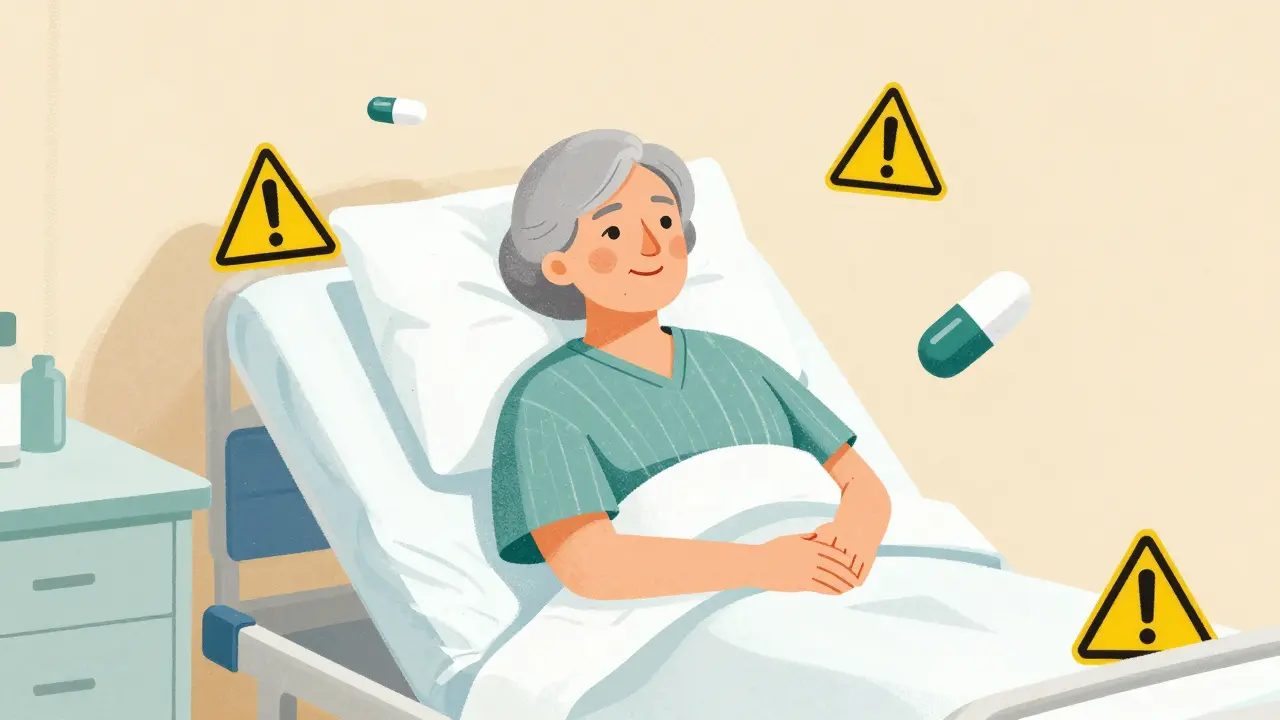
Every year, thousands of older adults end up in hospitals because of medications that should never have been prescribed in the first place. The Beers Criteria exist to prevent this. These guidelines help healthcare providers identify drugs that may do more harm than good for seniors.
Beers Criteria is a comprehensive, evidence-based set of guidelines identifying medications that may pose greater risks than benefits for individuals aged 65 years and older. Originally developed by Dr. Mark Beers in 1991, it is now updated regularly by the American Geriatrics Society (AGS). The latest version was published in 2023, reflecting new research on how aging affects drug metabolism.Why Older Adults Need Special Medication Guidance
As people age, their bodies change. Kidneys and liver process drugs differently. Muscle mass decreases, fat increases, and blood flow slows. These changes mean medications stay longer in the body or become more potent. For example, a dose that’s safe for a 40-year-old might cause dangerous side effects in an 80-year-old. This is why standard medication guidelines don’t always apply to seniors.
Polypharmacy-the use of multiple medications-is common among older adults. About 40% of seniors take five or more drugs daily. This increases the risk of harmful interactions. Studies show that Potentially Inappropriate Medications (PIMs) identified by the Beers Criteria lead to more hospital visits, falls, and even death. For instance, benzodiazepines (like Valium) increase fall risk by 30% in seniors, yet they’re still prescribed too often.
The Five Sections of the Beers Criteria
| Section | Description | Examples |
|---|---|---|
| Medications to avoid in most older adults | Drugs with high risks regardless of health condition | Benzodiazepines (e.g., Xanax), antipsychotics for dementia, NSAIDs (e.g., ibuprofen) |
| Medications to avoid with specific diseases | Drugs that worsen certain conditions | Anticholinergics for urinary incontinence in dementia patients, NSAIDs for heart failure |
| Medications to use with caution | Drugs that need careful monitoring | Metformin for kidney issues, warfarin for bleeding risk |
| Medications to avoid with renal impairment | Drugs dangerous for poor kidney function | ACE inhibitors for severe kidney disease, certain antibiotics |
| Drug-drug interactions | Combinations that cause serious side effects | Warfarin + aspirin (bleeding risk), SSRI antidepressants + tramadol (seizures) |
The 2023 update includes 131 specific criteria. For example, antipsychotic drugs like Risperdal are now strongly discouraged for dementia-related agitation because they increase stroke risk by 40%. Similarly, long-acting benzodiazepines (like Librium) are flagged due to their link to confusion and falls. These updates come from reviewing over 1,500 scientific studies published since 2019.
How Clinicians Use the Beers Criteria
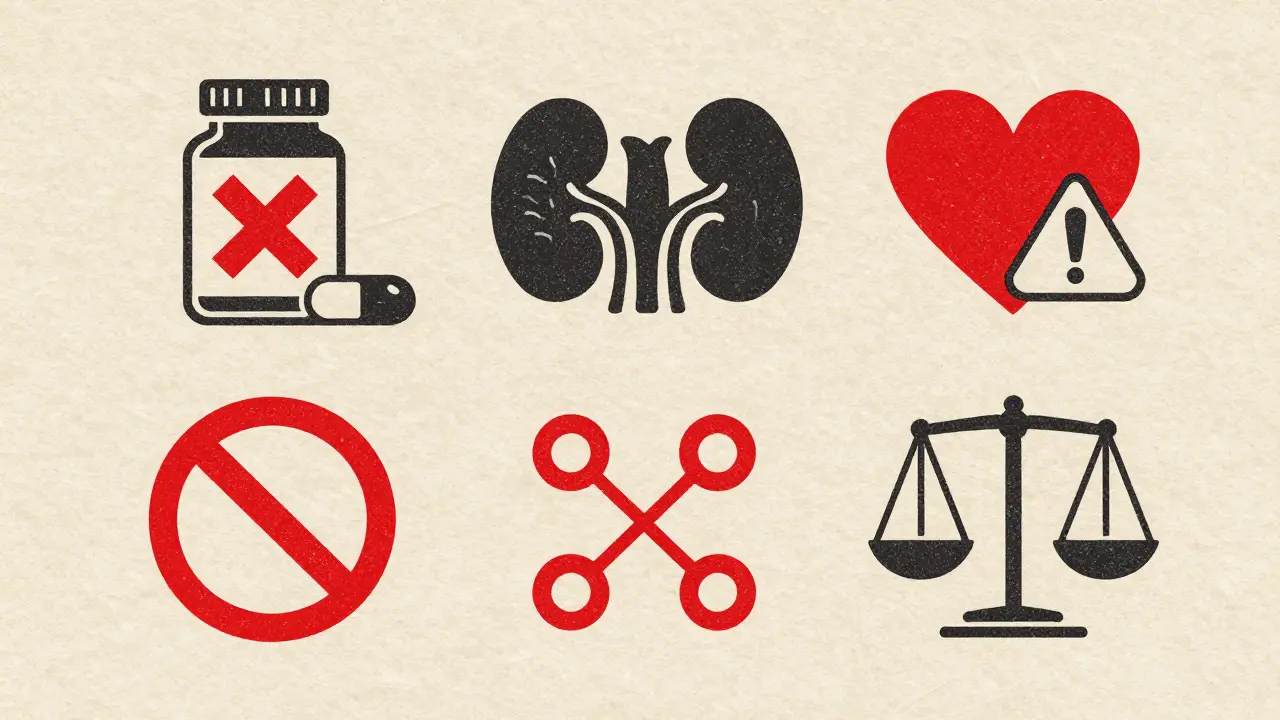
The AGS emphasizes that the Beers Criteria are not strict rules. They’re a tool to spark conversation between doctors and patients. For example, a doctor might see a senior on a high-risk medication and ask: "Is there a safer alternative? Are we monitoring side effects closely?"
Many hospitals and clinics integrate the criteria into electronic health records. When a doctor prescribes a drug flagged by the Beers Criteria, the system flags it with a warning. Pharmacists also use the guidelines to review prescriptions. A 2014 study found that applying the criteria to older adults in nursing homes identified 45.7% receiving at least one risky medication. This led to safer drug changes for many patients.
However, real-world use isn’t perfect. The AGS warns that "prescribing decisions aren’t always clear-cut." For instance, a patient with severe pain might need an NSAID despite kidney issues if no other option works. This is why deprescribing-carefully reducing unnecessary medications-is a key part of the process. It’s about balancing risks and benefits for each person.
What Patients and Caregivers Should Know
You don’t need to be a doctor to use the Beers Criteria. If you’re caring for an older adult, ask these questions during medication reviews:
- "Is this medication still necessary?"
- "Are there safer alternatives?"
- "What side effects should I watch for?"
The AGS offers free resources like a mobile app and pocket guide for clinicians, plus patient-friendly materials at healthinaging.org. For example, the site explains why certain sleep aids (like diphenhydramine) should be avoided in seniors. Caregivers can use this info to advocate for safer choices.
Remember: Never stop a medication without consulting a doctor. Some drugs need gradual tapering to avoid withdrawal. But asking questions can lead to better outcomes. A 2022 study showed that seniors who discussed medication risks with their doctors had 25% fewer hospitalizations related to drug side effects.

Common Misconceptions
Some people think the Beers Criteria are used to deny insurance coverage. This is false. The AGS explicitly states the criteria "should never solely dictate health coverage" or be used punitively. Others believe the guidelines are too rigid. In reality, they’re designed to be flexible. For example, the 2023 update added exceptions for certain drugs when no alternatives exist.
The criteria also don’t replace personalized care. A patient with terminal cancer might need a high-risk medication for pain relief, even if it’s listed in the Beers Criteria. The goal is informed decision-making, not blanket bans.
What’s Next for the Beers Criteria?
Future updates will likely include more data on pharmacogenomics-how genetics affect drug response. Researchers are also exploring AI tools to predict which seniors are most at risk for harmful medications. But the core principle remains: medication safety for older adults requires individualized care.
What is the Beers Criteria?
The Beers Criteria are evidence-based guidelines developed by the American Geriatrics Society to identify medications that may pose greater risks than benefits for older adults. They help healthcare providers avoid harmful drug choices in seniors.
How often are the Beers Criteria updated?
The American Geriatrics Society updates the Beers Criteria every 3-5 years. The most recent update was in 2023, which reviewed over 1,500 scientific studies to refine the recommendations.
Can the Beers Criteria be used to deny medication coverage?
No. The AGS explicitly states the criteria should never be used to restrict health coverage or as a punitive tool. They’re meant to guide clinical decisions, not insurance policies.
What’s the difference between Beers Criteria and STOPP-START?
The Beers Criteria focus solely on identifying potentially harmful medications. STOPP-START (Screening Tool of Older Persons’ Prescriptions and Screening Tool to Alert to Right Treatment) also checks for missed medications that should be prescribed. Beers is more widely used in the U.S., while STOPP-START is common in Europe.
Are the Beers Criteria used outside the U.S.?
Yes. While developed in the U.S., the Beers Criteria influence global geriatric care. Many countries adapt them locally. For example, New Zealand’s Ministry of Health references the Beers Criteria in its senior medication guidelines, though it also incorporates regional data on drug availability.




8 comments
Sarah B
This is critical for elderly care
Ariel Edmisten
Agreed. These guidelines save lives. Simple as that.
Paula Sa
It's fascinating how the Beers Criteria have evolved over time. From Dr. Beers' original work in 1991 to the 2023 update, it's clear that our understanding of aging and medication has deepened. I especially appreciate how they emphasize deprescribing-removing unnecessary meds. For example, the part about antipsychotics increasing stroke risk by 40% for dementia agitation is a stark reminder. But it's also about balance. Sometimes, even risky meds are needed if there's no alternative. The key is informed decision-making between doctor and patient. This isn't about strict rules but about thoughtful care. It's a big step forward for geriatric medicine. I hope more healthcare providers use this as a tool. The AGS really nailed this one.
Also, the table in the post really helps visualize the risks. Sections like medications to avoid with specific diseases are so practical. For instance, NSAIDs for heart failure patients-definitely something to watch out for. It's not just about individual drugs but how they interact. The drug-drug interactions section is crucial. I've seen cases where a patient on multiple meds had a bad reaction because of a combination flagged in the criteria. This is why it's so important for pharmacists to review prescriptions. Every senior deserves safe medication choices. We need to keep pushing for better practices in healthcare. It's a small change that can make a huge difference in quality of life.
Niel Amstrong Stein
Hey Paula, you hit the nail on the head. 🤝 The deprescribing part is so crucial. I've seen elderly folks on meds they don't need for years. Also, the part about benzodiazepines increasing fall risk-scary stuff. 😕 But it's not just about avoiding meds; it's about finding safer alternatives. Like using non-drug therapies for sleep issues instead of benzos. The AGS is doing great work here. 👌
Amit Jain
I'm not sure about the Beers Criteria. Sometimes they're too rigid. Like, if a patient has severe pain, they might need an NSAID even with kidney issues. The criteria don't account for individual circumstances. Also, why is it US-only? Other countries have different needs. 🤷♂️
Joey Gianvincenzi
It is absolutely incorrect to suggest that the Beers Criteria are too rigid. They are evidence-based guidelines designed to prevent harm. The AGS explicitly states that they are flexible and consider individual circumstances. Your assertion is unfounded and potentially dangerous. The criteria are not US-only; they are referenced globally. Your lack of understanding is concerning.
Mary Carroll Allen
Joey, you're right but maybe a bit harsh. 😅 I think the criteria are great but sometimes hard to implement. Like in real life, doctors are busy and might not check all the time. But the tools like the mobile app help. Also, the typo in the post's table-wait, no, it's correct. Just saying, its all about balance. 🙌
Lakisha Sarbah
This is really important stuff. I work in a nursing home and see how meds can mess up older folks. The Beers Criteria really help us avoid bad choices. But sometimes doctors forggt about them, you know? Just saying. 😊