
You might think high cholesterol is just something that comes from eating too much greasy food later in life. The reality is far more complex. About one in 250 people carries a genetic defect that causes dangerously high cholesterol from birth. This condition is called Familial Hypercholesterolemia, or FH. Without treatment, it can cut life expectancy by decades. But here is the good news: we now have better ways to find it earlier than ever before.
The medical community has shifted focus recently. We used to wait for heart attacks to happen before looking deeper. Now, the goal is finding the problem before damage occurs. This change relies on two pillars: knowing who to screen and treating aggressively once found. If you have a family history of early heart disease, reading this could save lives in your home.
Familial Hypercholesterolemia is a common inherited disorder causing extremely high levels of low-density lipoprotein cholesterol starting at birth, significantly increasing the risk of premature cardiovascular events. It belongs to genetic disorders impacting cardiovascular health.
Most people know cholesterol as a number on a lab sheet. For someone with FH, that number is a direct reflection of their DNA. It is an autosomal dominant disorder. This means if one parent has the gene, there is a 50% chance they passed it to you. The liver fails to recycle cholesterol efficiently. Instead of cleaning the blood vessels, the low-density lipoprotein (LDL) builds up plaque.
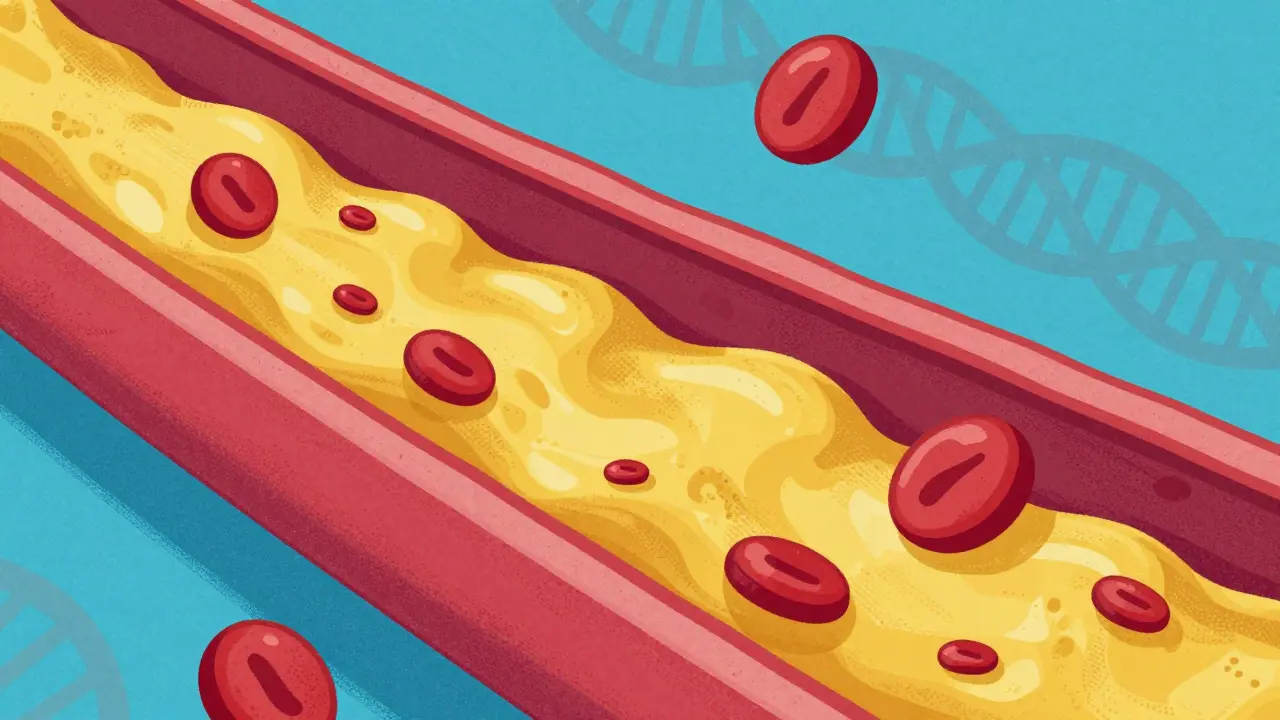
Think of your arteries like old pipes in a house. Over years, sludge sticks to the sides. In a typical person, this takes decades. With FH, the sludge arrives immediately. By age 20, arterial walls can show signs of hardening. By age 40, a person might suffer a heart attack. This explains why FH affects approximately one in 200 to one in 250 individuals worldwide for the heterozygous form. That is a lot of neighbors walking around with undiagnosed ticking time bombs.
Why Timing Changes Everything
There is a misconception that you should wait until middle age to treat cholesterol. That logic applies to standard cases, not FH. Because the buildup starts at birth, delaying treatment invites disaster. Studies from the Netherlands show that starting therapy in childhood helps normalize life expectancy. Conversely, waiting until symptoms appear often means it is already too late to prevent major damage.
Recent guidelines suggest starting aggressive management even earlier for certain groups. If a parent has confirmed FH, doctors recommend checking children as young as age two. If both parents are affected, treatment begins at birth. The window matters. Every year of untreated exposure adds risk that medication cannot fully erase later. You cannot undo scarred tissue in a heart muscle. Prevention is the only true cure for the long-term risk.
Untreated heterozygous FH reduces life expectancy by about thirty years in men. Women lose twenty-five years on average. These statistics are not theoretical guesses. They come from population studies comparing treated versus untreated cohorts. Imagine losing three decades of watching your grandchildren grow up. That is the price of missing a diagnosis. Conversely, catching it early turns a lethal diagnosis into a manageable chronic condition.
How Doctors Identify the Condition
Sometimes the body leaves clues. Severe cases might show xanthomas, which are yellowish cholesterol deposits in tendons or skin. Others notice corneal arcus, a white ring around the iris of the eye. However, most people with the heterozygous form look perfectly healthy. Relying on physical signs misses nearly everyone. Blood work remains the primary tool.
| Patient Group | LDL Threshold | Context |
|---|---|---|
| Adults | > 190 mg/dL | Strongly suggestive of FH |
| Children | > 160 mg/dL | Requires immediate investigation |
| Homozygous Form | > 400 mg/dL | Rare but severe variant |
These numbers act as red flags. An adult with LDL over 190 mg/dL does not necessarily have FH, but the probability jumps significantly. To be definitive, doctors use clinical scoring systems. Tools like the Dutch Lipid Clinic Network criteria weigh family history, physical exam findings, and lipid levels together. Genetic testing is the gold standard, identifying mutations in genes like LDLR, PCSK9, or APOB.
In practice, genetic tests aren't always available or covered by insurance immediately. This creates a gap where clinical suspicion must drive action. If the lab values match the pattern, you treat. Waiting for genetic confirmation shouldn't delay starting statins. The molecular evidence supports the clinical picture, especially when family history aligns with high lipid levels.
Treating the Root Cause
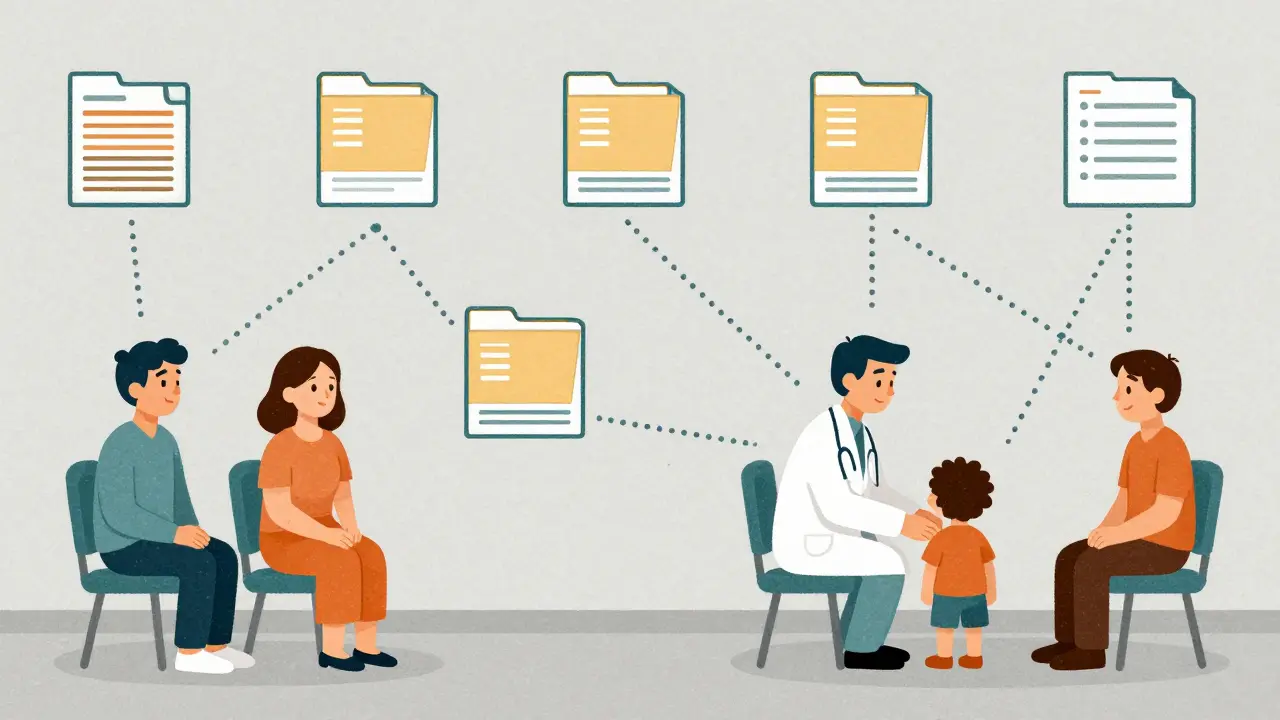
Diet changes alone rarely solve FH. Since the issue is genetic, not dietary, eating less fat won't lower LDL enough to reach safe zones. You need medications that tell your liver to pull down bad cholesterol. Statins remain the first line of defense. They block the enzyme producing cholesterol within the body.
However, FH patients usually need more than just a daily pill. Guidelines recommend combining statins with ezetimibe. This drug blocks absorption in the gut. For those still struggling to meet targets, newer drugs step in. PCSK9 inhibitors are powerful injections that increase the liver's ability to clear LDL from blood. One notable advancement is inclisiran, approved recently by regulators. It works differently by silencing the gene that makes PCSK9, allowing for doses only twice a year instead of weekly.
Targets matter just as much as the tools. Recent European Society of Cardiology guidelines advise reducing LDL below 100 mg/dL in adults. For children, the target sits slightly higher due to growth needs, generally staying under 135 mg/dL. The goal is also a minimum fifty percent drop from the baseline. This aggressive approach ensures the arteries stay relatively clear despite the genetic predisposition.
Getting Your Family Checked
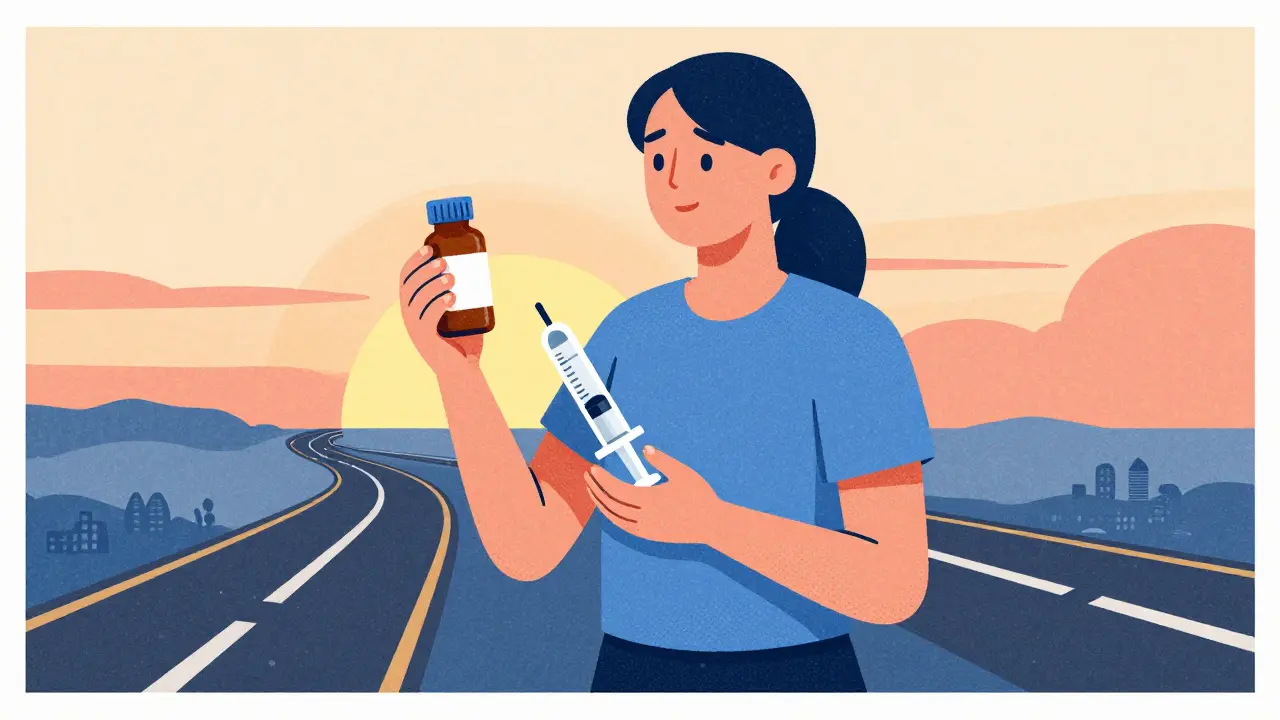
Finding yourself isn't enough. Since half your siblings share the same DNA risk, silence endangers them too. This process is called cascade screening. Once one case is identified, all first-degree relatives get tested. Second-degree and third-degree relatives follow depending on results.
This strategy is incredibly efficient. In countries like the Netherlands, systematic programs identified thousands of cases over decades. In contrast, other regions lag behind. Data suggests only about thirty percent of eligible families actually participate in screening. Cultural barriers, lack of provider knowledge, and fear of diagnosis play roles. Yet, skipping this step allows the cycle to continue unbroken.
If you know your result, tell your parents and siblings. If you don't know, ask your doctor about screening. It costs little compared to a bypass surgery later. Some regions use universal screening for all children aged nine to eleven. This catches kids who wouldn't otherwise be flagged until adulthood. Both methods-universal and cascade-work best together.
Moving Forward Without Fear
Living with FH requires discipline, but it does not mean living in fear. With modern medicine, the trajectory of the disease changes completely. Think of it like managing diabetes or hypertension. You check numbers regularly, take medication consistently, and keep active. The burden lifts when you accept responsibility rather than waiting for a crisis.
New technologies are improving detection further. Machine learning algorithms are being integrated into electronic health records to flag potential cases automatically. These tools analyze age, sex, and historical labs faster than human review. They reduce false negatives, ensuring fewer people fall through the cracks. As we move toward 2030, these systems promise to catch cases even earlier.
Your health journey starts with information. Understanding that high cholesterol can be inherited shifts the narrative from fault to biology. It empowers you to advocate for aggressive care. Do not let high numbers go unnoticed. The science is settled: early detection saves lives. Aggressive treatment restores future possibilities.
Is familial hypercholesterolemia reversible?
No, the genetic defect causing FH cannot be reversed. However, the dangerous effects of high cholesterol and heart disease risk can be managed effectively with medication and lifestyle changes.
Can diet alone lower LDL in FH patients?
Generally, no. While a heart-healthy diet is essential, dietary changes alone typically do not lower LDL enough for people with FH. Pharmacological treatment is almost always required.
When should children be screened for FH?
Guidelines recommend universal screening between ages 9 and 11. If a parent is diagnosed, younger siblings or children may be tested as early as age 2 or at birth if both parents are affected.
What happens if FH is left untreated?
Without treatment, individuals face an 8 to 10 times higher risk of cardiovascular events. Life expectancy drops significantly, with men potentially losing 30 years and women 25 years compared to the general population.
Does genetic testing matter if blood levels are high?
High LDL levels warrant treatment regardless of genetic test results. Genetic testing confirms the diagnosis and is crucial for cascade screening family members to identify others at risk.





12 comments
Richard Kubíček
It is relieving to see that modern treatment options are finally catching up to the severity of the genetic risk factors involved in this condition
Monique Ball
I completely agree with the assessment regarding early detection being the golden key here!!! 🙌 Many folks dismiss the genetic angle because they think cholesterol is solely diet related which is just simply wrong 💔 When you consider that LDL builds up from birth, waiting until symptoms appear feels like leaving your house unlocked 🏠🚨 The statistics about life expectancy reduction are truly heartbreaking to read 😢 Men losing thirty years is a massive tragedy that affects entire families 👨👩👧👦 We need to prioritize cascade screening so siblings aren't left walking blind into danger ⚠️ Genetic testing confirms the diagnosis even when physical signs like tendon xanthomas are missing entirely 👀 Blood work thresholds provide a clear roadmap for clinicians to follow effectively 📊 Statins combined with PCSK9 inhibitors really change the trajectory for patients significantly 💉💪 New guidelines suggest treating children as young as two years old in severe cases 👶 It is amazing how much progress medicine has made in recent decades regarding lipid management 📈 Everyone should demand screening if they have a family history of premature heart attacks ❤️🔥 Preventing plaque buildup is infinitely better than trying to remove it later on 🛡️ The cost of medication is nothing compared to bypass surgery costs down the road 💸 Early intervention literally restores possibilities for a long healthy life ahead ✨ Please share this information with anyone who might benefit from knowing these facts 📣🥺
Kameron Hacker
While systemic inefficiencies exist individual advocacy remains the primary defense against negligent healthcare systems that fail vulnerable populations
gina macabuhay
The notion that dietary changes alone manage familial hypercholesterolemia is a dangerous misconception prevalent among laypeople who misunderstand basic biology
Austin Oguche
I agree that screening protocols need to expand universally rather than relying on sporadic self reporting methods that often miss high risk groups
Tony Yorke
Early detection really does save lives here
Rachael Hammond
i thnik this stuf is really impurtant for famlies
Tommy Nguyen
New drugs like inclisiran make managing this condition feel much more manageable now
Jeannette Kwiatkowski Kwiatkowski
Honestly most people cant afford the fancy injections so statins remain the bare minimum for the poor
Debra Brigman
The landscape of cardiovascular prevention is blooming with vibrant new opportunities that deserve immediate attention from policy makers
tyler lamarre
Insurance companies conveniently ignore the cost of screening while profiting from downstream surgeries
Devon Riley
You never know who else might carry the gene until you actually test the extended family members 🧬💕