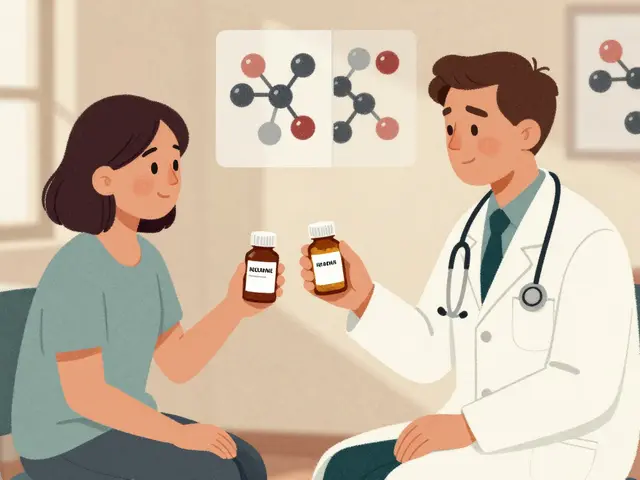
You've probably been there: your pharmacist tells you they have a cheaper version of the medication your doctor prescribed. You might wonder if the lower price comes with a hidden cost. Specifically, does a generic version carry a different risk of drug interactions than the big-name brand you see in commercials? The short answer is that for the vast majority of people, the risk is exactly the same. Whether you take the brand or the generic, the active ingredient doing the heavy lifting in your body is identical.
The core of the matter: Active ingredients
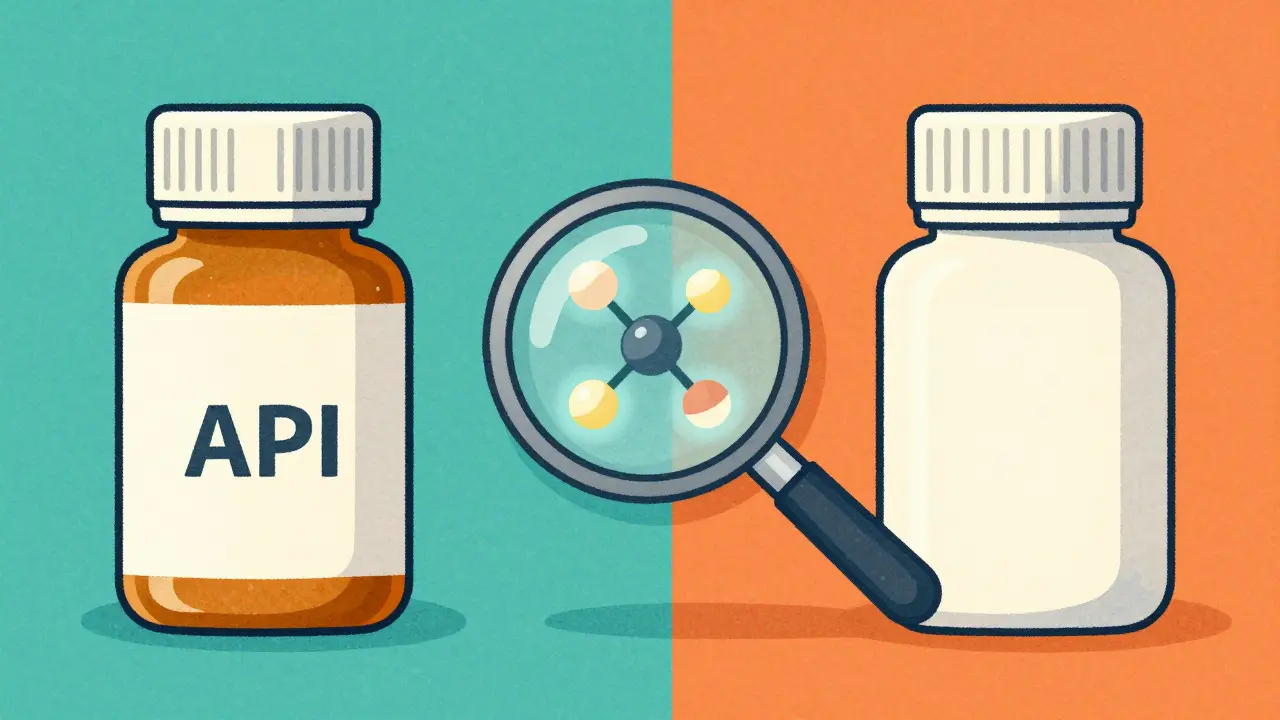
To understand why the risks are the same, we have to look at what's actually inside the pill. A Generic Drug is a pharmaceutical product that contains the same active ingredient, strength, dosage form, and route of administration as a brand-name drug . The Active Pharmaceutical Ingredient, or API, is the specific chemical that treats your condition. Because generics must use the exact same API as the brand, they interact with other drugs, foods, or supplements in the same way. If a brand-name blood thinner interacts poorly with aspirin, the generic version will do the same because the chemistry hasn't changed.
In the U.S., this isn't just a suggestion; it's the law. The Hatch-Waxman Act is the 1984 legislation that created the modern framework for generic drug approval . It requires manufacturers to prove "bioequivalence," meaning the generic version delivers the active ingredient into your bloodstream at a similar rate and extent as the original.
Why generics might feel different
If the active ingredients are the same, why do some people swear they feel a difference? The answer lies in the "inactive" ingredients. These are called Excipients, which are inactive substances like fillers, binders, preservatives, and coloring agents used to stabilize the drug . While these don't change how the drug treats your disease, they can occasionally cause a reaction.
For example, if a generic version uses lactose as a filler and you are severely lactose intolerant, you might experience stomach upset. This isn't a "drug interaction" in the clinical sense-the medicine isn't fighting with another drug-but it is a reaction to the formulation. Rare allergies to specific dyes or preservatives can also occur, which is why some patients might feel a difference when switching brands.
| Feature | Brand-Name | Generic |
|---|---|---|
| Active Ingredient (API) | Original Formula | Identical to Brand |
| Inactive Ingredients | Proprietary Mix | Varies by Manufacturer |
| FDA Approval Path | Full Clinical Trials | Bioequivalence (ANDA) |
| Interaction Risk | Based on API | Based on API |
| Cost | Higher | Lower |
The "Narrow Therapeutic Index" exception
While most drugs are interchangeable, there is a small group called Narrow Therapeutic Index (NTI) Drugs, which are medications where a very small change in dose or blood concentration can lead to a significant change in efficacy or toxicity . Think of these as "precision" drugs. For these, a tiny variation in how the body absorbs the medicine can matter.
Standard generics usually have to fall within an 80-125% absorption range. However, for NTI drugs, regulators often demand much tighter windows. If you are taking a medication for something critical like seizure control or a transplant organ rejection, your doctor might mark your prescription "Dispense as Written." This ensures you stay on one specific manufacturer's version to avoid the slight pharmacokinetic swings that can happen when switching between different generic brands.
Does the data support the safety of generics?
When we look at the hard numbers, the evidence is overwhelmingly in favor of generics. A major study published in Scientific Reports looked at 17 different cardiovascular drugs. They found that generic versions were not just similar, but in some cases actually resulted in fewer deaths and fewer major cardiac events than the brand-name versions. This suggests that the biological outcome is essentially the same, regardless of the label.
Even the FDA Adverse Event Reporting System, known as FAERS, a database that monitors safety reports for all approved drugs , shows no significant difference. Data from 2015 to 2020 showed that interaction-related adverse events occurred in 0.78% of brand-name cases compared to 0.82% of generic cases. In the world of statistics, that difference is basically zero.
Common pitfalls and how to handle them
One of the biggest hurdles in switching to generics is the "nocebo effect." This happens when a person expects a drug to work poorly because it's cheaper, so they actually experience more side effects. Data from WebMD forums suggests that complaints about generics spike in the first three months after a new version hits the market, but then drop back to normal. The drug didn't change; the perception did.
To make sure your transition is smooth, keep these practical tips in mind:
- Keep a list: Always give your pharmacist a full list of your supplements and over-the-counter meds. The interaction risk comes from the *combination* of drugs, not the brand.
- Be consistent: If you're on a high-stakes medication (like an NTI drug), try to stick with the same generic manufacturer rather than switching every time the pharmacy changes suppliers.
- Report changes: If you feel a difference after switching, tell your doctor. It's likely a benign reaction to a filler, but it's better to have a professional verify it.
Do generics cause more drug interactions than brands?
No. Because generic drugs use the same active pharmaceutical ingredient as brand-name drugs, their chemical interaction with other substances is the same. Regulatory bodies like the FDA ensure they are bioequivalent, meaning they behave the same way in your body.
Can inactive ingredients cause a reaction?
Yes, it is possible. While the active medicine is the same, the fillers, dyes, or binders (excipients) can differ. Some people may have an allergy or intolerance (like lactose intolerance) to a specific inactive ingredient used by one manufacturer but not another.
Why does my doctor sometimes insist on the brand-name version?
This usually happens with Narrow Therapeutic Index (NTI) drugs. For these medications, even a tiny variation in how the drug is absorbed can affect safety or efficacy. In these rare cases, staying on one specific formulation is safer than switching.
Are generic drugs tested as thoroughly as brands?
Generics do not go through the same multi-year clinical trials as brand drugs because the active ingredient has already been proven safe and effective. Instead, they undergo bioequivalence testing to prove they work the same way as the original.
What should I do if I feel a difference after switching to a generic?
First, track your symptoms specifically. Then, consult your pharmacist or doctor. They can check if the generic contains a filler you are sensitive to or if you are experiencing a nocebo effect. Do not stop taking a prescribed medication without medical guidance.