
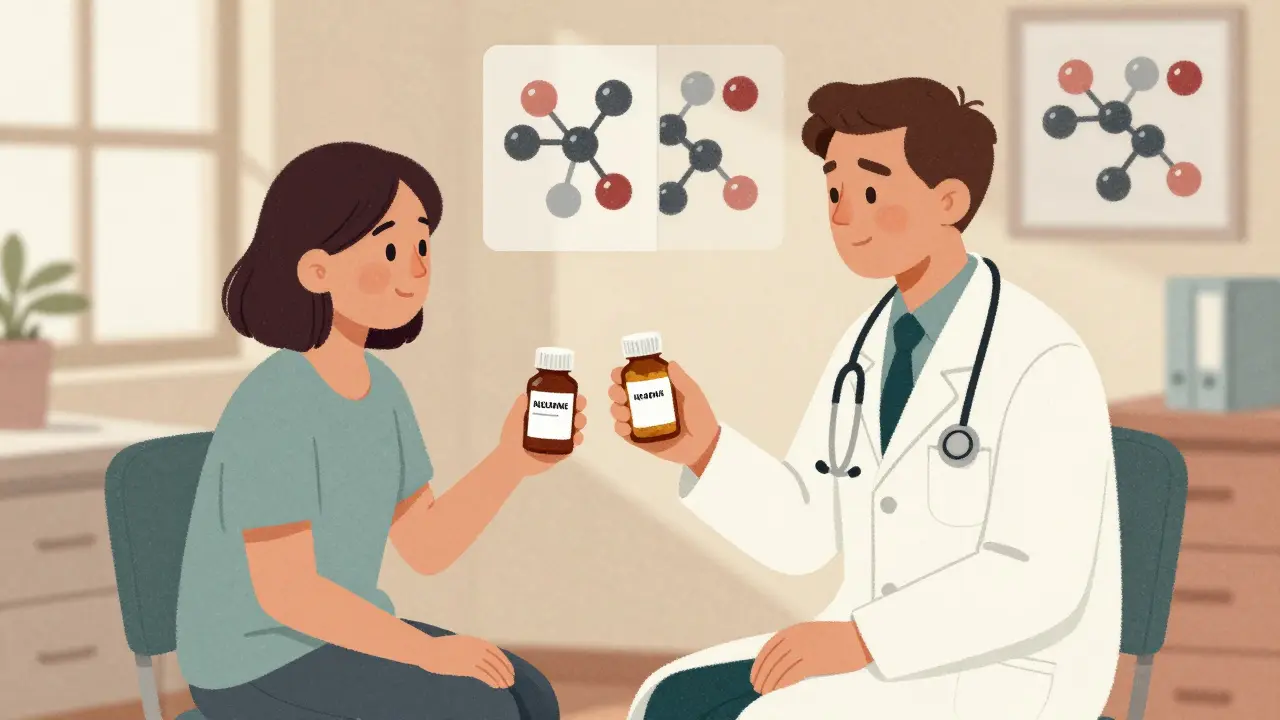
When you pick up a prescription, you might see two names on the label: one you recognize, and another that looks unfamiliar. The first is the brand-name drug. The second is the generic. You might wonder-does it matter which one you take? The short answer: generic medications work just as well as brand-name ones, almost always. But if you’re unsure, or if you’ve noticed a change after switching, it’s important to talk to your doctor-not just accept the substitution without asking.
Why Generics Are Just as Effective
Generic drugs aren’t cheap knockoffs. They’re exact copies of brand-name drugs in every way that matters: the active ingredient, how it works in your body, how fast it’s absorbed, and how long it lasts. The U.S. Food and Drug Administration (FDA) requires generics to be bioequivalent to the brand-name version. That means the difference in how your body absorbs the medicine is no more than 20%, and usually it’s less than 4%. For most people, that’s undetectable. Take blood pressure pills, for example. Whether you take the brand-name lisinopril or its generic version, your blood pressure will respond the same way. The same goes for antidepressants like sertraline, cholesterol meds like atorvastatin, or even antibiotics like amoxicillin. Nine out of every ten prescriptions filled in the U.S. are for generics-and for good reason. They save patients and the healthcare system billions each year.What’s Actually Different Between Them?
If they work the same, why do they look different? That’s because U.S. law says generic drugs can’t look identical to the brand-name version. So you’ll see different shapes, colors, or even flavors. The inactive ingredients-like fillers, dyes, or preservatives-might also vary. These don’t affect how the medicine works, but they can cause rare reactions in people with allergies. For instance, someone allergic to red dye might react to a brand-name pill that uses it, but not to the generic that uses yellow. The biggest difference? Price. Generics cost 80-85% less. A 30-day supply of a brand-name statin might be $150. The generic? $10. That’s not a small gap-it’s the difference between taking your medicine every day or skipping doses because you can’t afford it.When Your Doctor Might Recommend the Brand Name
There are a few situations where your doctor might prefer the brand-name version. These are rare, but real. One is for drugs with a narrow therapeutic index-medicines where even tiny changes in blood levels can cause serious problems. Examples include warfarin (a blood thinner), levothyroxine (for thyroid issues), and some seizure medications like phenytoin. While the FDA says approved generics are safe for these, some doctors still feel more comfortable sticking with the brand, especially if you’ve been stable on it for years. Another case is when you’ve had a bad reaction to a specific generic version in the past. Maybe you switched from one generic manufacturer to another and noticed new side effects. That’s worth mentioning. It’s not that generics are unsafe-it’s that different manufacturers might use slightly different inactive ingredients, and your body might react to one but not another. And then there’s biologics. These are complex drugs made from living cells, like insulin or rheumatoid arthritis treatments. They don’t have true generics-they have “biosimilars,” which are similar but not identical. These are still being studied, and your doctor may recommend sticking with the original brand for now.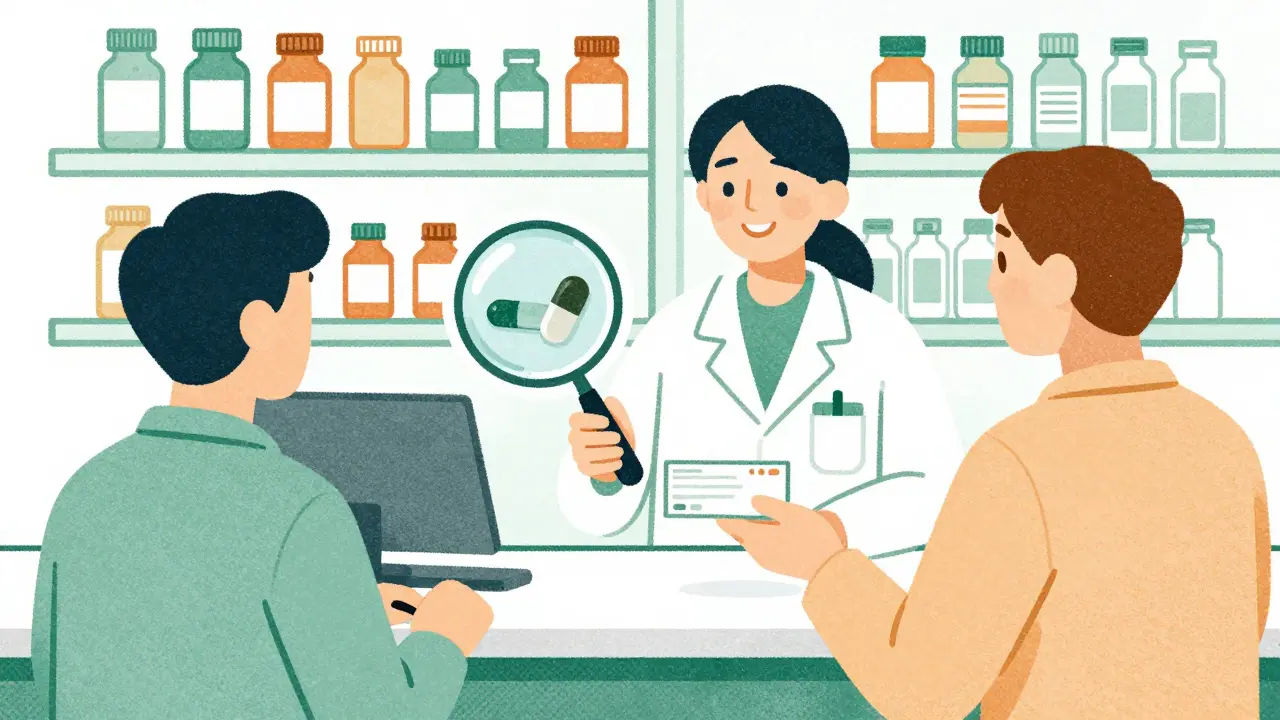
What to Say to Your Doctor
You don’t need to be an expert to have this conversation. Here’s what to ask:- “Is there a generic version of this medication?”
- “Will the generic work just as well for my condition?”
- “Are there any reasons I should stay on the brand-name version?”
- “I’ve noticed changes since switching-could that be the medication?”
- “How much will this cost with and without insurance?”
What Pharmacists Can Do
In most places, pharmacies are legally required to substitute a generic unless the doctor says not to. That means you might get a different pill than you expected-even if you didn’t ask for it. That’s where your pharmacist comes in. They’re trained to explain the differences. If you pick up a new pill and think, “This doesn’t look right,” don’t just take it. Ask the pharmacist: “Is this the generic version? What’s different?” Most will take five minutes to explain it, show you the label, and reassure you. A 2022 study found that 78% of patient concerns about generics were solved with a simple conversation.
What to Do If You Notice a Change
Sometimes, people feel like a generic isn’t working as well. You might think, “I used to sleep better on the brand, now I’m wide awake at night.” Or, “My headaches came back.” Before you assume the generic is the problem, consider this: your body might be reacting to the change itself-not the drug. That’s called the nocebo effect. If you believe a cheaper version is inferior, your brain might convince you it’s not working. Studies show that 89% of patients report no difference when switching to generics. But 17% feel uneasy at first-until they’re educated. Still, if you truly feel worse, track it. Write down:- When you switched
- What symptoms changed
- When they started and stopped
- Any other changes (sleep, diet, stress)
The Bigger Picture: Why This Matters
Generic medications aren’t just a cost-saving trick. They’re a public health win. Between 2007 and 2016, generics saved the U.S. healthcare system over $1.6 trillion. That money keeps people on their meds, out of hospitals, and working. But savings mean nothing if people stop taking their drugs because they’re confused, scared, or embarrassed to ask questions. Talking to your doctor about generics isn’t about being difficult. It’s about being informed. It’s about making sure you get the treatment you need without sacrificing your health to save a few dollars-or risking your health because you didn’t speak up.Final Thoughts: Trust the Science, Ask the Questions
You don’t need to choose between trust and skepticism. The science is clear: generics are safe, effective, and rigorously tested. But your body is unique. Your experience matters. So ask. Listen. Keep track. And don’t let cost or confusion keep you from getting the care you deserve.Are generic medications as safe as brand-name drugs?
Yes. Generic medications must meet the same strict safety and quality standards as brand-name drugs, set by the FDA. They contain the same active ingredients, work the same way in the body, and have the same risks and benefits. The FDA monitors both types continuously for safety issues.
Why do generic pills look different from brand-name ones?
U.S. trademark laws require generic drugs to look different from brand-name versions. This means they can’t have the same shape, color, or packaging. But the active ingredient-and how it works-is identical. The differences are only in inactive ingredients like dyes or fillers, which don’t affect the drug’s effectiveness.
Can I switch from a brand-name drug to a generic without problems?
For most people, yes. Over 90% of prescriptions in the U.S. are for generics, and studies show 89% of patients notice no difference in effectiveness after switching. However, for certain medications-like those with a narrow therapeutic index (e.g., warfarin, levothyroxine)-your doctor may advise staying on the brand if you’ve been stable on it.
What if I feel worse after switching to a generic?
Track your symptoms: when they started, what changed, and whether they improved when you switched back. Bring this to your doctor. It could be a reaction to an inactive ingredient, or it could be the nocebo effect-where expecting a problem causes you to feel one. Either way, your doctor can help determine if a switch back is needed or if another generic manufacturer’s version might work better.
Does my doctor have to prescribe the brand-name version if I ask for it?
No. In most cases, pharmacists are required by law to substitute a generic if one is available, unless the doctor writes “dispense as written” on the prescription. Your doctor can write that note if they believe the brand is necessary for your health-but they’ll likely ask why you want to avoid the generic, especially if cost is a concern.
Are there any medications that don’t have generic versions?
Yes. Some drugs are still under patent protection, so no generic exists yet. Others, like complex biologics (e.g., insulin, Humira, Enbrel), don’t have true generics-they have biosimilars, which are similar but not identical. These are newer, more expensive, and still being studied for long-term use.
How much money can I save by using generics?
On average, generics cost 80-85% less than brand-name drugs. For example, a 30-day supply of a brand-name cholesterol pill might cost $150, while the generic costs around $10. That’s $1,680 saved per year. Across the U.S., generics saved $1.67 trillion between 2007 and 2016.




10 comments
Jake Nunez
Just had my pharmacist explain this to me last week. I was freaked out when my pills changed color, but he showed me the FDA paperwork and broke it down like I was five. Saved me $140 this month. No joke.
Paul Bear
Let’s be clear: the FDA’s bioequivalence standard of ±20% is a legal loophole disguised as science. That’s not ‘close enough’-that’s a 40% potential swing in systemic exposure. For drugs like warfarin, that’s not a difference, it’s a death sentence waiting to happen. The data cherry-picked here ignores real-world adverse event reports from the FAERS database. If you’re not tracking INR levels monthly after a switch, you’re playing Russian roulette with your liver.
Christine Milne
Oh please. Americans think generics are ‘just as good’ because they don’t know what real medicine is. In Germany, they test generics for stability over 36 months, not 12. In Japan, they require identical dissolution profiles down to the 5th decimal. Here? We let a $10 pill with cornstarch filler replace a $150 one and call it progress. This isn’t healthcare innovation-it’s corporate fraud dressed up as cost-saving.
McCarthy Halverson
Generic works. Same active ingredient. Same results. Talk to your doc if you feel off. Don’t assume it’s the pill. Track it. Then decide.
Michael Marchio
Look, I get it. You want to save money. But you’re not saving anything if you end up in the ER because your thyroid meds didn’t absorb right. I’ve seen it too many times-patients who switched to generics, stopped taking their labs, and then wonder why they’re exhausted, gaining weight, or having palpitations. The FDA says it’s fine, but the FDA doesn’t live in your skin. Your body doesn’t care about regulatory standards. It cares about consistency. If you’ve been stable on brand for five years, why gamble? You wouldn’t swap your Honda engine for a knockoff just because it’s cheaper. Why do it with your life?
Jake Kelly
My grandma switched from brand-name levothyroxine to generic and didn’t notice a thing. She’s 82, takes it daily, and her TSH is perfect. Sometimes the fear is worse than the switch. Just talk to your doctor and give it a fair shot.
Ashlee Montgomery
It’s not about trust in the system. It’s about trust in your own body. If you feel different, it’s not weakness. It’s data. The system says ‘it’s the same.’ But your sleep, your mood, your energy-those are the real metrics. Why are we so quick to dismiss lived experience in favor of regulatory checkboxes?
neeraj maor
Ever wonder why the same generic from different manufacturers causes different side effects? Because the FDA doesn’t require them to disclose the full list of inactive ingredients. Big Pharma owns the patent, but the generic makers? They’re Chinese labs with no oversight. The dyes, the binders, the lubricants-they’re not tested for long-term neurotoxicity. You think your antidepressant is working? Maybe it’s just the aluminum oxide in the coating keeping you numb. Wake up.
Ritwik Bose
🙏 Thank you for writing this. I switched from brand to generic for my blood pressure med last year. Was nervous. Talked to my doctor, asked about the fillers, got a list from the pharmacy. No issues. Saved ₹12,000/year. My wife says I’m a hero for asking. 🙏
Bradford Beardall
Just got back from India last month. Saw how they handle generics there-massive scale, strict batch testing, local manufacturing. They don’t have the same brand-name culture we do. And guess what? Their hypertension rates are dropping faster than ours. Maybe we’re the ones stuck in the myth. Not the generics.