
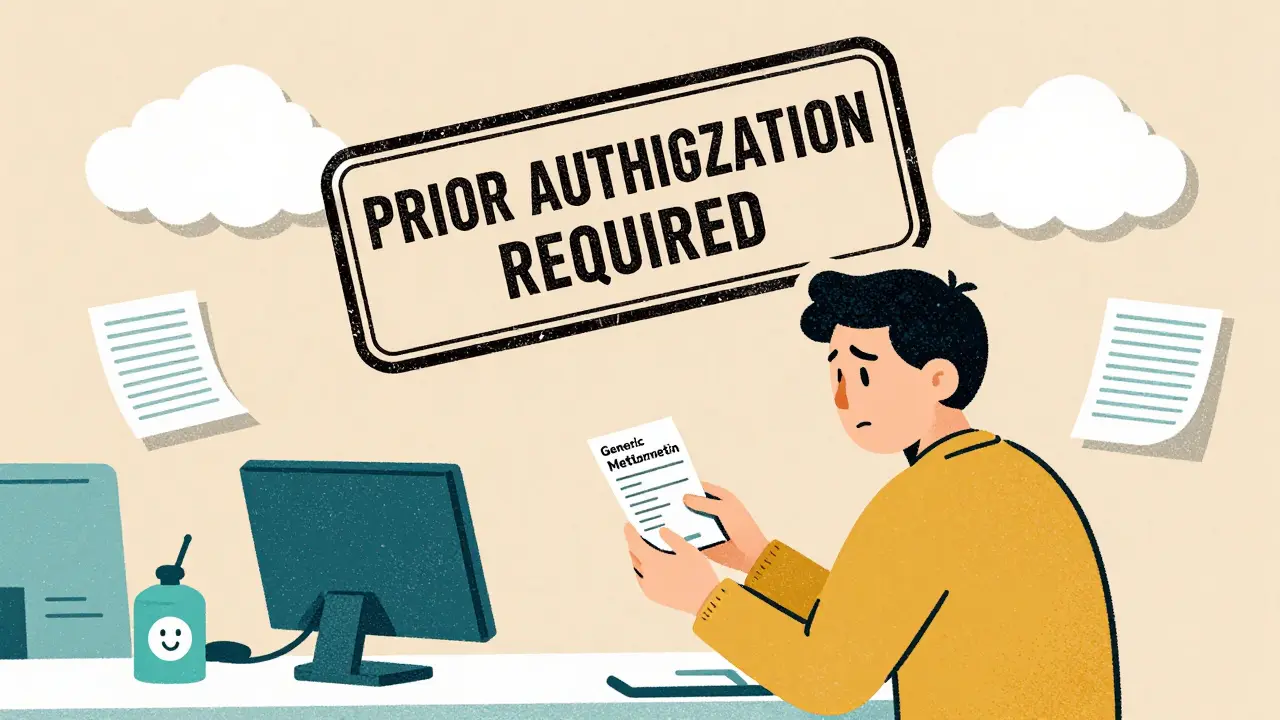
It’s 2026, and you’ve been taking generic metformin for type 2 diabetes for three years. Your doctor prescribes it again. You show up at the pharmacy, ready to pick it up-only to be told, "We need prior authorization." You didn’t even know that was a thing. You thought generics were supposed to be easy, cheap, and automatic. Turns out, you’re not alone.
More than 1 in 5 generic prescriptions now require insurance approval before they’re covered. That’s up from just 5% in 2018. And it’s happening to drugs like lisinopril, levothyroxine, atorvastatin, and metformin-medications that have been first-line treatments for decades. These aren’t fancy new drugs. They’re the cheapest, most studied, and most widely used pills in medicine. Yet, insurance companies are asking doctors to jump through hoops just to prescribe them.
Why Are Generics Being Blocked?
At first glance, this makes no sense. Generics cost 80% less than brand-name drugs. They’re just as safe. They’re FDA-approved. So why do insurers now require approval for them? The answer isn’t about cost-it’s about control.
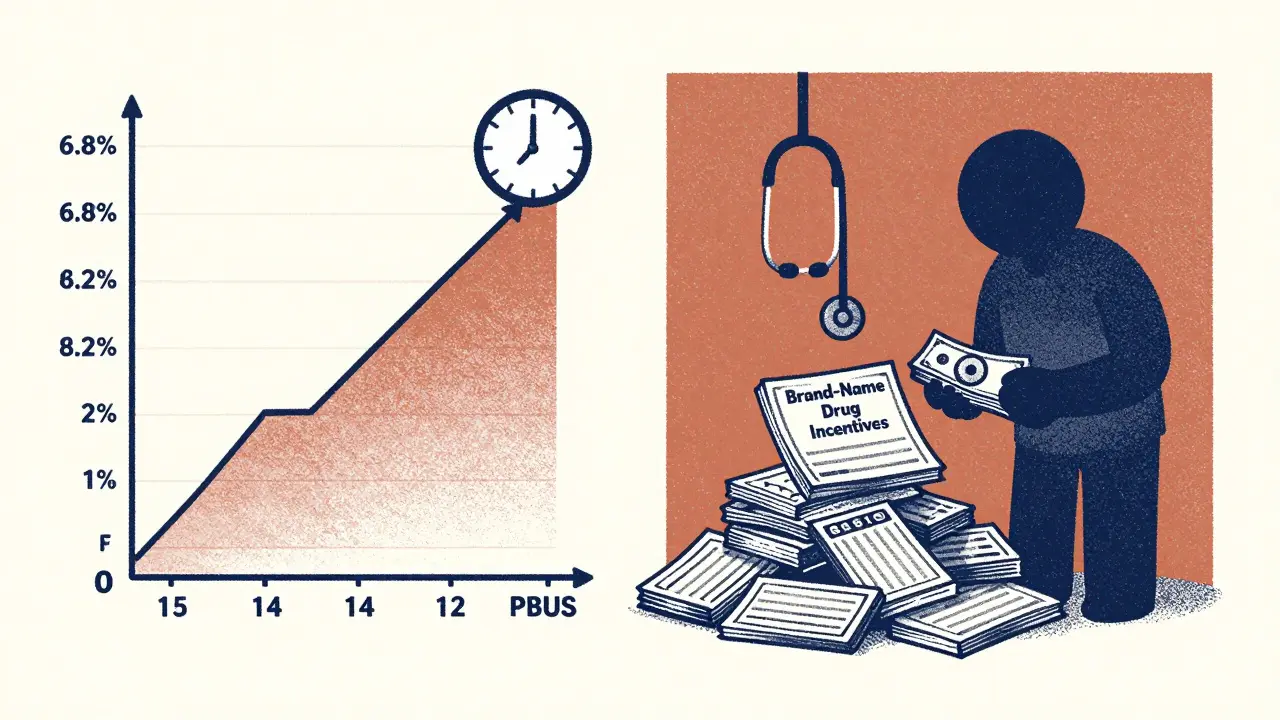
Pharmacy Benefit Managers (PBMs), the middlemen between insurers and pharmacies, have built systems that prioritize rebate deals over patient access. Even though generics make up 90% of all prescriptions filled in the U.S., they only account for 23% of total drug spending. That’s because PBMs earn rebates from brand-name drug makers when they push patients away from generics. So, if a patient tries to get a generic version of a drug, the PBM might block it-not because it’s unsafe, but because the rebate system rewards them for steering patients toward more expensive options.
Some insurers require prior authorization for generics to enforce "step therapy." That means you have to try (and fail) on another drug first-even if that drug is less effective or has worse side effects. For example, a patient with high blood pressure might be forced to try a different generic ACE inhibitor before being allowed to take the one their doctor prescribed. The problem? That delay can raise their blood pressure, increase their risk of stroke, and lead to hospitalization.
How Long Does It Take?
The approval process can take anywhere from a few days to three weeks. Cigna says decisions take 5-10 business days. Mayo Clinic says it can stretch to "a few weeks." But here’s the kicker: for urgent cases, you can request an "urgent" review. Cigna says they’ll respond in 72 hours. But providers report that even urgent requests often get stuck in bureaucratic limbo.
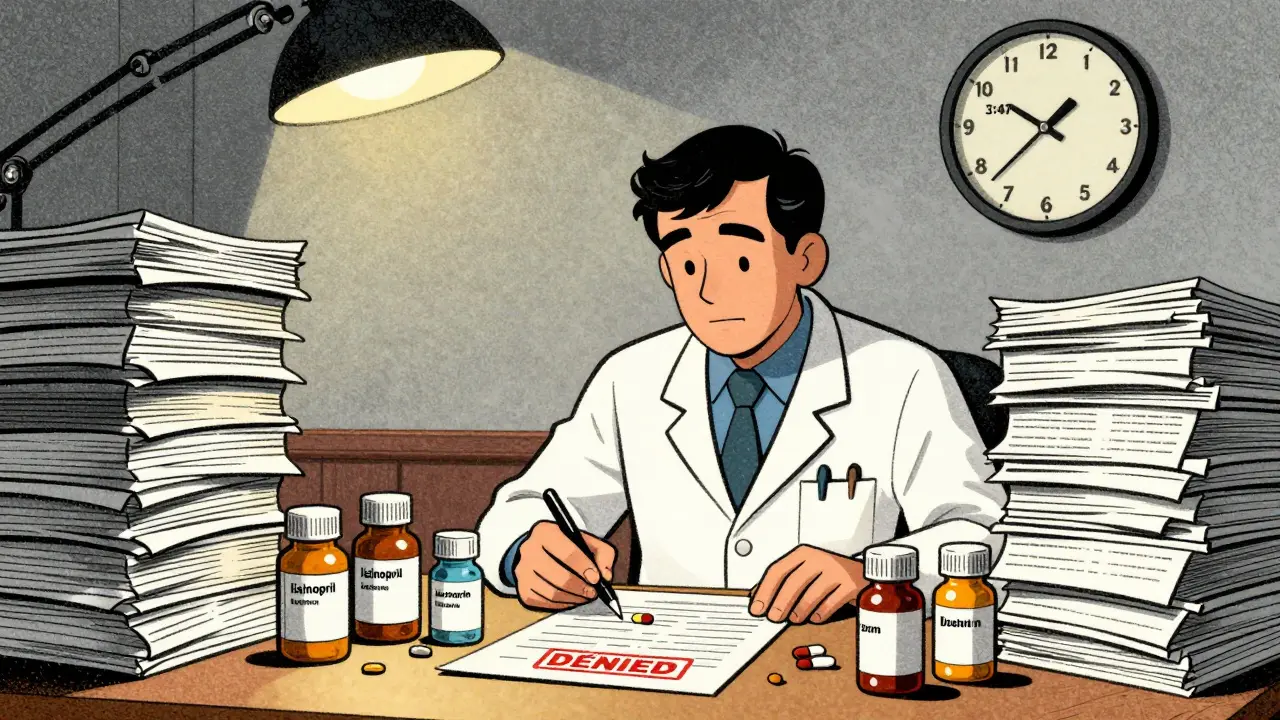
Doctors are drowning in paperwork. On average, each physician handles 43 prior authorizations a week. Nearly 4 out of 10 of those are for generic drugs. One clinic in Ohio reported spending 17.3 hours a week just filling out forms for generics. That’s nearly half a full-time employee’s time-not treating patients, not answering calls, not reviewing labs. Just chasing insurance approvals.
And when a request gets denied? You start over. You appeal. You submit lab results, doctor notes, previous treatment records. Sixty-seven percent of denials can be overturned-but only if you have the time and energy to fight back. Most patients don’t. They just go without.
Who’s Affected the Most?
It’s not just patients. It’s providers, pharmacists, and the whole healthcare system.
One patient in a Kaiser Family Foundation case study waited 14 days for approval of generic metformin. During that time, their HbA1c rose from 6.8% to 8.2%. That’s not just a number-it’s increased risk of nerve damage, kidney failure, vision loss. The delay wasn’t medical. It was administrative.
Patients with chronic conditions are hit hardest. People with Crohn’s disease, hypertension, thyroid disorders, and depression are being forced to wait for medications they’ve taken for years. On Reddit, users share stories of being denied generic levothyroxine-despite having stable thyroid levels for years. One person wrote: "My endocrinologist says I’m stable. Insurance says I need a new blood test. I’ve had five this year already. Why?"
Specialty generics face the highest barriers. Oncology generics, like generic paclitaxel, require prior authorization in 35% of cases. Cardiovascular generics? Around 12%. The pattern is clear: the more critical the drug, the more likely insurers are to block it.
What’s Being Done?
Change is coming-but slowly.
In December 2023, Congress passed the Improving Seniors’ Timely Access to Care Act. Starting in 2026, Medicare Advantage plans must process prior authorizations electronically and respond to urgent requests within 72 hours. That’s a win. But it only covers Medicare patients.
States are acting, too. California’s SB 1024, effective January 2025, bans prior authorization for 47 generics on the state’s Essential Drug List. That includes common drugs like metformin, lisinopril, atorvastatin, and levothyroxine. Thirty-four other states have similar restrictions for certain generic classes.
On June 23, 2025, the biggest insurers-Aetna, UnitedHealthcare, Cigna, Humana, and Blue Cross Blue Shield-announced they’ll eliminate prior authorization for 12 commonly prescribed generics starting January 2026. That includes ACE inhibitors, statins, and metformin. It’s a major shift. But it’s voluntary. And it only covers a small slice of the problem.
What Should You Do?
If you’re prescribed a generic and told you need prior authorization:
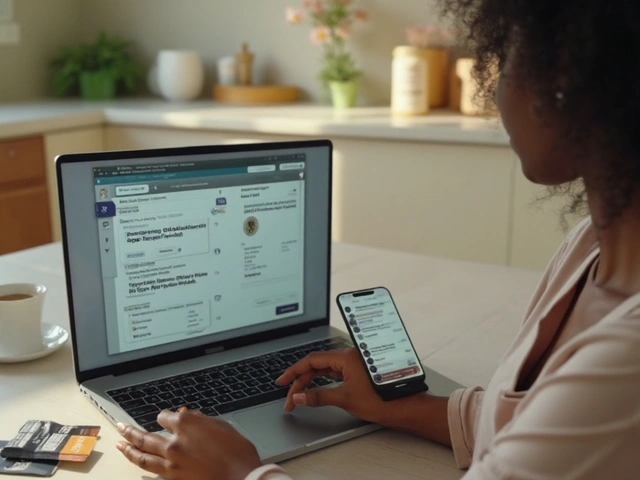
- Ask your doctor if they’ve submitted the request electronically. Providers who use platforms like CoverMyMeds get approvals 32% faster.
- Request urgent status if your condition is unstable or worsening. You have the right to ask.
- Keep records of every call, email, and denial letter. You’ll need them if you appeal.
- Call your insurer directly. Ask for a written explanation of the denial. Most denials are based on technical errors, not clinical ones.
- Check your state laws. Some states have banned prior authorization for certain generics. If yours does, use it.
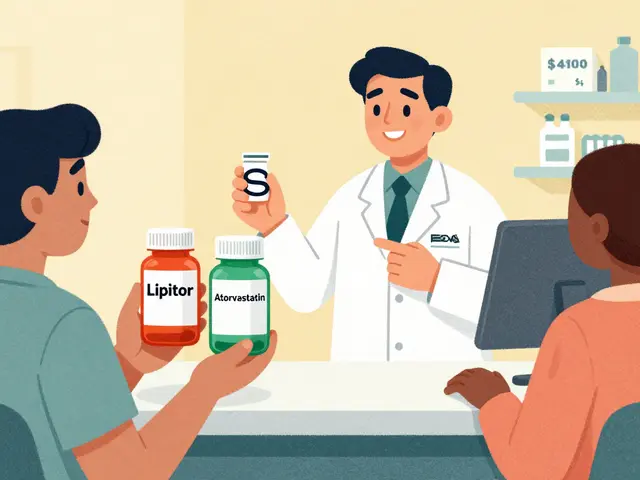
Pharmacists can also help. Many now flag prior authorization requirements before you even leave the pharmacy. If they say "this might take time," don’t assume it’s normal. Push back.
The Bigger Picture
This isn’t just about paperwork. It’s about trust.
Generics were created to save money and improve access. They work. They’re safe. They’ve been used by millions for decades. Requiring approval for them doesn’t reduce costs-it increases them. A 2025 study from the American Gastroenterological Association found that prior authorization for first-line generics increases total healthcare costs by 18% because of delays, complications, and emergency visits.
Insurance companies claim they’re ensuring "appropriate use." But when the most appropriate, cheapest, and safest option requires approval, something’s broken. The system is no longer serving patients. It’s serving rebates.
By 2028, experts predict a 40% drop in prior authorization for generics-if reforms keep moving. But until then, patients and providers are stuck in a system that treats life-saving pills like luxury items.
Don’t accept silence. Ask questions. Demand answers. And if your doctor says, "This shouldn’t be this hard," they’re right.

10 comments
Charity Hanson
This is wild. I had to wait 11 days for my generic lisinopril last month. My BP spiked. I felt like the system was punishing me for being cheap and healthy. Why do we let this happen?
Noah Cline
This is a textbook PBM rent-seeking behavior. The rebate structure creates perverse incentives where formulary placement overrides clinical utility. PBMs are essentially oligopolistic intermediaries extracting surplus from the supply chain. The FDA approval status is irrelevant when financial engineering overrides pharmacoeconomic logic.
Lisa Fremder
Another one of these woke healthcare frauds. You think we’re supposed to just hand out free medicine? This is why America’s system works. If you can’t afford it go to a clinic. Stop whining about generics. They’re not magic pills. They’re just pills.
Ajay Krishna
I’m from India and we don’t have this problem. Generics are everywhere, cheap, and no one asks for permission. I get why it’s happening in the US - it’s not about cost, it’s about profit. The system is broken. We need to fix the middlemen, not the patients.
Sumit Mohan Saxena
The empirical evidence is unequivocal. A 2024 JAMA Health Forum study demonstrated that prior authorization for first-line generics increases 30-day medication non-adherence by 22.7% (95% CI 19.3–26.1). This directly correlates with increased emergency department utilization and hospitalization rates. The administrative burden on providers is not merely operational - it is a systemic failure of care coordination.
Brandon Vasquez
I’ve been a pharmacist for 18 years. I’ve seen this get worse every year. Patients come in, confused, stressed, sometimes crying. They’ve been on metformin for 10 years. Now they’re told to wait. It’s not just paperwork. It’s emotional labor. We’re not just filling prescriptions anymore. We’re fighting insurance.
Vikas Meshram
You people dont understand. The PBM system is designed to prevent fraud. If you take generics too easily, people will start hoarding them. Or selling them. Or using them for non-medical reasons. This is about control. You think you know what’s best? You dont. The system knows better.
Charity Hanson
I just called my insurer. They said my prior auth request was denied because my doctor didn’t use the right form code. I spent 45 minutes on hold. Then I called my doctor. She said she used the right one. They’re blaming each other. I’m just trying to stay alive.
Justin Ransburg
The reforms underway are meaningful. California’s SB 1024 is a model. The voluntary commitments from major insurers signal a shift. We must continue to advocate, document, and legislate. Patient safety cannot be outsourced to rebate structures. The solution is not more bureaucracy - it’s transparency and accountability.
Ben Estella
I work for one of those big insurers. We don’t make the rules. We just enforce them. The rebates come from the drug companies. We’re just the middleman. If you want to fix this, go after the pharma giants. They’re the ones paying us to block generics. Not us.