Warfarin and NSAIDs: What You Need to Know About the Dangerous Mix
When you take warfarin, a blood thinner used to prevent clots in people with atrial fibrillation, artificial heart valves, or a history of deep vein thrombosis. Also known as Coumadin, it works by blocking vitamin K to slow clotting—but even small changes in your routine can throw it off balance. Now add NSAIDs, common pain relievers like ibuprofen, naproxen, and diclofenac used for arthritis, headaches, or muscle pain. Also known as nonsteroidal anti-inflammatory drugs, they reduce swelling and pain, but they also irritate the stomach lining and interfere with platelets. Together, they don’t just add up—they multiply risk. A study from the Journal of the American College of Cardiology found people taking both had nearly triple the chance of dangerous internal bleeding compared to those on warfarin alone.
This isn’t just about stomach upset. Warfarin makes your blood take longer to clot. NSAIDs make your platelets less sticky and damage the protective lining of your gut. The result? A perfect storm for bleeding—whether it’s a nosebleed that won’t stop, dark stools, or sudden bruising without injury. Even occasional use of an NSAID can be risky if you’re on warfarin long-term. And it’s not just the big names—some cold medicines, menstrual pain pills, and topical gels also contain NSAIDs. You might not realize you’re adding fuel to the fire.
What about acetaminophen? That’s usually safer for pain relief when you’re on warfarin. But don’t assume anything. Your doctor needs to know every pill, supplement, or tea you take—because even green tea or garlic supplements can interact. And it’s not just about what you take, but when. Missing a dose of warfarin, eating more kale one week, or switching from Advil to Aleve can all shift your INR levels without warning. That’s why regular blood tests aren’t optional—they’re your early warning system.
The posts below give you real, practical answers. You’ll find out how to spot the hidden NSAIDs in your medicine cabinet, what to do if you accidentally took both, how to talk to your pharmacist about safer alternatives, and why some people can use NSAIDs safely under close watch. These aren’t theory pages—they’re stories from people who’ve been there, doctors who’ve seen the fallout, and clear steps to protect yourself. Whether you’re on warfarin for life or just starting out, this collection gives you the tools to avoid the most common, preventable mistake.
- Dec 5, 2025
- Posted by Cillian Osterfield
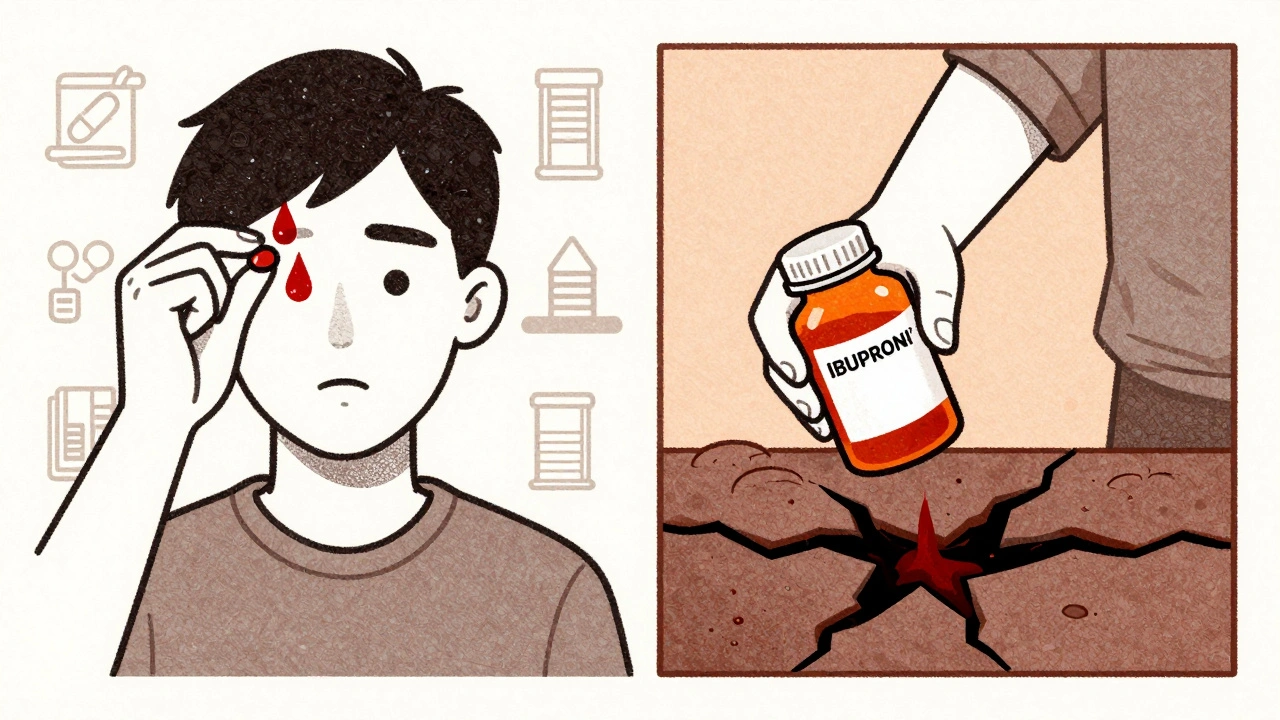
Warfarin and NSAIDs: Why Combining Them Increases Bleeding Risk
Combining warfarin and NSAIDs can more than quadruple your risk of serious bleeding. Learn why this interaction is dangerous, which painkillers are safest, and what to do if you need pain relief while on blood thinners.