Chloramphenicol: What It Is, How It’s Used, and What You Need to Know
When you hear Chloramphenicol, a broad-spectrum antibiotic used for severe bacterial infections, especially when other drugs don’t work. Also known as chloromycetin, it’s one of the oldest antibiotics still in use today—despite its serious risks. It doesn’t just kill a few types of bacteria. It shuts down protein production in almost all of them, making it effective against everything from eye infections to deadly meningitis. But that power comes with a price.
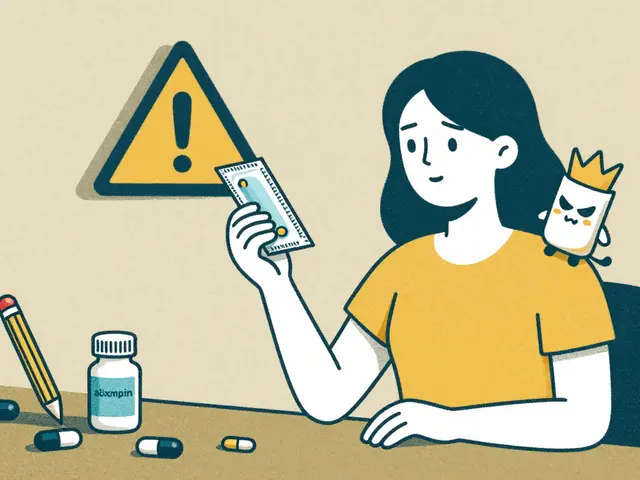
Doctors don’t reach for Chloramphenicol unless they have to. Why? Because it can damage your bone marrow. That’s where your blood cells are made. In rare cases, it causes a condition called aplastic anemia—where your body stops making red blood cells, white blood cells, and platelets. This isn’t just a side effect; it’s life-threatening and often irreversible. Even worse, it can happen weeks after you’ve stopped taking it. That’s why many countries restrict its use to hospitals and only for infections that won’t respond to safer antibiotics like amoxicillin or doxycycline.
But here’s the thing: in places with limited access to advanced care, Chloramphenicol is a lifeline. It’s cheap, stable at room temperature, and works against bacteria that have shrugged off other drugs. In parts of Africa and Asia, it’s still used to treat typhoid fever and bacterial meningitis in kids when nothing else is available. Even in the U.S., it’s sometimes used as eye drops for conjunctivitis—because the dose is tiny and the risk is low. But oral or injectable forms? Those are strictly controlled.
Another hidden risk? antibiotic resistance, the process where bacteria evolve to survive exposure to drugs like Chloramphenicol. Because it’s been around since the 1940s, many strains have already learned how to fight it. That’s why doctors avoid using it unless absolutely necessary. Overuse today means it might not work when you really need it tomorrow. And while newer antibiotics are safer, they’re also more expensive. That’s the trade-off: safety versus access.
There’s also a rare but scary side effect called gray baby syndrome—seen mostly in newborns. Their livers can’t process Chloramphenicol the way adults can, so the drug builds up to toxic levels. Their skin turns gray, their breathing slows, and their blood pressure drops. It’s preventable with careful dosing and monitoring, but it’s why newborns are rarely given this drug unless there’s no other option.
So why does Chloramphenicol still exist? Because sometimes, when every other drug has failed, it’s the only thing left that works. It’s not a first-line treatment. It’s not something you take for a sinus infection. But for life-threatening cases where other antibiotics have given up, it’s still a critical tool in the doctor’s kit. And that’s why you’ll find it referenced in posts about drug interactions, antibiotic safety, and when to use last-resort meds.
Below, you’ll find real-world examples of how Chloramphenicol fits into the bigger picture of antibiotics, infections, and patient safety—from its role in treating stubborn eye infections to why it’s avoided in certain populations. These aren’t just drug reviews. They’re stories of when medicine has to walk the line between risk and survival.
- Oct 22, 2025
- Posted by Cillian Osterfield
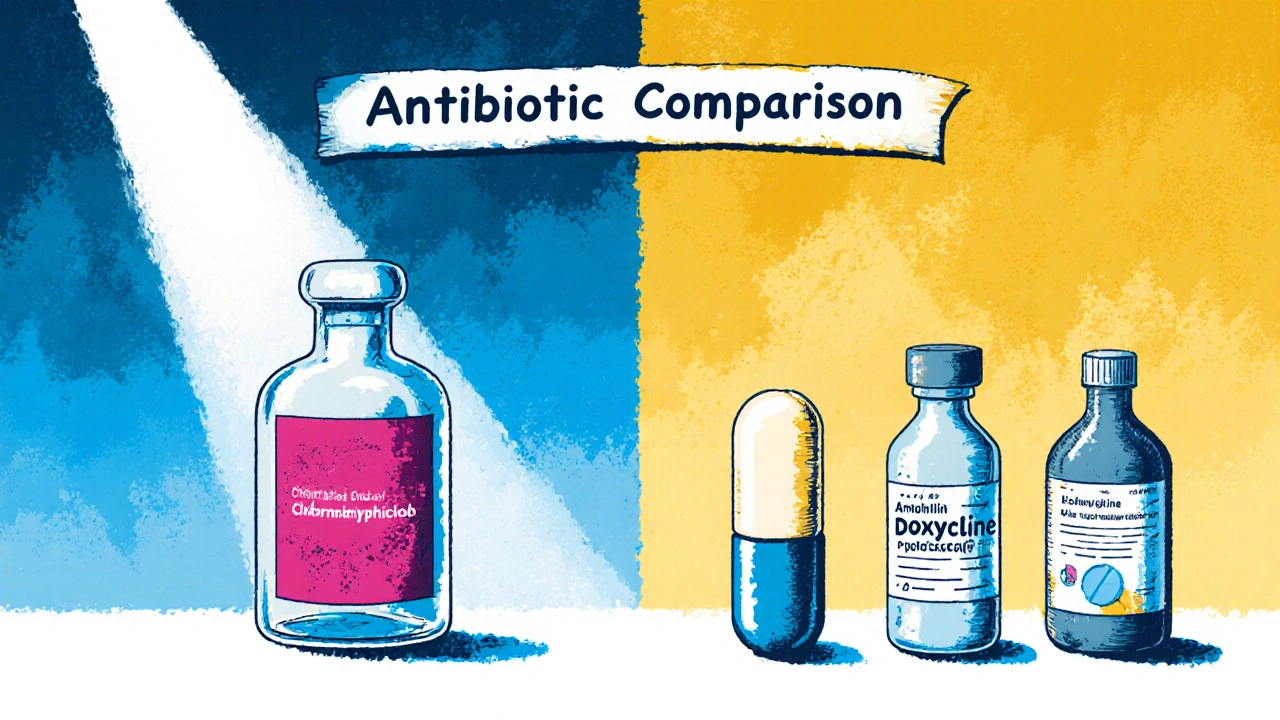
Chloramphenicol vs Alternatives: Comprehensive Antibiotic Comparison
A detailed comparison of Chloramphenicol (Chloromycetin) with common antibiotic alternatives, covering efficacy, safety, and usage guidance.