

Stimulant Heart Risk Assessment Tool
Assess Your Cardiac Risk
This tool evaluates your risk of cardiac arrhythmias when considering stimulant medications like Adderall or Ritalin. Based on your personal and family health history.
When you’re struggling with focus, impulsivity, or hyperactivity, stimulant medications like Adderall or Ritalin can feel like a lifeline. For millions of people-especially kids and young adults-they work. But what happens when your doctor mentions the word arrhythmia? That’s when the relief turns to worry. Is this medication safe for your heart? Should you keep taking it? And if not, what else works?
How Stimulants Can Affect Your Heart
Stimulants used for ADHD-amphetamines like Adderall and Vyvanse, and methylphenidate like Ritalin and Concerta-don’t just boost focus. They also crank up your nervous system. That means your heart beats faster, your blood pressure rises slightly, and your body releases more adrenaline. For most people, these changes are mild and temporary. But for some, they can trigger something more serious: irregular heart rhythms. The science shows it’s not about one big spike in heart rate. It’s about how these drugs interact with the electrical system of the heart. Cocaine and methamphetamine, for example, block key ion channels that control how heart cells fire. This delays the heart’s recovery between beats, lengthening the QT interval on an ECG. A prolonged QT interval is a known trigger for dangerous arrhythmias like torsades de pointes. Even prescription stimulants, though less extreme, can do the same thing-especially in people who already have hidden heart conditions. A 2021 study tracking adults over 66 found that starting a stimulant tripled the risk of ventricular arrhythmia within the first 30 days. That’s alarming, but it’s not the whole story. The same study showed the risk dropped back to normal after six months. That suggests the biggest danger isn’t long-term use-it’s the body’s initial reaction to the drug.Who’s at Real Risk?
Not everyone needs to panic. The absolute risk of a serious heart event from stimulants is still very low. But some people are far more vulnerable.- People with a personal or family history of sudden cardiac death before age 50
- Those diagnosed with long QT syndrome, hypertrophic cardiomyopathy, or other structural heart diseases
- Individuals who’ve had unexplained fainting, chest pain, or palpitations
- Adults over 65 starting stimulants for the first time
- People using illicit stimulants like cocaine or meth-these carry 2.5 to 4.5 times higher risk than prescription versions
What Doctors Do Before Prescribing
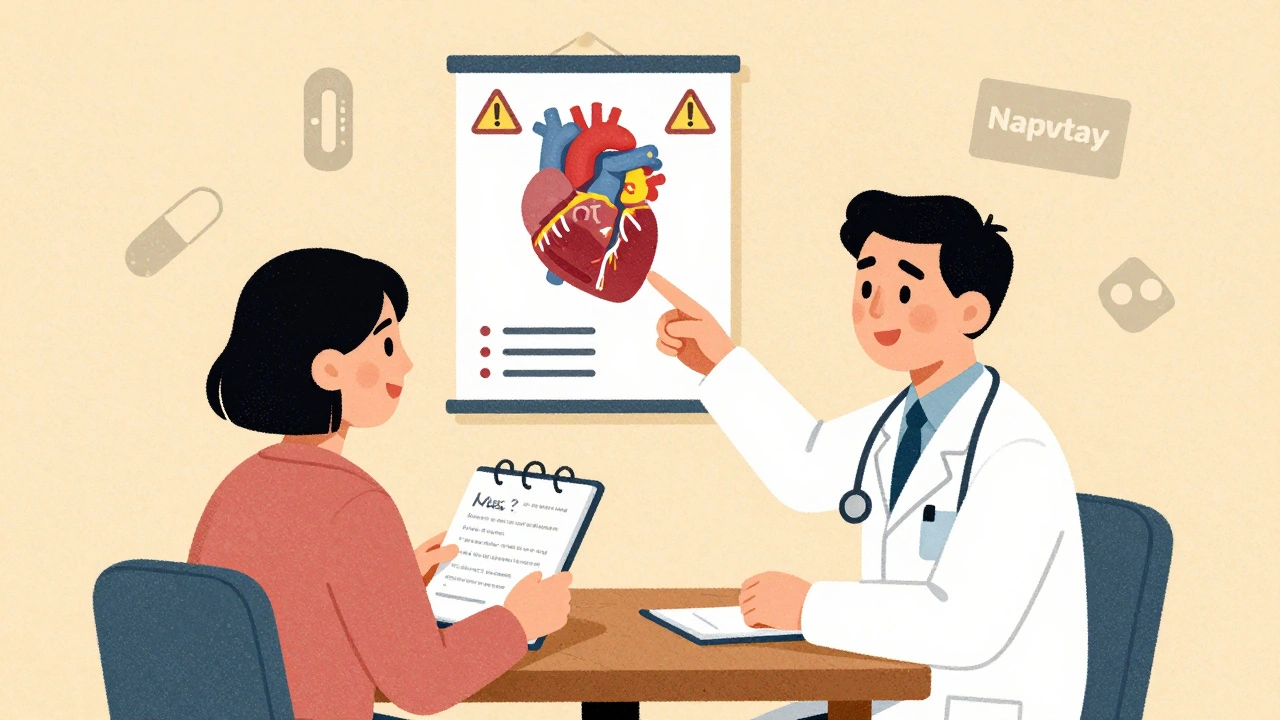
In real-world practice, most doctors follow a simple checklist:- Ask about personal and family heart history-especially sudden death, arrhythmias, or unexplained fainting
- Perform a physical exam: listen for heart murmurs, check pulse and blood pressure
- Check blood pressure and heart rate at baseline, then again 1-3 months after starting
- Repeat checks every 6-12 months during ongoing treatment
- Order an ECG only if there’s a red flag in history or exam
Prescription vs. Illicit: A Big Difference
It’s easy to lump all stimulants together. But the risks aren’t the same. Prescription stimulants are dosed carefully, monitored, and manufactured under strict controls. Even though they carry some risk, the benefits for ADHD often outweigh them-especially when used as directed. Illicit stimulants? That’s a different story. Cocaine and meth don’t just affect the heart-they wreck it. They cause structural changes over time, scar heart tissue, and create electrical chaos. Studies show chronic users are far more likely to have QT prolongation, ventricular tachycardia, and even sudden cardiac arrest. There’s no safe dose. No monitoring. No safety net.What If You Can’t Take Stimulants?
If your heart doesn’t tolerate stimulants-or if you’re just worried about the risk-there are alternatives. They’re not as fast-acting or as effective for everyone, but they work.- Atomoxetine (Strattera): A non-stimulant that works on norepinephrine. It takes 4-8 weeks to kick in, but it doesn’t raise heart rate or blood pressure much. About 50-60% of people see improvement.
- Guanfacine (Intuniv): Originally a blood pressure pill, it helps with focus and impulse control. Works well for kids and teens. Side effects: drowsiness, low blood pressure.
- Clonidine (Kapvay): Similar to guanfacine. Often used when ADHD comes with anxiety or sleep issues.
What’s Changing in 2025?
The conversation around stimulants and heart health is shifting. The American College of Cardiology is expected to release updated guidelines in late 2025. These won’t ban stimulants. They won’t require ECGs for everyone. Instead, they’ll focus on personalized risk scoring. Researchers are now looking at genetic markers. Some people have variations in adrenergic receptor genes that make them more sensitive to stimulant effects. In the future, a simple blood test might tell you if you’re at higher risk before you even start a pill. For now, the message from cardiologists and psychiatrists is the same: Don’t fear the medication. Fear the silence. If you’re on a stimulant and you’ve never talked to your doctor about your heart, that’s the real risk.When to Call Your Doctor
You don’t need to panic over every skipped beat. But if you notice any of these, reach out:- Heart racing for no reason, especially at rest
- Feeling dizzy or fainting, even briefly
- Chest pain or pressure, especially during activity
- Shortness of breath that doesn’t match your effort
- Palpitations that feel like fluttering or pounding
Final Thought: Balance, Not Fear
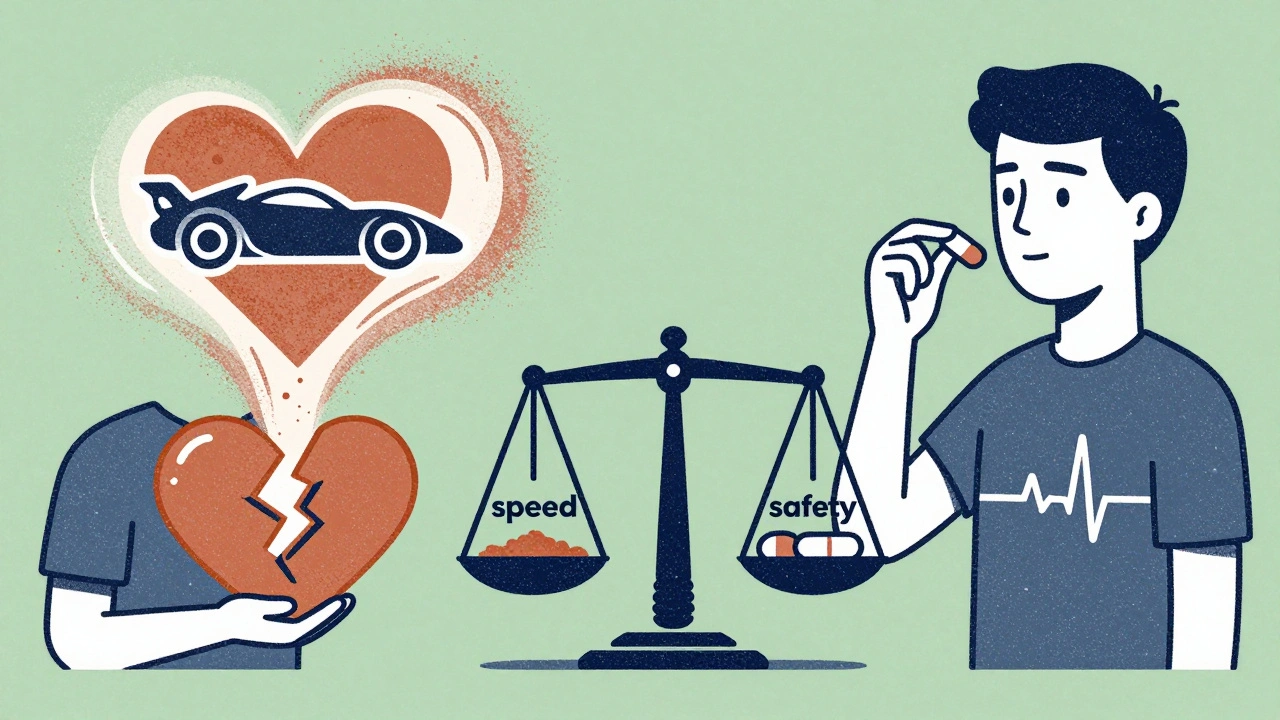
ADHD isn’t just about focus. It’s about self-worth, relationships, school, jobs, and mental health. For many, stimulants restore a life that felt out of reach. But your heart matters too. The goal isn’t to avoid stimulants entirely. It’s to make an informed choice. Talk to your doctor. Share your family history. Get your blood pressure checked. If you’re worried, ask about alternatives. There’s no shame in choosing safety over speed. The best treatment isn’t the one that works fastest. It’s the one you can take without wondering if it’s killing you.Do all stimulants raise the risk of arrhythmias?
Not all stimulants carry the same risk. Prescription ADHD medications like Adderall and Ritalin have a low but real risk, especially in the first month of use or in older adults. Illicit stimulants like cocaine and methamphetamine pose a much higher risk due to their stronger effects on heart ion channels and their tendency to cause structural heart damage over time.
Should I get an ECG before starting ADHD medication?
Routine ECGs aren’t required for everyone. Major guidelines from the American Heart Association and American Academy of Pediatrics say a detailed medical history and physical exam are enough for most people. But if you have symptoms like fainting, chest pain, a family history of sudden cardiac death, or known heart conditions, an ECG is recommended before starting.
Are non-stimulant ADHD meds effective?
Yes, but they work differently. Non-stimulants like Strattera, Intuniv, and Kapvay are about 50-60% effective at reducing ADHD symptoms, compared to 70-80% for stimulants. They take longer to work-weeks, not days-but they don’t raise heart rate or blood pressure significantly. They’re often the first choice for people with heart concerns.
Can I restart stimulants after stopping due to heart concerns?
It depends. If your arrhythmia was temporary and resolved after stopping the medication, and no structural heart damage was found, some doctors may cautiously try a lower dose under close monitoring. But if you had a serious event like ventricular tachycardia or prolonged QT, restarting stimulants is generally not advised. Always consult a cardiologist before reconsidering.
Is it safe to take stimulants if I have high blood pressure?
Not without caution. Stimulants can raise blood pressure further. If your blood pressure is already high or uncontrolled, your doctor will likely delay starting stimulants until it’s managed. If your pressure spikes above the 95th percentile after starting, the medication will usually be stopped or changed. Regular monitoring is essential.


10 comments
Saket Modi
bro i took adderall for 3 years and never had issues... until i started doing kegels during zoom calls. then my heart felt like it was trying to escape my chest. 🤪
Chris Wallace
I’ve been on Strattera for 18 months now. It’s slow. Like, "waited three weeks to notice I didn’t forget my keys again" slow. But I don’t have to check my pulse every hour. I don’t lie awake wondering if my heart’s gonna stage a coup. My doc said my QT interval’s normal, and honestly? That peace of mind is worth the lag. I used to think non-stimulants were for people who couldn’t handle the real stuff. Turns out, they’re for people who want to live past 40.
william tao
It is imperative to underscore that the pharmacological modulation of central nervous system neurotransmission via sympathomimetic agents necessitates a rigorous cardiovascular risk stratification protocol. The absence of mandatory electrocardiographic screening constitutes a glaring lacuna in contemporary clinical practice. One must not conflate statistical probability with individual safety. The data are unequivocal: the risk is non-zero, and therefore, unacceptable.
alaa ismail
Honestly? I switched to guanfacine after my panic attack during a work presentation. Felt like my heart was trying to climb out my throat. Now I just get a little sleepy. And yeah, it took a month to kick in-but I didn’t die. And I got promoted. So... win? 🤷♂️
ruiqing Jane
If you’re reading this and you’ve never discussed your family’s cardiac history with your prescriber-you owe it to yourself to schedule that conversation. Not tomorrow. Not next week. Today. Your heart doesn’t care how productive you are. It only cares if you’re listening.
Carolyn Woodard
The neuropharmacodynamics of dopaminergic and noradrenergic agonism in the context of cardiac repolarization kinetics present a complex interplay between genetic polymorphisms in SCN5A and KCNH2 channels, coupled with epigenetic modulation of beta-adrenergic receptor expression. While population-level risk metrics suggest low incidence, individual susceptibility profiles-particularly in carriers of long QT variants-warrant preemptive pharmacogenomic screening prior to initiation of stimulant regimens.
Allan maniero
I’m 68 and started Adderall last year for focus. My cardiologist said, ‘We’ll monitor you like a hawk.’ Two months in, my BP spiked to 158/94. We paused it. Did an echo, an ECG, everything. Turns out I’ve had a minor mitral valve issue since I was 20-never knew. I’m on guanfacine now. It’s not Adderall. But I’m alive. And I can finally finish a book without falling asleep at page 3.
Anthony Breakspear
Look, stimulants are like spicy food-some folks can handle a ghost pepper, others get a rash from jalapeños. I used to think if you weren’t on Adderall, you were just lazy. Then I met my cousin who had a VT episode after his first Ritalin pill. He’s 29. Now he takes Strattera and runs marathons. The meds don’t define you. Your heart does. And it’s way louder than your ADHD brain.
Zoe Bray
The clinical guidelines promulgated by the American Heart Association and the American Academy of Pediatrics are predicated upon population-based epidemiological models that may not adequately account for individual phenotypic variability in drug metabolism or subclinical cardiac anomalies. Therefore, while not universally mandated, the prudent clinician ought to consider baseline ECG screening for all patients initiating stimulant therapy, irrespective of asymptomatic status.
Girish Padia
People these days are so weak. Back in my day, we took pills and didn’t whine about our hearts. If your heart can’t handle it, maybe you shouldn’t be trying to be productive. Just sit there and watch Netflix like a normal person.