

It starts quietly. A student who used to love math now skips class. A teenager stops hanging out with friends, spends hours staring at the wall, muttering to themselves. A parent notices their child’s handwriting has become unreadable, their clothes are messy, and they jump at shadows. These aren’t just phases. They’re red flags - and they might be the earliest signs of psychosis.
Psychosis isn’t a disease you can catch or a personality flaw. It’s a break from reality. People experiencing it might hear voices no one else hears, believe things that aren’t true, or struggle to organize their thoughts. But here’s the crucial thing: psychosis is treatable - especially when caught early.
What Are the Early Signs of Psychosis?
The shift into psychosis doesn’t happen overnight. It creeps in over weeks or months. Many people don’t realize what’s happening until it’s advanced. That’s why knowing the early warning signs matters.
Look for changes in four key areas:
- Thinking and speech: Conversations become hard to follow. The person jumps from topic to topic, talks in circles, or stops mid-sentence like their thoughts vanished. They might say odd things - like believing the TV is sending them secret messages or that strangers are watching them.
- Perception: They might hear whispers, footsteps, or voices when no one’s around. Colors might seem too bright. Sounds might feel overwhelming. They might feel like things around them are somehow meant just for them.
- Emotions: Mood swings become extreme. They laugh at nothing, cry for no reason, or show no emotion at all. Anxiety and depression often show up first. Some feel paranoid - convinced people are talking about them, even if there’s no evidence.
- Behavior: Personal hygiene drops. They stop showering or changing clothes. They withdraw from family and friends. School or work performance crashes. Sleep patterns flip - they stay up all night or sleep 14 hours a day.
According to the National Alliance on Mental Illness, 78% of people experiencing their first episode of psychosis had a noticeable drop in grades or job performance. Eighty-five percent struggled to concentrate. More than 70% spent increasing amounts of time alone.
Here’s what’s often missed: in the early stages, many people know something’s wrong. They might say, “I think I’m going crazy,” or “I don’t feel like myself.” That’s a critical moment. This is when help can still make a huge difference.
Why Timing Matters More Than You Think
The longer psychosis goes untreated, the harder it is to recover. Studies show the average person in the U.S. waits 74 weeks - almost two years - before getting proper help. That delay isn’t just frustrating; it’s damaging.
Each extra month without treatment increases recovery time by 5 to 7%. It lowers the chance of returning to school, work, or normal relationships by over 3% per month. That’s not a small number. That’s life-changing.
Dr. Lisa Dixon from Columbia University puts it plainly: “The duration of untreated psychosis directly shapes the future. Early action isn’t just helpful - it’s the difference between recovery and long-term disability.”
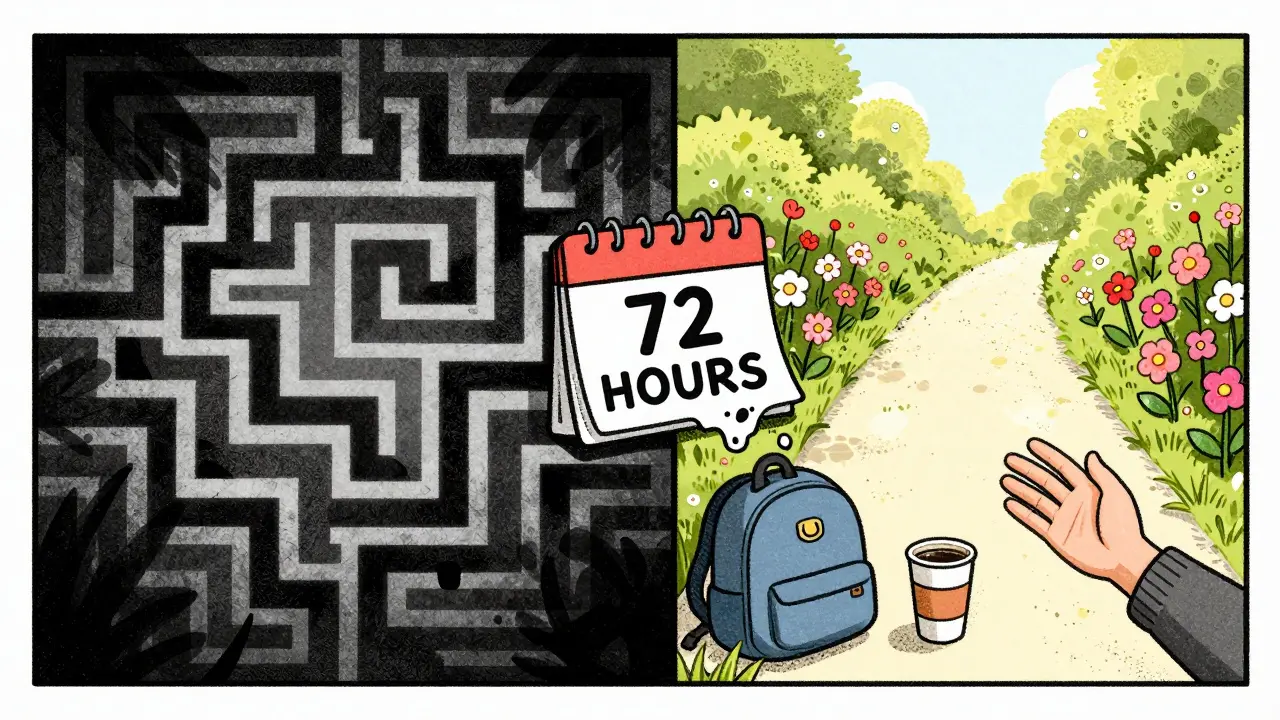
That’s why experts talk about the “golden hour” - not meaning the first 60 minutes, but the first 72 hours after someone first shows clear warning signs. Getting them to a specialist quickly can prevent a full psychotic episode.
What Is Coordinated Specialty Care (CSC)?
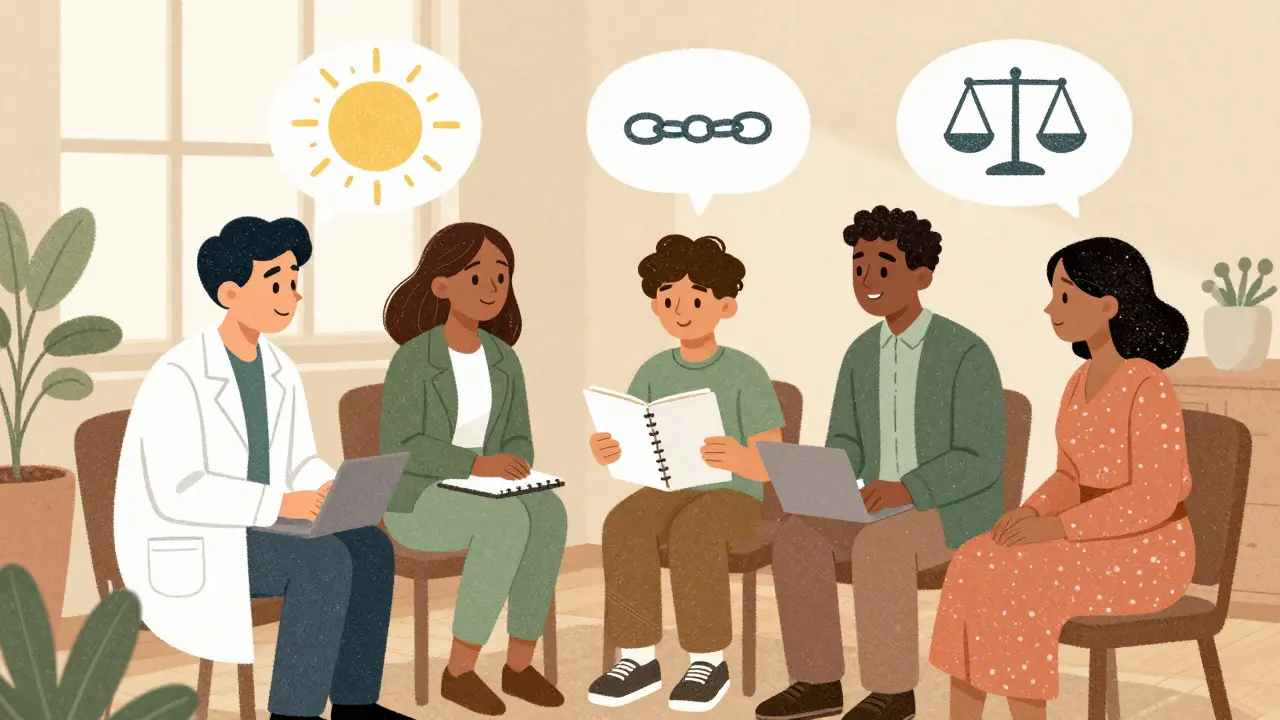
If psychosis is a storm, Coordinated Specialty Care is the shelter. It’s not just one treatment. It’s a team approach built for people experiencing their first episode of psychosis - usually between ages 15 and 30.
CSC programs have five core parts, all working together:
- Case management: A case manager checks in weekly, sometimes at home. They help with appointments, housing, transportation - whatever’s blocking recovery.
- Family support: Families aren’t bystanders. They get 12 to 20 weekly sessions to learn what psychosis is, how to respond, and how to support without pushing.
- Therapy: Cognitive Behavioral Therapy for psychosis (CBTp) helps people understand their experiences, challenge false beliefs, and manage distressing thoughts without medication.
- Education and work support: Over 80% of CSC participants return to school or work within three months. Programs help them adjust schedules, find mentors, or apply for accommodations.
- Medication management: If meds are needed, they start at low doses - often 25 to 50% of what’s used for chronic cases. The goal isn’t to sedate, but to reduce symptoms gently and safely.
It’s not theory. The RAISE study, led by the National Institute of Mental Health, showed people in CSC programs had 58% better symptom improvement and 42% better daily functioning after two years compared to standard care. They were also 35% more likely to stick with treatment.
Who Delivers CSC - And Where Can You Find It?
CSC programs are run by specialized teams - psychiatrists, therapists, case managers, peer support specialists - all trained in early psychosis. In the U.S., there are now 347 certified CSC programs across 48 states. They’re often attached to community mental health centers, university clinics, or hospitals.
But access isn’t equal. Only 28% of rural counties have a CSC program. Urban areas have 84%. That gap leaves thousands without timely care.
Thankfully, things are changing. The 21st Century Cures Act requires Medicaid-funded programs to offer CSC by 2025. Thirty-two states have already created billing codes so these services get paid. Federal funding jumped to $27.8 million in 2022.
Still, only 42% of people with first-episode psychosis get into CSC within the critical two-year window. That’s a massive gap. Many families don’t know where to turn. Doctors miss the signs. Schools don’t have the training.
How to Get Help - Step by Step
If you notice these signs in someone you care about, here’s what to do:
- Don’t panic, but don’t wait. Early signs aren’t an emergency - but they’re urgent. Don’t assume they’ll “grow out of it.”
- Use a screening tool. The 16-item Prodromal Questionnaire (PQ-16) is used by clinics nationwide. A score of 8 or higher means a full assessment is needed. You can find it online through mental health nonprofits.
- Call a local CSC program. Search “early psychosis program near me” or contact your state’s mental health department. Oregon’s EASA program, for example, reduced the time between first signs and treatment from 112 weeks to just 26.
- Go with them. Many people feel scared or ashamed. Your presence makes a difference. Don’t argue about their beliefs. Say, “I’m worried about you. Let’s get help.”
- Ask about family support. Programs that include families work better. Make sure they’re offering it.
Some people worry about medication. But in CSC, meds are optional at first. Therapy and support come first. If meds are added, they’re low-dose and closely monitored. The goal is to help the person feel like themselves again - not to numb them.
What’s New in Psychosis Treatment?
Science is moving fast. In 2022, researchers identified 12 blood markers that can predict who’s likely to develop psychosis with 82% accuracy. That’s not a diagnostic tool yet - but it’s a step toward earlier, more precise intervention.
Programs are also using apps. The PRIME Care app lets users log mood, sleep, and symptoms. Forty-five percent of CSC programs now use digital tools. But here’s the catch: teens use them less than adults. Human connection still matters most.
The new EPINET network is tracking 15 key outcomes across 200+ programs. Early results show 63% of participants achieve symptom remission within a year. That’s better than ever.
And there’s focus on equity. Black Americans wait 2.4 times longer than White Americans to get help. The RAISE-3 study is now testing how to fix that - with culturally tailored outreach, peer support from similar backgrounds, and community-led education.
What You Can Do Right Now
Psychosis isn’t rare. It affects about 100,000 young people in the U.S. each year. But most families don’t know what to look for. Here’s how you can help:
- Learn the signs. Share this info with teachers, coaches, and family members.
- Know your local resources. Find the nearest CSC program now - before you need it.
- Ask questions. If your doctor dismisses concerns as “just stress,” push back. Say, “Could this be early psychosis?”
- Reduce stigma. Don’t say “crazy” or “psycho.” Use words like “someone experiencing psychosis.” Language shapes how people feel about seeking help.
The most powerful thing you can do is act early. Not because psychosis is scary - but because recovery is possible. With the right support, people go back to school, get jobs, build relationships, and live full lives.
This isn’t about preventing psychosis forever. It’s about giving someone back their future - before it slips away.
Can psychosis go away on its own?
No. Psychosis doesn’t just disappear. Without treatment, symptoms usually get worse over time. Some people may have a single episode and recover with help, but most will struggle with recurring episodes or long-term disability if untreated. Early intervention through Coordinated Specialty Care gives the best chance for full recovery.
Is psychosis the same as schizophrenia?
No. Psychosis is a symptom - not a diagnosis. Schizophrenia is one condition that can cause psychosis, but so can bipolar disorder, severe depression, drug use, or even extreme stress. Many people who experience a single episode of psychosis never develop schizophrenia. That’s why early treatment focuses on the symptoms, not labeling the person.
Are antipsychotic medications dangerous?
When used correctly in early psychosis, second-generation antipsychotics are generally safe and effective. In Coordinated Specialty Care, they start at very low doses - often half of what’s used for chronic cases. Side effects like weight gain or drowsiness are monitored closely. The risk of not treating psychosis - losing education, jobs, relationships - is far greater than the risk of carefully managed medication.
Can kids and teens get Coordinated Specialty Care?
Yes. CSC is designed specifically for young people, ages 15 to 30. Programs tailor therapy, education support, and family involvement to developmental needs. Teens respond better to peer support and school-based services than adult-focused clinics. Many programs even partner with schools to make it easier to attend.
What if I’m not sure it’s psychosis?
That’s exactly why you should get an evaluation. Early psychosis symptoms overlap with anxiety, depression, ADHD, or even burnout. A trained clinician can tell the difference. You don’t need a diagnosis to get help - just concern. Most CSC programs offer free screenings and won’t push you into treatment unless it’s clearly needed.
How long does Coordinated Specialty Care last?
Most programs last 2 to 5 years, with the most intensive support in the first year. As the person improves, team contact decreases - from weekly to monthly. The goal is to build independence. Many continue with therapy or support groups long after formal CSC ends, but they no longer need daily team oversight.




9 comments
Bryan Woods
It's staggering how many early signs are dismissed as 'teenage behavior' or 'stress.' I've seen this in my own family - a quiet withdrawal, messy room, slipping grades - and we thought it was just puberty. If someone had told us about Coordinated Specialty Care back then, things could've been so different. Early intervention isn't just medical - it's compassionate.
Ryan Cheng
Real talk: if your kid starts talking like they're in a David Lynch movie and stops showering, don't wait for a 'real diagnosis.' Call a CSC program. They don't need to be labeled to get help. I work in a high school and we're training staff to spot these signs now - no stigma, just support. It's working.
wendy parrales fong
I think the most beautiful part of this is how CSC treats people like humans, not cases. Not 'fix the brain,' but 'help the person come back to themselves.' That shift in mindset? It's everything. I've met people who thought they were broken - and now they're teaching art classes. That’s the power of patience and care.
Jeanette Jeffrey
Let’s be real - most of these 'early signs' are just kids being weird or lazy. I’ve seen too many parents panic over a messy room and call it psychosis. Medication is overprescribed, and these programs are basically government-funded therapy for entitlement. Wake up. Not every odd kid needs a team.
Shreyash Gupta
But what if they're just on weed? 😅 I mean, my cousin in Delhi hears voices after smoking too much ganja - is that psychosis or just bad weed? 🤔 Also, why do they always say 'young people'? What about older folks? 🤷♂️
Ellie Stretshberry
i saw my sister go through this and no one knew what to do... we thought she was just depressed. she stopped talking for weeks. i wish we'd known about csc sooner. the team helped her so much. now she's back in college and even started a blog. it's not perfect but it's better. thank you for sharing this
Zina Constantin
As a Black woman who grew up in a community where mental health was whispered about, I can tell you - this article is life-changing. We need culturally grounded CSC programs everywhere. Not just in cities. My cousin waited two years because the nearest clinic was 200 miles away. This isn't just medical - it's justice.
Dan Alatepe
Bro... I seen this in my cousin in Lagos. He started talking to the TV like it was his mama. We took him to a pastor first - bless his soul - but nothing worked. Then we found a clinic that did CSC-style care. He’s working now. No drugs. Just listening, support, and someone who didn’t call him crazy. This ain’t magic - it’s humanity. 🙏
Angela Spagnolo
...I just... I didn't know... I thought it was just anxiety... I'm so sorry I waited... I'm going to call the CSC program tomorrow... I'm so scared... but I'm going to do it... please... someone... tell me I'm not too late...