
TCA Side Effect Assessment Tool
Your Side Effect Risk Assessment
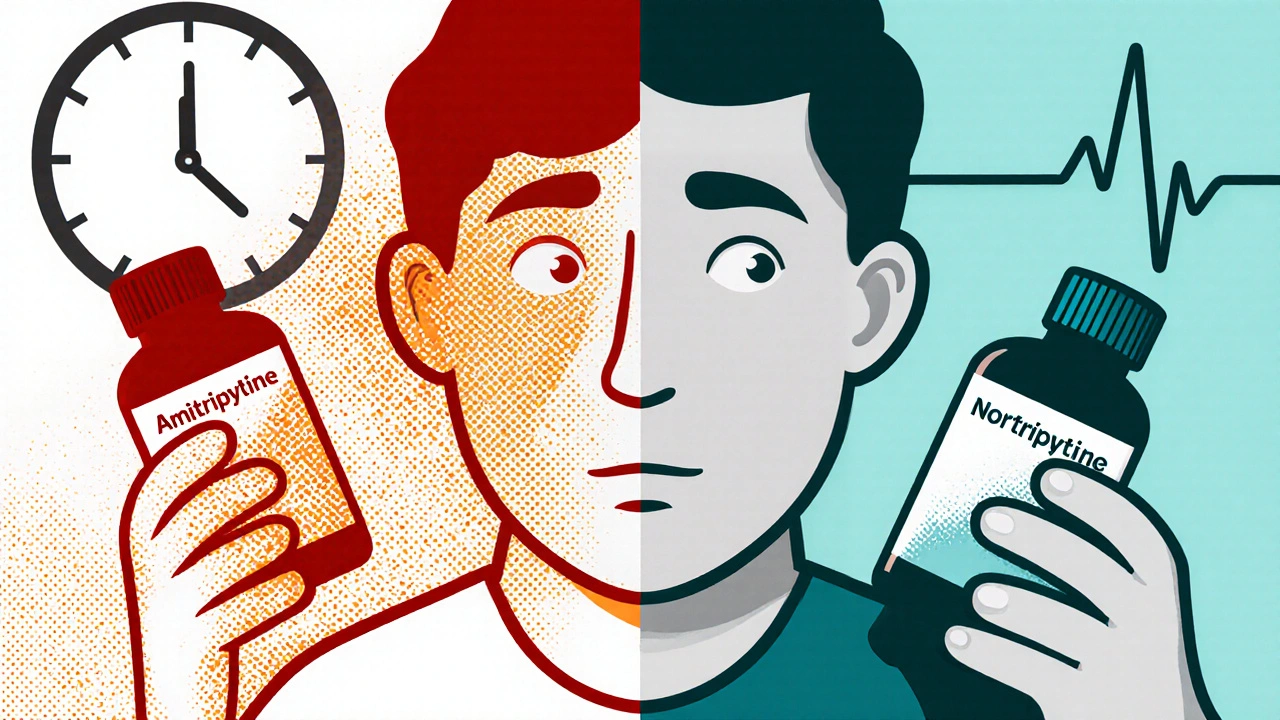
Tricyclic antidepressants (TCAs) like amitriptyline and nortriptyline aren’t new. They’ve been around since the 1950s, and while they’ve been pushed to the sidelines by newer drugs, they still work-especially when other antidepressants fail. But they come with a heavy price tag in side effects. If you’re considering one of these meds, or already taking one, you need to know what you’re really signing up for.
How TCAs Work (And Why They Cause So Many Side Effects)
TCAs don’t just boost serotonin like SSRIs do. They hit multiple targets at once: serotonin, norepinephrine, acetylcholine, histamine, and adrenaline receptors. That’s why they can help with depression, nerve pain, and even migraines. But that same broad action is why they cause dry mouth, dizziness, blurred vision, and heart rhythm changes.
Amitriptyline, for example, has an extremely strong grip on muscarinic receptors (Ki = 1.8 nM), which control things like saliva production and bladder function. That’s why dry mouth and trouble peeing are so common. Nortriptyline, its metabolite, binds less tightly to these receptors-making it slightly gentler on the body. That’s why doctors often switch patients from amitriptyline to nortriptyline when side effects get too rough.
Common Side Effects: The Everyday Struggles
Most people on TCAs experience at least one of these:
- Dry mouth - Affects up to 30% of amitriptyline users. It’s not just annoying-it leads to cavities, gum disease, and mouth infections. Many patients go through multiple bottles of saliva substitutes each month.
- Blurred vision - Happens in 15-20% of users. It usually clears up after a few weeks, but some people can’t drive safely during that time.
- Constipation - Up to 25% of users report this. It’s not just uncomfortable; severe cases can lead to bowel obstruction, especially in older adults.
- Urinary retention - Especially risky for men with enlarged prostates. Some need catheters because they literally can’t pee.
- Drowsiness - Amitriptyline knocks out 40% of users. Nortriptyline hits about 25%. That’s why they’re usually taken at night.
- Orthostatic hypotension - A sudden drop in blood pressure when standing up. Causes dizziness, fainting, and increases fall risk-especially dangerous for seniors.
- Fast heart rate - Resting heart rates can jump 10-20 beats per minute. For someone with heart disease, this is a red flag.
These aren’t rare quirks. They’re predictable, well-documented, and happen often enough that doctors should warn you before prescribing.
Serious Risks: When TCAs Can Be Dangerous
Some side effects aren’t just uncomfortable-they can be life-threatening.
Heart problems are the biggest concern. TCAs can prolong the QTc interval on an ECG by 20-40 milliseconds. That’s enough to trigger dangerous heart rhythms like torsades de pointes, which can lead to sudden death. The risk climbs with doses over 100 mg daily, and patients with existing heart conditions should never start one without an ECG first.
Overdose is deadly. Unlike SSRIs, which are relatively safe in overdose, TCAs can kill you with just a few extra pills. Symptoms include widened QRS complex on ECG, seizures, low blood pressure, and respiratory failure. The mortality rate per overdose is higher than any other antidepressant class.
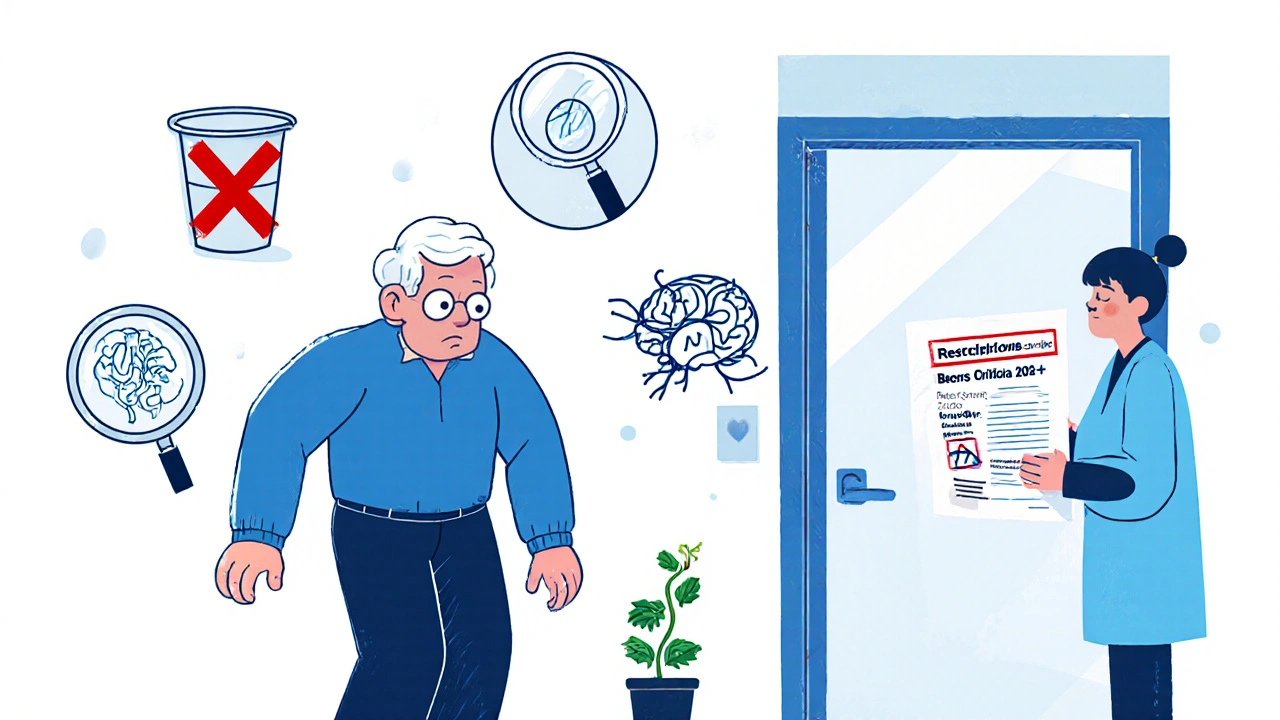
Cognitive decline is another silent threat. In people over 65, 25% experience confusion and 15% become disoriented. The Beers Criteria (2023) specifically says: avoid amitriptyline in older adults. Studies show a 70% higher risk of falls and a 50% increased chance of dementia-like symptoms.
Why Doctors Still Prescribe Them
If TCAs are so risky, why do they still exist?
Because they work where others don’t.
A 2018 Lancet meta-analysis found that TCAs have a 65-70% response rate in treatment-resistant depression-compared to 50-55% for SSRIs. For people who’ve tried three or four other meds and nothing helped, TCAs can be the last option that works.
They’re also the gold standard for neuropathic pain. A 2020 Cochrane Review showed amitriptyline gives at least 50% pain relief in 35-40% of patients with diabetic nerve pain. Duloxetine, a newer drug, only helps 20-25%. For chronic pain patients, that difference can mean the difference between living and just surviving.
And they’re cheap. Generic amitriptyline costs as little as $4 a month in the U.S. That matters when insurance won’t cover newer, pricier drugs.
Amitriptyline vs. Nortriptyline: What’s the Difference?
Many patients start on amitriptyline because it’s the most prescribed TCA. But here’s the truth: nortriptyline is often the better choice.
| Feature | Amitriptyline | Nortriptyline |
|---|---|---|
| Primary use | Depression, neuropathic pain, migraines | Depression, neuropathic pain (less sedating) |
| Typical starting dose | 25-50 mg daily | 25 mg daily |
| Max daily dose | 150-200 mg | 100-150 mg |
| Sedation | High (up to 40%) | Moderate (around 25%) |
| Anticholinergic effects | Very strong | Moderate |
| Cardiac risk | Higher | Lower |
| Best for | Pain-heavy depression, nighttime use | Older adults, patients sensitive to sedation |
Nortriptyline is a secondary amine TCA. That means it’s less likely to cause dry mouth, constipation, or confusion. It’s also less likely to cause weight gain. For patients over 60, or those with heart issues, nortriptyline is often the safer pick-even if it’s slightly less potent for pain.
Who Should Avoid TCAs Altogether?
There are clear red flags:
- History of heart attack, arrhythmias, or heart failure
- Glaucoma (TCAs can raise eye pressure)
- Enlarged prostate or urinary retention
- Severe constipation or bowel obstruction
- History of seizures
- Age 65 or older-especially if already showing memory issues
- Taking other drugs that prolong QTc (like certain antibiotics or antifungals)
If you’re on any of these, your doctor should offer alternatives before even considering a TCA.
Real People, Real Experiences
Online forums tell the real story:
On Reddit, one user wrote: “Amitriptyline killed my nerve pain-but I needed three bottles of Biotene a week and still got two cavities. Switched to nortriptyline. Better, but still wiped me out.”
On Drugs.com, 38% of amitriptyline reviews mention “constant cotton mouth” or “blurred vision that made driving dangerous.” One woman said she needed a catheter because she couldn’t urinate.
But others say it saved their life: “After 10 years of 15 migraines a month, amitriptyline cut them to 3. The weight gain sucked, but I could finally leave the house.”
The pattern? TCAs work for some-badly. For others, they’re unbearable. There’s no middle ground.
How to Use TCAs Safely
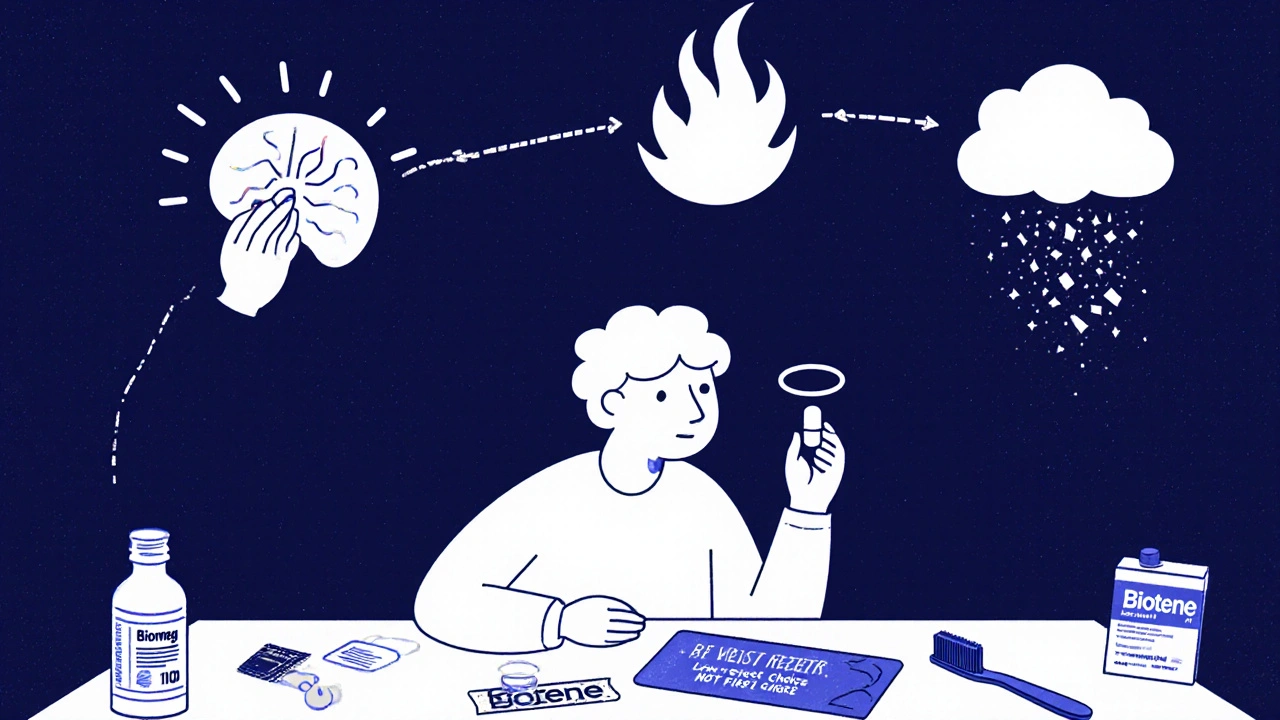
If your doctor says yes, here’s how to minimize harm:
- Start low, go slow - Begin with 10-25 mg at bedtime. Don’t rush to increase the dose.
- Get an ECG before starting - Especially if you’re over 50 or have heart issues.
- Rise slowly - Stand up from sitting or lying down in stages to avoid fainting.
- Brush and floss daily - Use fluoride toothpaste and sugar-free gum to fight dry mouth.
- Watch for urinary trouble - If you can’t pee or feel bloated, call your doctor immediately.
- Don’t stop suddenly - Withdrawal can cause electric-shock sensations, nausea, and anxiety. Taper over 4-6 weeks.
- Give it time - It takes 2-4 weeks to work. Don’t quit after a week because you feel worse.
The Future of TCAs
TCAs are fading from first-line use. Only 5-7% of antidepressant prescriptions in the U.S. are for TCAs today-down from 30% in the 1990s.
But they’re not disappearing. New research is finding smarter ways to use them:
- Low-dose amitriptyline (10-25 mg) combined with an SSRI can boost results while cutting side effects.
- Genetic testing for CYP2D6 metabolism can predict who will have too much drug in their system-helping avoid toxic buildup.
- Some clinics now use TCAs only after three failed SSRI/SNRI trials, as recommended by the American Psychiatric Association.
For now, they’re not the go-to. But for the right person-someone with stubborn pain, treatment-resistant depression, and no other options-they’re still a lifeline.
Are tricyclic antidepressants still prescribed today?
Yes, but rarely as a first choice. TCAs like amitriptyline and nortriptyline are now mostly used when SSRIs and SNRIs don’t work-especially for chronic nerve pain, migraines, or severe treatment-resistant depression. They’re prescribed in about 5-7% of antidepressant cases today, down from 30% in the 1990s.
Which TCA has the fewest side effects?
Nortriptyline and desipramine generally have fewer side effects than amitriptyline or imipramine. They’re secondary amine TCAs, meaning they’re less likely to cause dry mouth, constipation, blurred vision, or confusion. Nortriptyline is often preferred for older adults or those sensitive to sedation.
Can TCAs cause weight gain?
Yes. Amitriptyline is especially known for causing weight gain-often 10-15 pounds in the first six months. This is due to increased appetite and slowed metabolism from histamine blockade. Nortriptyline causes less weight gain, but it’s still possible. Monitoring diet and activity helps.
Why are TCAs dangerous for elderly patients?
TCAs have strong anticholinergic effects that worsen confusion, memory, and balance in older adults. Studies show a 70% higher risk of falls and a 50% increased chance of cognitive decline. The Beers Criteria explicitly advises avoiding amitriptyline and other high-anticholinergic TCAs in people over 65.
Is it safe to drink alcohol while taking TCAs?
No. Alcohol adds to the sedative effects of TCAs, increasing dizziness, drowsiness, and risk of falls. It can also worsen low blood pressure and heart rhythm problems. Mixing alcohol with TCAs is strongly discouraged.
How long does it take for TCAs to work?
It takes 2-4 weeks for TCAs to show full antidepressant effects. For nerve pain, relief may start in 1-2 weeks but often takes up to 6 weeks. Many patients stop too early because they don’t feel better right away-this is why patience and doctor follow-ups are crucial.
Can you overdose on TCAs?
Yes, and it’s life-threatening. Even a small overdose can cause seizures, dangerously low blood pressure, heart rhythm disturbances, and respiratory failure. TCAs have the highest fatality rate per overdose of any antidepressant. Never take more than prescribed, and keep them out of reach of children.
Do TCAs affect sexual function?
Yes. About 35-40% of male users report reduced libido, delayed orgasm, or erectile dysfunction. This is due to their effect on neurotransmitters and hormones. It’s often underreported but can be a major reason for stopping treatment.
Final Thoughts: When TCAs Are Worth the Risk
TCAs aren’t the easy answer. They’re the hard one. The last resort. The option you pick when everything else has failed.
For someone with nerve pain that won’t quit, or depression that refuses to lift-even after five other meds-amitriptyline can be the only thing that brings relief. But that relief comes with a cost: dry mouth, dizziness, confusion, and heart risks.
If you’re on one, know the signs. If you’re considering one, ask the hard questions. Is this the best option-or just the only one your doctor hasn’t ruled out yet?
There’s no shame in needing a TCA. But there’s real danger in using one without understanding what you’re letting yourself in for.



12 comments
Aki Jones
Let’s be real-TCAs aren’t just drugs, they’re government-approved chemical mind-wipes disguised as treatment. The FDA knows this. The pharmaceutical industry profits from the fact that you’ll need lifelong dental care, catheters, and ECGs just to survive their ‘magic pill.’ They’ve been quietly replacing SSRIs with TCAs in VA hospitals because they’re cheaper-and patients are disposable. You think your doctor cares? They’re paid by the pill. Read the 2023 Beers Criteria again. It’s not a suggestion. It’s a warning label written in blood.
Jefriady Dahri
Man, this post hit different 😔 I’ve been on nortriptyline for 8 months for neuropathy, and yeah-the dry mouth is brutal, but I can finally walk to the grocery store without crying. I carry a water bottle everywhere, chew sugar-free gum like it’s my job, and my dentist loves me now (in a good way). It’s not perfect, but it’s the first thing that didn’t make me feel like a zombie. If you’re scared, start low, talk to your doc, and don’t give up too soon. You got this 💪
Elise Lakey
I appreciate how thorough this is. I’ve been on amitriptyline for migraines and had no idea about the QTc prolongation risk. My doctor never mentioned an ECG. I’m going to request one next week. Also, the part about urinary retention-my dad had to get a catheter after starting it. I never connected it until now. Thank you for writing this. It’s scary, but necessary.
Erika Hunt
It’s fascinating how these drugs are this powerful and this dangerous at the same time-it’s like they were designed by someone who knew exactly how to balance efficacy with collateral damage. The fact that they work so well for treatment-resistant depression and neuropathic pain, yet come with this laundry list of side effects, makes me wonder if we’re just trading one kind of suffering for another. And yet, for some people, the trade is worth it. I’ve seen friends go from bedridden to functional on nortriptyline, and I’ve seen others end up in the ER because they didn’t know about the cardiac risks. There’s no universal answer here-only individual risk assessments, and that’s terrifying.
Sharley Agarwal
Don’t take TCAs. You’ll regret it. Period.
prasad gaude
In India, we call these ‘old-school pills’-grandma’s remedy for sadness. My uncle took amitriptyline for 12 years. He said it gave him peace, but he forgot his own birthday three times. The dry mouth? He kept a glass of water by his bed like it was holy water. We didn’t know about QT prolongation until his heart skipped once during Diwali. Now, we use yoga, turmeric, and silence. Sometimes, the body heals when the mind stops fighting.
Srikanth BH
For anyone considering TCAs-don’t panic, but do your homework. I was skeptical too, but after three failed SSRIs, nortriptyline gave me back my life. The first two weeks were rough-I felt like a zombie with cotton in my mouth-but by week four, I could sleep through the night for the first time in years. I started with 10mg. Took it slow. Got an ECG. Brushed my teeth religiously. And now? I’m not ‘cured,’ but I’m living. You can do this. Just don’t rush it.
Rachel Villegas
This is one of the clearest, most balanced summaries I’ve read on TCAs. I’ve been on nortriptyline for chronic pain for over a year and the side effects are real, but manageable. I wish more doctors would present the trade-offs this honestly. Thank you for including the comparison table-it’s invaluable.
Amy Hutchinson
Wait so you’re saying your doctor just gave you this stuff without even checking your heart? Are you kidding me? I had a cousin who died from a TCA overdose because the ER didn’t know what they were looking at. You need to demand an ECG. Like, right now. Don’t wait. I’m not being dramatic-I’m trying to save your life.
Archana Jha
TCAs are just the beginning… the real agenda is to make you dependent on saliva substitutes, catheters, and cardiac monitors so Big Pharma can sell you lifetime supplies. They know you’ll get addicted to the relief, then trap you in a cycle of side effects that require more meds. The CYP2D6 testing? That’s not for your safety-it’s to make sure you metabolize it slow enough to keep buying. And don’t get me started on how they use the ‘treatment-resistant’ label to push people into this hell
Andrew Camacho
Wow. So you’re telling me these drugs are basically poison with a prescription label? And doctors still hand them out like candy? I mean, come on. If SSRIs don’t work, maybe it’s not that your brain is broken-it’s that the system is broken. You’re not failing. The system is. And now you’re being handed a chemical grenade and told to ‘be patient.’ This isn’t medicine. This is institutional neglect dressed up as science.
Arup Kuri
Anyone who takes TCAs is asking for trouble. My cousin took amitriptyline for anxiety and ended up in a psych ward after his heart went haywire. He was 34. No heart problems before. Now he’s on beta blockers for life. If your doctor prescribes this without screaming WARNING at you, find a new doctor. These aren’t medications. They’re time bombs with a 10% chance of killing you