
What Makes These Three Dementias Different?
When people hear the word "dementia," they often think of memory loss - forgetting names, repeating questions, getting lost in familiar places. But dementia isn’t one thing. It’s a group of brain disorders, each with its own cause, pattern, and impact. Three of the most common - and often misunderstood - types are vascular dementia, frontotemporal dementia (FTD), and Lewy body dementia (LBD). Unlike Alzheimer’s, which most people associate with dementia, these three don’t always start with memory problems. And that’s where things get tricky.
Getting the right diagnosis isn’t just about labeling a condition. It’s about choosing the right treatment, avoiding dangerous medications, and preparing for how the disease will unfold. Misdiagnose LBD as Alzheimer’s, and a person could be given an antipsychotic that causes paralysis or even death. Mistake FTD for depression, and someone in their 50s might be sent to a psychiatrist instead of a neurologist. Vascular dementia? If you don’t treat high blood pressure, the next stroke could come faster than you expect.
Vascular Dementia: When Blood Flow Fails
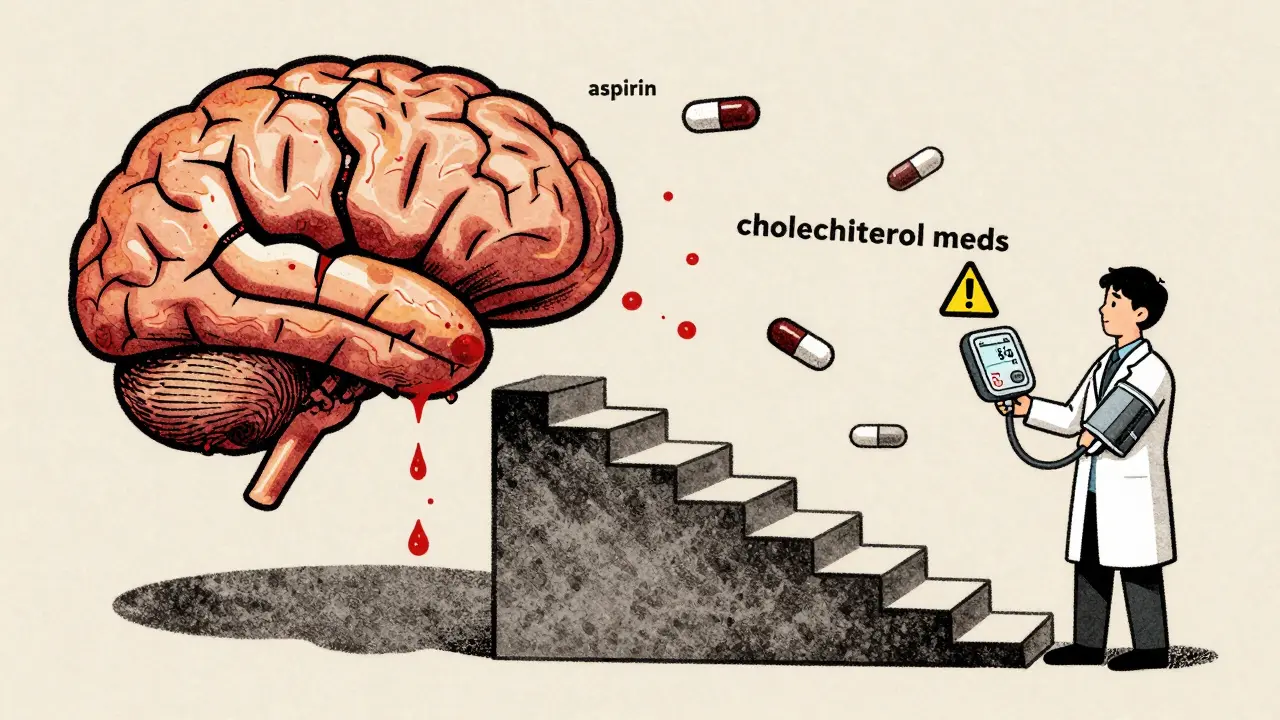
Vascular dementia happens when the brain doesn’t get enough oxygen because blood vessels are damaged. This isn’t one big stroke - it’s often many tiny ones, or long-term wear and tear from high blood pressure, diabetes, or clogged arteries. These small injuries kill off brain tissue in patches, and over time, those patches add up.
What sets vascular dementia apart? The way it progresses. Instead of slowly fading, symptoms often show up in steps. A person might seem fine for months, then suddenly struggle to follow a conversation or forget how to pay bills - right after a mini-stroke. Then they stabilize again, until the next event. This stepwise decline is a red flag.
Symptoms go beyond memory. People may have trouble planning, making decisions, or moving slowly. They might lose bladder control or walk with a shuffling gait. Hallucinations and delusions happen too, but less often than in Lewy body dementia.
The good news? You can slow it down. Controlling blood pressure (keeping it under 130/80), managing diabetes, lowering cholesterol, and taking aspirin or similar blood thinners can reduce future damage. The SPRINT-MIND trial showed that aggressive blood pressure control cut the risk of mild cognitive decline by nearly 20%. This isn’t just about treating dementia - it’s about preventing more strokes.
Frontotemporal Dementia: Personality Before Memory
Imagine your neighbor, once warm and funny, suddenly becoming cold, rude, or emotionally flat. They start stealing from the grocery store, eating compulsively, or losing all interest in family. They don’t forget your name - but they don’t care if they see you anymore. This isn’t just aging. It’s frontotemporal dementia.
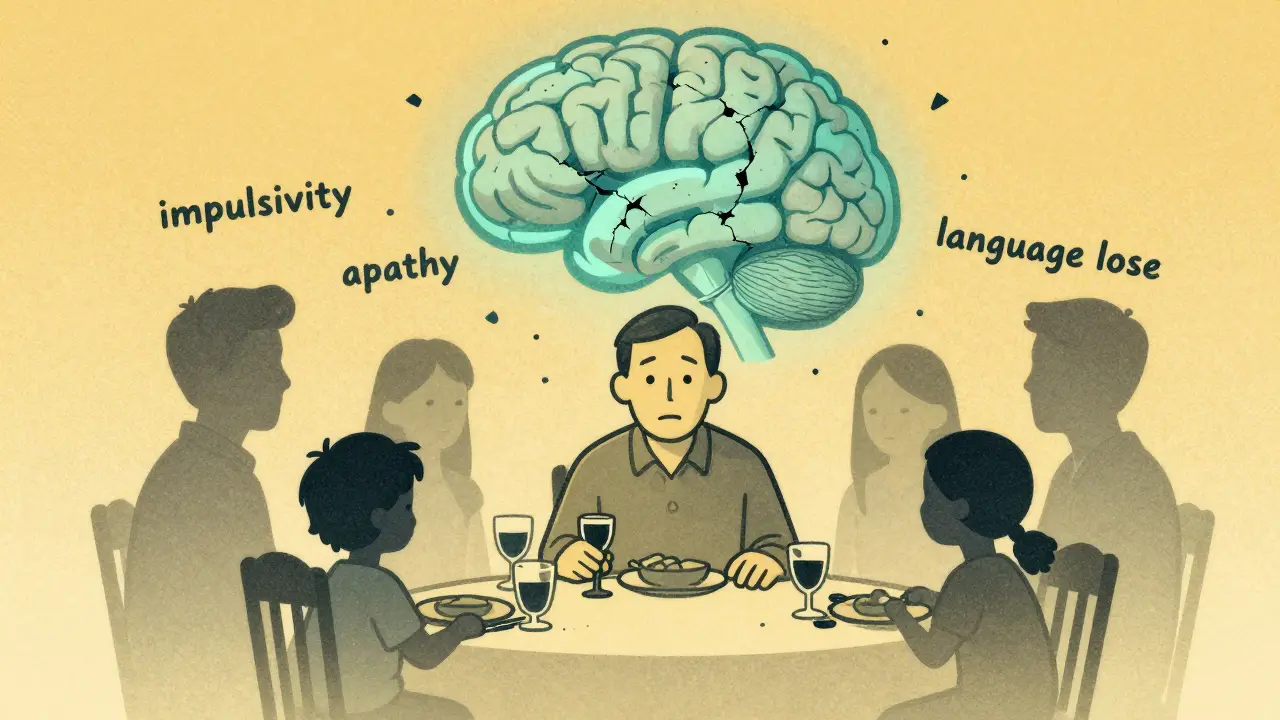
FTD hits the front and side parts of the brain - the areas that control behavior, judgment, and language. Unlike Alzheimer’s, memory stays mostly intact in the early stages. Instead, personality changes take center stage. This is why it’s so often mistaken for depression, bipolar disorder, or even schizophrenia. Up to half of FTD cases are misdiagnosed as psychiatric conditions.
FTD usually starts between ages 45 and 65 - making it the most common dementia in people under 60. It doesn’t wait for retirement. People in their prime working years lose jobs, marriages fall apart, and families scramble to understand what’s happening.
There are three main patterns: behavioral changes (like impulsivity or apathy), language problems (trouble speaking or understanding words), and movement issues (similar to Parkinson’s). Brain scans show clear shrinkage in the frontal and temporal lobes. There’s no cure, but some people respond to antidepressants like SSRIs for mood swings or compulsive behaviors. Speech therapy helps those with language loss.
What’s heartbreaking is how little research funding FTD gets. Despite affecting millions worldwide, it receives less than 2% of the money Alzheimer’s receives. That means fewer clinical trials, fewer treatment options, and longer waits for answers.
Lewy Body Dementia: The Triple Threat
Lewy body dementia is the most confusing of the three. It’s not one disease - it’s two: dementia with Lewy bodies (DLB) and Parkinson’s disease dementia (PDD). The difference? Timing. If dementia comes first - or within a year of movement problems - it’s DLB. If Parkinson’s symptoms come first and dementia follows years later, it’s PDD.
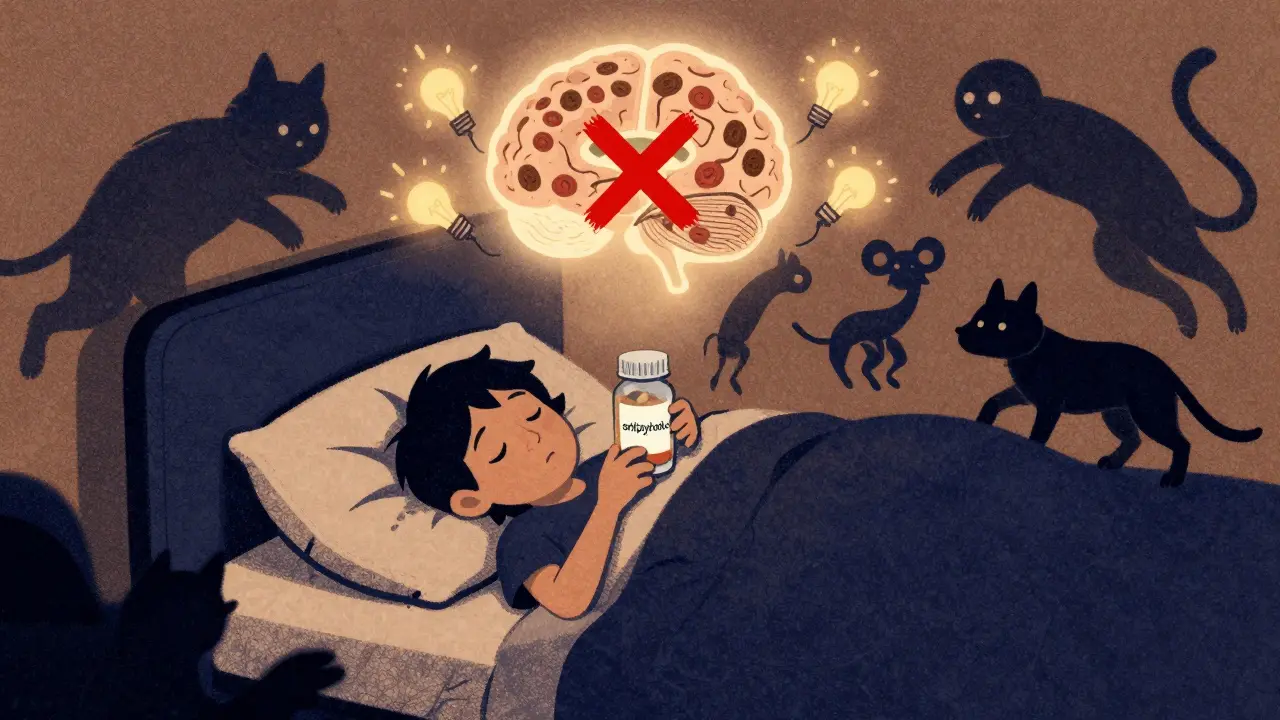
What makes LBD so dangerous? Three core signs that rarely show up together in other dementias: fluctuating attention (one minute alert, the next zoning out), visual hallucinations (seeing people or animals that aren’t there), and Parkinson’s-like movement (stiffness, slow motion, balance issues). Many people also have REM sleep behavior disorder - acting out dreams violently, like punching or yelling in their sleep.
Memory isn’t the first thing to go. People with LBD might forget where they put their keys, but they can still recall their wedding day. What they can’t do is stay focused. Their thinking shifts like a flickering light. That’s why they’re often misdiagnosed as having Alzheimer’s - up to 75% of the time.
Here’s the critical part: antipsychotic drugs can kill people with LBD. Medications like haloperidol or even risperidone - sometimes used for hallucinations in Alzheimer’s - can trigger severe reactions: extreme stiffness, high fever, organ failure, even death. Up to 75% of LBD patients have dangerous reactions. That’s why doctors must avoid them unless absolutely necessary.
The best treatments are cholinesterase inhibitors like rivastigmine, which help with thinking and hallucinations. Physical therapy helps with movement. Sleep issues are managed with melatonin or clonazepam. Early diagnosis reduces hospital stays by 30% - not because of a miracle drug, but because people get the right care from the start.
How They Compare: Side by Side
| Feature | Vascular Dementia | Frontotemporal Dementia (FTD) | Lewy Body Dementia (LBD) |
|---|---|---|---|
| Primary Cause | Reduced blood flow from strokes or vessel damage | Buildup of tau or TDP-43 proteins in frontal/temporal lobes | Alpha-synuclein protein clumps (Lewy bodies) in brainstem and cortex |
| Typical Age of Onset | 65+ | 45-65 (most common under 60) | 50+ |
| Memory Loss Early On? | Yes, but not always first | No - memory often preserved | No - attention and perception affected first |
| Key Symptoms | Stepwise decline, poor judgment, movement problems | Personality changes, impulsivity, language trouble | Fluctuating alertness, visual hallucinations, Parkinson’s symptoms |
| Hallucinations | Occasional | Rare | Very common - often detailed and recurrent |
| Motor Symptoms | Yes - slow movement, balance issues | Yes - in later stages | Yes - early and prominent |
| Diagnosis Tools | Brain MRI showing infarcts or white matter damage | MRI showing frontal/temporal atrophy, FDG-PET | DaTscan, clinical criteria (fluctuations, hallucinations, parkinsonism) |
| Key Treatment | Control blood pressure, diabetes, aspirin | SSRIs for behavior, speech therapy | Cholinesterase inhibitors (rivastigmine), avoid antipsychotics |
| Prognosis | Varies - depends on stroke risk | 6-10 years after diagnosis | 5-8 years after diagnosis |
Why Diagnosis Matters More Than You Think
Doctors don’t always get this right. In one study, 75% of people with Lewy body dementia were first told they had Alzheimer’s. That’s not just an error - it’s a risk. Antipsychotics prescribed for Alzheimer’s can cause sudden death in LBD patients. A single dose can trigger neuroleptic malignant syndrome - a life-threatening reaction.
FTD is often labeled as "just a midlife crisis" or "depression." People are sent to therapists instead of neurologists. They lose jobs, relationships, and independence while waiting for someone to recognize the brain is changing.
Vascular dementia? Many assume it’s just "old age." But if high blood pressure isn’t treated, the next stroke could be fatal - or leave someone completely disabled.
Correct diagnosis isn’t about labels. It’s about safety. It’s about choosing the right medication. It’s about knowing what to expect. It’s about giving families the tools they need to care for someone without putting them in danger.
What You Can Do Now
If you or someone you know is showing signs of dementia - especially if it’s not classic memory loss - don’t wait. Go beyond the basic memory test. Ask for:
- Brain imaging (MRI preferred over CT)
- Neuropsychological testing focused on behavior and attention, not just memory
- Referral to a neurologist who specializes in dementia
For vascular dementia, get your blood pressure checked. If it’s over 130/80, talk to your doctor about lowering it. Control your blood sugar. Quit smoking. These steps don’t just prevent dementia - they prevent strokes.
For FTD, recognize that personality changes aren’t "just being difficult." They’re symptoms. Support groups for caregivers are critical - isolation is common.
For LBD, learn the red flags: hallucinations, sleep acting out, extreme sensitivity to medications. If a doctor suggests an antipsychotic, ask: "Is this safe for Lewy body dementia?" If they hesitate, get a second opinion.
Dementia isn’t one disease. It’s many. And treating them the same can do more harm than good.
What’s Next for Research?
There’s hope on the horizon. Blood tests are being developed to detect early signs of vascular damage and protein buildup. For LBD, drugs like prasinezumab are being tested to clear alpha-synuclein. For FTD, gene-targeting therapies are entering trials for people with inherited forms.
The bigger challenge? Funding. Alzheimer’s gets billions. LBD and FTD together get less than $50 million a year in the U.S. - even though they affect millions. That gap means fewer answers, slower progress, and more families left to figure it out alone.
But awareness is growing. More neurologists are learning to spot the differences. More families are speaking up. And every time someone asks the right question - "Is this Lewy body dementia?" - it brings us one step closer to better care.
Can vascular dementia be reversed?
No, brain damage from strokes can’t be undone. But further damage can be stopped. Controlling blood pressure, diabetes, and cholesterol can prevent new strokes and slow cognitive decline. Some people stabilize or even improve slightly with aggressive vascular risk management.
Is frontotemporal dementia hereditary?
About 30-40% of FTD cases have a strong family history. Mutations in genes like MAPT, GRN, and C9orf72 are linked to inherited forms. Genetic testing is available for families with multiple affected members, but it’s not routine unless there’s a clear pattern.
Why do people with Lewy body dementia have hallucinations?
Lewy bodies build up in brain areas that process vision and perception. This disrupts how the brain interprets what the eyes see, leading to false images - often of people, animals, or shadows. Unlike in psychosis, patients often know these aren’t real, but they still see them clearly.
Can someone have more than one type of dementia?
Yes - it’s called mixed dementia. Up to 40% of people with Alzheimer’s also have Lewy bodies or vascular damage. This makes diagnosis harder and symptoms more complex. Treatment must address all contributing factors.
Are there tests to confirm these dementia types?
There’s no single blood test. Diagnosis relies on clinical symptoms, brain imaging (MRI, PET), and sometimes specialized scans like DaTscan for LBD. For FTD, FDG-PET shows reduced activity in frontal/temporal lobes. Vascular dementia requires MRI to spot strokes or white matter changes.
What should caregivers avoid with Lewy body dementia?
Avoid typical antipsychotics like haloperidol or risperidone - they can cause severe reactions, including death. Even newer ones like quetiapine carry risks. Never give these without a neurologist’s approval. Also avoid medications for nausea or colds that contain anticholinergics - they can worsen confusion.
Final Thought: Know the Signs, Ask the Right Questions
Dementia isn’t a single journey. Vascular dementia is about protecting your blood vessels. Frontotemporal dementia is about recognizing personality shifts as brain disease. Lewy body dementia is about understanding that hallucinations and tremors aren’t just old age - they’re warning signs.
If you’re worried, don’t settle for a quick checkup. Push for a specialist. Bring a list of symptoms - not just memory lapses, but mood changes, sleep issues, or movement problems. Ask: "Could this be one of the other dementias?"
Because sometimes, the difference between a safe path and a dangerous one isn’t a miracle drug - it’s asking the right question at the right time.





13 comments
Roshan Gudhe
This is one of the most lucid breakdowns of non-Alzheimer dementias I've ever read. The way you contrast the progression patterns-stepwise for vascular, personality-first for FTD, and the flickering attention of LBD-is clinically precise yet accessible. I've seen families lose years because they assumed all dementia looks like Grandma forgetting her keys. This should be mandatory reading for primary care docs.
Especially the part about antipsychotics in LBD. I work in ER and have seen three patients coded as 'Alzheimer's with psychosis' die after Haldol. One was 62. His wife had no idea. This isn't just education-it's damage control.
Harriot Rockey
Thank you for writing this. My mom was misdiagnosed with depression for 18 months before we found out it was FTD. She stopped recognizing my voice but could still recite every lyric to 'Bohemian Rhapsody.' The cruelty is that her mind was still there-just trapped behind a wall of apathy. I wish more people understood that dementia isn't about forgetting names-it's about losing the person you love while they're still breathing.
Also, yes, funding is criminal. FTD research gets less than 2% of Alzheimer's money. We need to change that.
Samuel Bradway
I work with elderly patients in home care. One guy with LBD would stare at the wall for hours, then suddenly yell at his dead wife. We thought he was delusional. Turns out he was seeing her-just like the article said. We stopped giving him antipsychotics after reading this. Now we use melatonin and dim the lights at night. He smiles again. Small wins, but they matter.
Caleb Sutton
This is all just corporate pharma propaganda. They don't want you to know the real cause: 5G towers and fluoridated water. Dementia rates spiked after 2010. Coincidence? I think not. The FDA and AMA are in bed with Big Pharma. They profit from misdiagnosis. Antipsychotics? They're not dangerous-they're cover-ups. The truth is being buried under 'clinical trials' and 'peer-reviewed journals.' Wake up.
Jamillah Rodriguez
i mean... i get it? but like... why is this so long?? 🥱
Susheel Sharma
The structural analysis here is admirable, yet the author’s tone betrays a troubling romanticization of neurodegenerative disease as some kind of noble tragedy. Vascular dementia isn’t 'about protecting your blood vessels'-it’s the consequence of decades of poor dietary choices, sedentary lifestyles, and systemic healthcare neglect. FTD isn’t a misunderstood mystery-it’s the price of modern stress and genetic entropy. And LBD? A textbook example of protein misfolding in an aging population that refused to adapt. This isn’t poetry. It’s pathology. And we need more cold, hard science-not emotional appeals.
Rachel Kipps
this was so helpful. i had no idea lbd could be so dangerous with meds. i think my uncle had it but no one ever tested him. i’ll make sure his dr checks for it now. thank you for sharing this. i’ll send it to my family.
Coy Huffman
Man, I wish my dad had read this before he got prescribed risperidone. He went from being sharp as a tack to barely able to stand in two weeks. We thought it was the dementia getting worse. Turns out it was the meds. I’ve been telling everyone I know to ask about LBD if there’s hallucinations + tremors. Don’t let them gaslight you into thinking it’s just old age.
Kunal Kaushik
I’m from India and we don’t talk about dementia here. We call it 'dimag ki bimari' like it's a weakness. This post changed how I talk to my grandparents. My grandma forgets my name sometimes, but she still hums the same lullaby she sang to me as a kid. Maybe it’s not all lost. Thanks for seeing the person, not just the disease.
Mandy Vodak-Marotta
Okay I’m gonna go full essay mode because this hit me in the soul. I’ve been my mom’s caregiver for five years now. She had FTD. She used to be the funniest person alive-told jokes at Thanksgiving that made everyone cry laughing. Then one day she just... stopped. Didn’t care if we cried. Didn’t care if I skipped meals. She’d sit there, staring at the TV, and I’d scream at her to say something, anything. And then I realized: she couldn’t. Not because she didn’t want to. Because her brain stopped telling her how.
I spent two years blaming her. Then I found this article. And I finally understood: she wasn’t being cruel. She was trapped. I stopped yelling. I started singing her songs. I held her hand and told her stories even when she didn’t respond. And you know what? Sometimes she’d squeeze my hand. Just once. That was enough.
So yes, funding is pathetic. Yes, doctors are clueless. But if you’re reading this? You’re not alone. And if you’re caring for someone like this? You’re a goddamn hero. Even on the days you feel like you’re failing. You’re not. You’re just human. And that’s enough.
Janice Williams
I find it deeply irresponsible to present these distinctions as if they are universally recognized or reliably diagnosed. The MRI findings you cite are often ambiguous. Many patients exhibit overlapping pathologies. The so-called 'stepwise decline' in vascular dementia is frequently misattributed-hypoxia, medication side effects, or even urinary tract infections can mimic it. And let’s not pretend FTD is distinct from early-onset Alzheimer’s with behavioral phenotypes. The diagnostic boundaries are porous at best. This article reads like a marketing brochure for neurologists who want to sound authoritative without acknowledging the profound uncertainty inherent in clinical neurology.
Nathan King
A commendable synthesis of current clinical knowledge, though the omission of biomarker advancements-particularly plasma p-tau217 and neurofilament light chain assays-is a notable lacuna. While imaging modalities remain foundational, the advent of blood-based biomarkers promises to revolutionize differential diagnosis in the near term. Furthermore, the assertion that LBD patients exhibit preserved autobiographical memory requires qualification: episodic recall is often intact, but semantic memory degradation occurs earlier than commonly assumed. The therapeutic recommendations remain sound, but the framing should emphasize the probabilistic nature of clinical diagnosis, not the illusion of categorical certainty.
rahulkumar maurya
Let’s be real: this is just another feel-good piece for the Alzheimer’s Association’s donor base. Vascular dementia? It’s just a fancy term for people who ate too much bacon. FTD? That’s what happens when you let your kids raise themselves on TikTok. LBD? Oh no, poor sweet grandma sees dead people-probably because she watched too many horror movies. The real issue isn’t misdiagnosis-it’s that we’ve turned brain disease into a marketable tragedy to sell more MRIs and SSRIs. Stop romanticizing neurodegeneration. Fix the healthcare system. Then we’ll talk.