
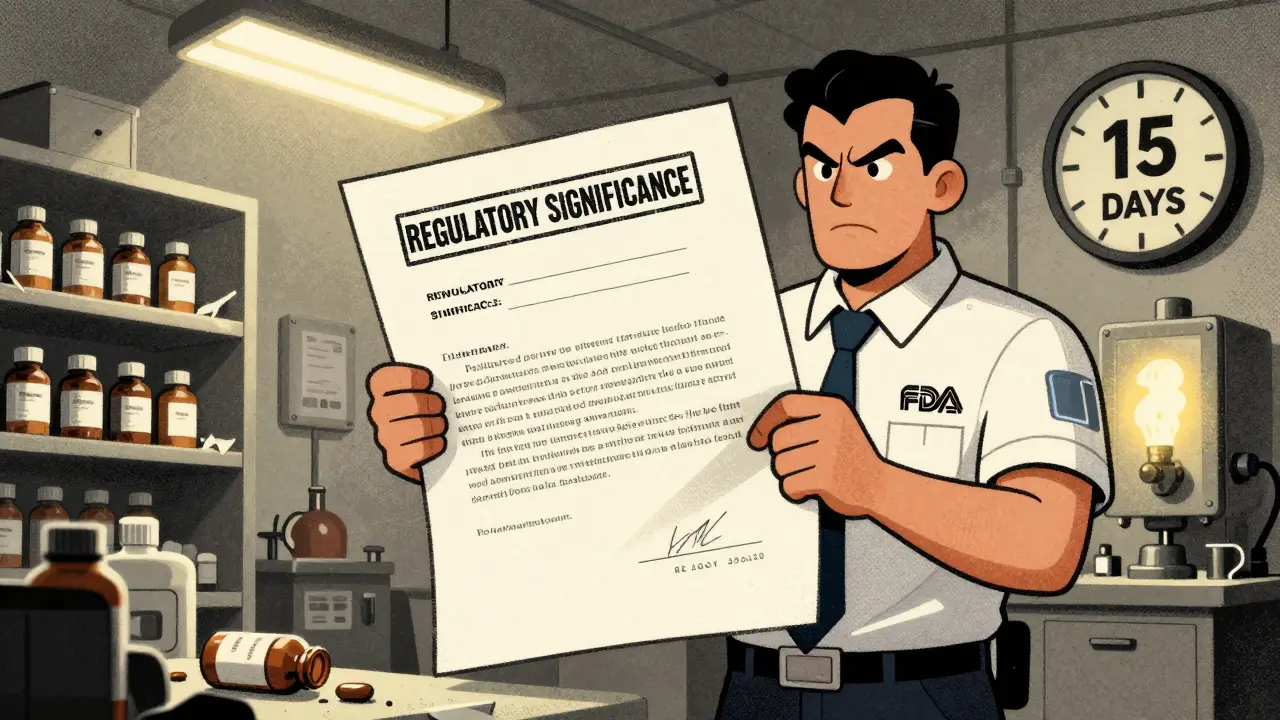
When a company makes a drug, food, or medical device in the U.S., the FDA doesn’t just watch from the sidelines. If something goes wrong - if a factory cuts corners, if a label lies, if a product puts people at risk - the FDA has real power to step in. And one of its most common tools? The FDA warning letter. It’s not a gentle reminder. It’s a formal notice that says: fix this, or face serious consequences.
What Exactly Is an FDA Warning Letter?
An FDA warning letter is a formal, written notice sent to manufacturers, distributors, or importers who have broken federal rules. It’s not a fine. It’s not a shutdown. But it’s the first major step toward those things. The letter lists every violation found - from unsanitary conditions in a lab to false claims on a website - and gives the company a deadline to respond. Usually, that’s 15 business days.
These letters aren’t random. They’re issued only when the FDA finds violations of “regulatory significance.” That means the problem isn’t minor. Maybe the company didn’t test its product properly. Maybe it’s selling a drug as if it’s FDA-approved when it’s not. Or maybe it’s hiding records during an inspection. These aren’t paperwork errors. They’re safety risks.
The FDA calls these letters “informal, advisory correspondence.” But don’t be fooled. Once you get one, your product could be blocked at the border. Your factory could be inspected again - unannounced. And if you don’t fix the problem fast enough, you could be hit with a civil penalty of up to $1 million per violation.
How the FDA Escalates From Warning to Punishment
Warning letters are step one. But the FDA has a whole ladder of enforcement tools.
- FDA Form 483: This is what inspectors hand you at the end of an on-site visit. It lists observations - things like dirty equipment or missing records. It’s not a warning letter, but it often leads to one.
- Untitled Letters: These are for less serious issues. They don’t carry the same weight as warning letters, but they’re still official.
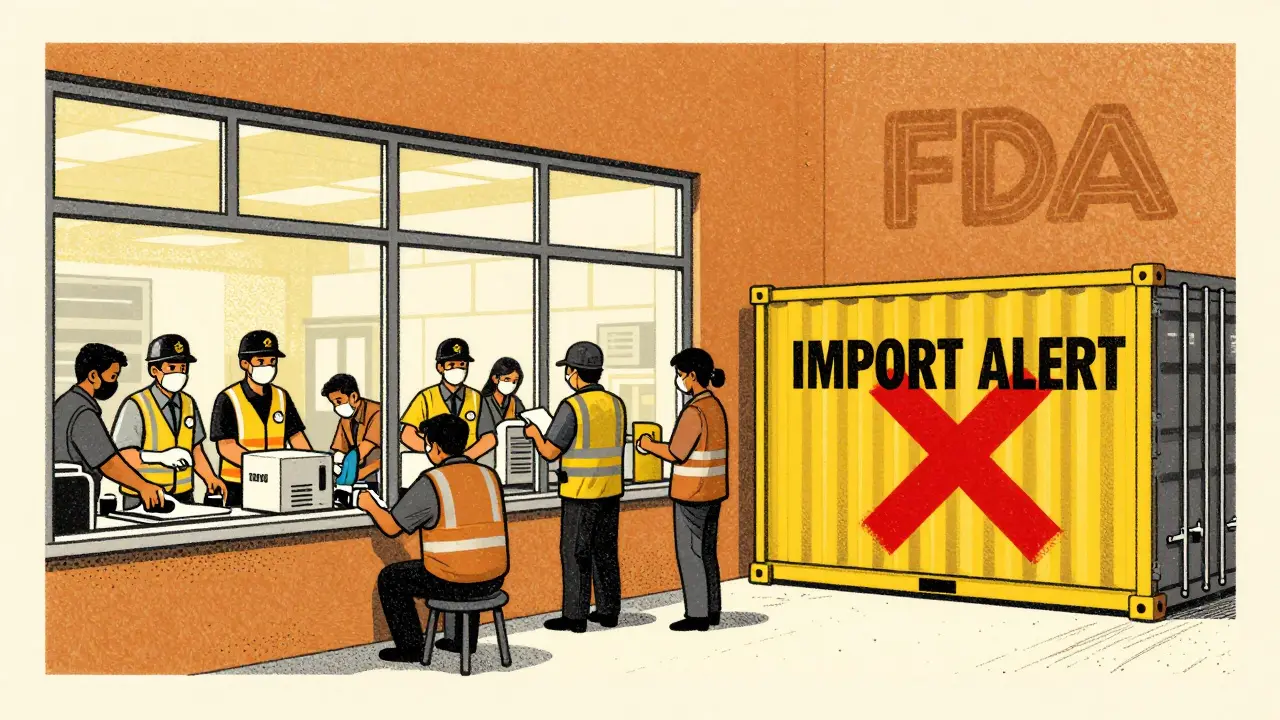
- Import Alerts: If a foreign company ships a product that keeps failing inspections, the FDA puts it on an import alert. That means every shipment gets automatically detained when it hits U.S. ports. The importer has 30 days to prove it’s safe - or the whole shipment gets refused.
- Recalls: The FDA can force a company to pull a product off the market. This happens when there’s a clear danger - like a contaminated batch of baby formula or a faulty insulin pump.
- Withdrawal of Approval: For drugs and biologics, the FDA can completely revoke approval. That means the product can no longer be sold. This is rare - but it happens when quality control is consistently bad.
- Criminal Penalties: If a company lies, hides records, or refuses an inspection, the FDA can refer the case to the Department of Justice. Individuals can face jail time.
The shift in tone matters. Older warning letters said things like, “We request you cease violations.” New ones say, “We request you take immediate action.” That’s not just wording. It’s a signal that the FDA is done waiting.
Who Gets Warning Letters - And Why?
The FDA doesn’t pick targets randomly. Certain industries are under heavier scrutiny right now.
Tobacco Products
Since 2021, the FDA has issued over 700 warning letters to companies selling unauthorized vaping products. Most of these target flavored e-cigarettes that appeal to teens. The agency says these products violate the law because they never got marketing authorization. Even if they’re popular, if they’re not approved, they’re illegal. The FDA is treating this like a public health emergency.
Pharmaceuticals and Compounding Pharmacies
In the first half of 2025 alone, the FDA issued 58 warning letters to compounding pharmacies and telehealth companies. Why? Because they’re selling fake versions of popular weight-loss drugs like semaglutide and tirzepatide. These aren’t generic drugs. They’re unapproved, untested, and often sold with misleading claims online. The FDA says this puts patients at risk - and it’s cracking down hard.
Food Manufacturing
In 2024, the FDA issued 149 warning letters to human food facilities and 37 to animal food facilities. The most common violations? Poor sanitation, failed testing, and missing preventive controls under the Food Safety Modernization Act (FSMA). Companies that used to get warnings for dirty floors now get them for failing to analyze risks before they even start production. The rules have changed - and so have the consequences.
Foreign Manufacturers
The biggest shift in 2025? Unannounced inspections. The FDA is now sending teams to factories in China, India, and elsewhere without telling them ahead of time. This is new. And it’s powerful. Companies that used to have time to clean up before inspections now get caught in real time. The goal? To catch violations when they’re happening - not after the fact. The FDA plans to increase these inspections by 300% over the next two years.
What Happens When You Get a Warning Letter
Getting one isn’t the end - but it’s the beginning of a crisis.
First, you have 15 business days to respond. That response isn’t just an apology. It has to include:
- A detailed plan for fixing each violation
- Deadlines for each fix
- Proof that the fix actually works (like test results or photos)
- Steps to prevent it from happening again
The FDA doesn’t accept vague promises. If your response says, “We’ll do better,” you’ll get another letter - and this time, it’ll be worse.
After you respond, the FDA checks. They might send inspectors back. They might review your records. If they’re not satisfied, you get a follow-up letter. Then? Civil penalties. Product seizures. Or worse - a recall or withdrawal of approval.
Many companies treat this like a legal issue. But it’s not. It’s a quality issue. A culture issue. A leadership issue. Experts say the best response involves the CEO, the head of quality, the regulatory team, and legal counsel - all working together. If you only send your compliance officer, you’re already behind.
Why the FDA Is Getting Tougher
Under Commissioner Robert Califf, the FDA has gone back to the 1990s model: issue hundreds of warning letters every year. That’s a deliberate change. In the 2010s, the agency became more cautious - afraid of lawsuits, afraid of backlash. Now, it’s not.
Warning letters now carry the signature of the Director of CDER (Center for Drug Evaluation and Research) or CBER (Center for Biologics Evaluation and Research). That’s not just a name change. It means these letters come from the top. They’re not suggestions. They’re directives.
The budget reflects it too. The FDA’s 2026 request includes $50 million for more inspectors, better data tools, and expanded international inspections. This isn’t a temporary push. It’s a long-term strategy.
And it’s working. Companies are now spending more on compliance than ever before. Some are moving production overseas. Others are shutting down non-approved products. A few are even suing the FDA - but most are just trying to fix their systems before it’s too late.
What Manufacturers Need to Do Now
If you’re making anything regulated by the FDA - drugs, food, devices, tobacco - here’s what you need to do:
- Know the rules inside out. Don’t rely on outdated training. The FDA’s standards change every year.
- Train your team. Quality isn’t just the job of one person. Everyone from the lab tech to the marketing manager needs to understand compliance.
- Don’t ignore Form 483s. If an inspector writes something down, treat it like a warning letter waiting to happen.
- Document everything. If you can’t prove you followed the rules, the FDA will assume you didn’t.
- Prepare for surprise inspections. Especially if you’re a foreign manufacturer. Assume they’re coming - and be ready.
The FDA isn’t trying to shut down businesses. It’s trying to protect patients. But if you ignore the rules, you’re not just risking a fine. You’re risking lives. And the FDA knows it.
What happens if I ignore an FDA warning letter?
Ignoring an FDA warning letter almost always leads to escalation. The FDA may issue a follow-up letter, detain your products at the border, impose civil penalties of up to $1 million per violation, or even initiate a mandatory recall. In severe cases, the agency can refer your case to the Department of Justice for criminal prosecution, especially if you obstructed inspections or falsified records.
Can the FDA shut down a facility without a warning letter first?
Yes. While warning letters are the most common first step, the FDA can take immediate action if there’s an imminent health risk. For example, if a food facility is found to be producing contaminated products that could cause illness or death, the agency can issue an emergency suspension without prior notice. The same applies to drugs with serious safety issues or unapproved biologics in use.
Do warning letters apply to foreign companies?
Absolutely. The FDA regulates all products sold in the U.S., no matter where they’re made. Foreign manufacturers receive warning letters just like U.S.-based companies. Many also face import alerts, which block their products at U.S. ports. Unannounced inspections of foreign facilities have increased sharply since 2025, making it harder to hide non-compliance.
How long do warning letters stay on record?
FDA warning letters are public records and remain accessible indefinitely on the agency’s website. Even after a company fixes the issue, the original letter stays posted. This affects investor confidence, customer trust, and future inspections. Some companies are now being asked to disclose past warning letters during due diligence for mergers or funding rounds.
Can a company appeal an FDA warning letter?
You can’t formally appeal a warning letter - it’s not a legal order. But you can request a meeting with the FDA to discuss your response, provide additional evidence, or clarify misunderstandings. Many companies use this opportunity to negotiate timelines or explain technical issues. However, if the FDA stands by its findings, the letter stands. Ignoring it or refusing to respond is not an option.
The message is clear: the FDA is watching. And it’s no longer willing to wait.



13 comments
Justin Archuletta
FDA's been way too chill for years. Now they're finally acting like the cops they're supposed to be. Good. 🙌
Sanjana Rajan
These companies are lazy. They think they can cut corners and just pay a fine later. Nope. Time to stop coddling frauds.
Kyle Young
It's interesting how the FDA's shift mirrors broader societal trends-away from appeasement, toward accountability. But I wonder if this punitive model truly prevents harm, or just punishes after the fact.
Aileen Nasywa Shabira
Oh wow, the FDA is "protecting patients"? What a coincidence they only care when there's a PR opportunity. Meanwhile, insulin costs $300 and no one blinks. 😂
Kendrick Heyward
I'm so proud of the FDA. 🥹 They're finally doing what they were meant to do. No more letting Big Pharma run wild. This is justice. ❤️
lawanna major
The shift in language-from 'we request you cease violations' to 'take immediate action'-isn't semantic. It's structural. It signals a move from advisory to authoritative. This reflects a deeper institutional recalibration toward risk-based enforcement. The FDA is no longer asking. It is commanding.
Ryan Voeltner
The FDA's approach, while necessary, must remain proportionate. Regulatory rigor should not eclipse due process. We must ensure that compliance is fostered, not feared.
Emily Hager
You know what's ironic? The FDA is cracking down on unapproved weight-loss drugs, while the same people who scream about 'Big Pharma' are buying those same drugs off Instagram. Hypocrites.
Melissa Starks
I just want to say-thank you, FDA. You're not perfect, but you're trying. I've seen too many people get sick because companies didn't care. My cousin got sick from a tainted supplement. No one got punished. Now? Now there's a chance. I'm crying a little. 🤗 We need more of this. Seriously. Everyone needs to step up. It's not just about money. It's about people. 💙
Lauren Volpi
So now the government is going to tell American businesses how to run their labs? Next they'll be telling us what to eat. This is socialism with a white coat.
Amadi Kenneth
This is all a distraction. The FDA is just covering up the fact that the whole system is rigged. Big Pharma owns them. They're letting the real bad actors go. You think they're going after Chinese factories? Nah. They're just making noise so we don't look at the real problem: the FDA approves dangerous drugs every day and calls it 'science.'
Shameer Ahammad
The regulatory framework governing pharmaceutical compliance is, in essence, a manifestation of the social contract between the state and the private sector. The issuance of warning letters, while procedurally informal, functions as a normative mechanism to reassert public health imperatives over market-driven expediency. One must acknowledge, however, that the asymmetry of power between regulator and regulated may engender procedural inequities, particularly for small entities lacking institutional capacity.
Alexander Pitt
If you're a small manufacturer and you get a Form 483, don't panic. Fix the thing. Document the fix. Send the response in 10 days, not 14. The FDA wants you to fix it-not go bankrupt. Most of these letters are avoidable if you just train your team and keep records. Seriously. It's not rocket science.