
Antidepressant Sweating Risk Calculator
Antidepressant Sweating Risk Calculator
Enter the antidepressant you're taking to see the sweating risk percentage and recommended alternatives.
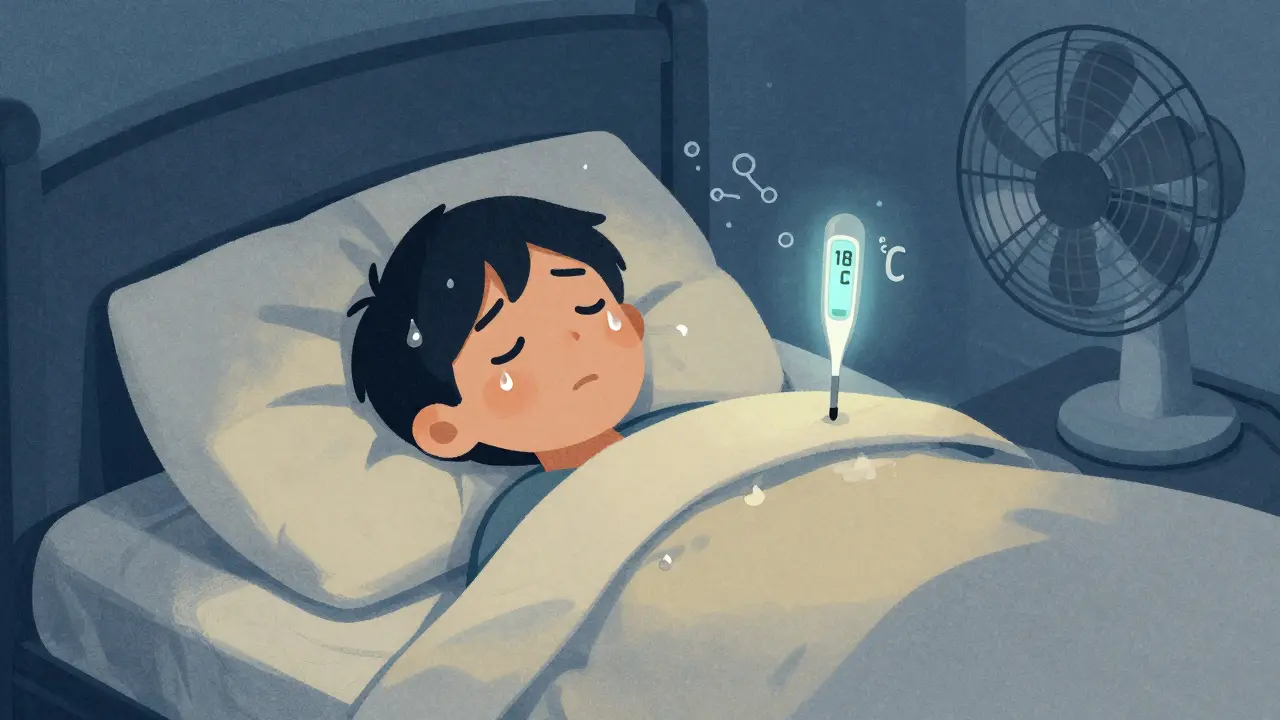
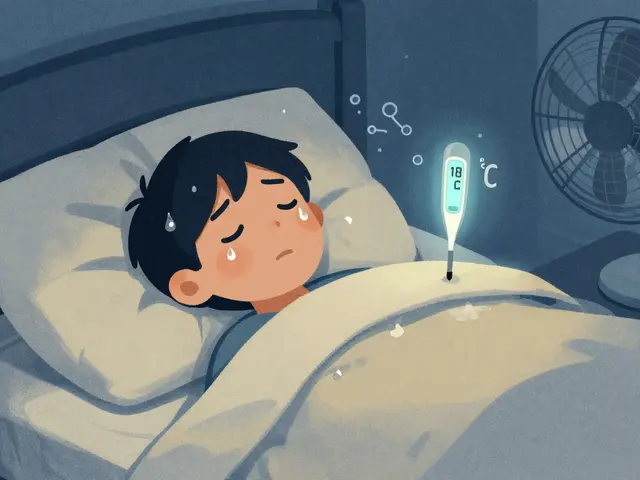
When you start taking an antidepressant, you expect relief from anxiety or depression-not to wake up soaked through in the middle of the night, or to need a full change of clothes by noon. Yet for one in five people on these medications, that’s exactly what happens. Excessive sweating, known clinically as antidepressant-induced hyperhidrosis (ADIES), isn’t rare. It’s common, poorly discussed, and often enough to make people quit their treatment altogether.
It’s not just SSRIs like sertraline or paroxetine. SNRIs like venlafaxine, even bupropion, and older tricyclics can trigger it. The sweating isn’t from heat or stress-it’s your nervous system misfiring because of how the drug interacts with serotonin pathways in your brain. This isn’t a sign you’re doing something wrong. It’s a side effect built into the pharmacology of many antidepressants.
Why Your Body Starts Sweating Nonstop
Antidepressants don’t just lift your mood-they tweak your brain’s thermostat. Serotonin, which helps regulate mood, also controls sweating through the hypothalamus. When too much serotonin builds up in certain areas, your body thinks it’s overheating-even when you’re sitting in a cool room. The result? Drenching sweats on your scalp, face, neck, and underarms.
This isn’t temporary for most people. Unlike nausea or dizziness, which often fade after a few weeks, sweating tends to stick around. Studies show it can last six months or longer without intervention. And because it’s not dose-dependent, lowering your pill doesn’t always help. One person on 20mg of sertraline might sweat heavily, while another on 50mg feels fine. It’s unpredictable-and frustrating.
Which Medications Cause the Most Sweating?
Not all antidepressants are equal when it comes to sweating. Here’s what the data shows:
| Medication | Class | Sweating Incidence | Notes |
|---|---|---|---|
| Paroxetine | SSRI | 19% | Highest risk among SSRIs |
| Sertraline | SSRI | 15% | Very common cause |
| Escitalopram | SSRI | 14% | Often replaced with citalopram |
| Fluoxetine | SSRI | 7% | Lower risk option |
| Fluvoxamine | SSRI | 5% | Lowest SSRIs risk |
| Venlafaxine | SNRI | 16% | Immediate-release worse than XR |
| Bupropion | NDRI | 12% | Similar to SSRIs despite different mechanism |
| Trazodone | SARI | 4% | Often used as alternative |
| Vortioxetine | Multi-modal | 3% | Lowest among newer agents |
Notice the big difference between escitalopram and citalopram? They’re nearly identical-except one is a single isomer, the other isn’t. Yet switching from escitalopram to citalopram at the same dose has resolved sweating in multiple case reports. This isn’t just theory. Real people on Reddit and patient forums report full relief after making the switch.
When Sweating Is More Than Just a Nuisance
Not all sweating is ADIES. If you’re sweating and also have:
- Fast heart rate
- Shaking or tremors
- Muscle stiffness
- Confusion or high fever
…you could be developing serotonin syndrome. This is rare but dangerous. It needs emergency care. If you’re unsure, call your doctor or go to urgent care. Don’t wait. ADIES is uncomfortable. Serotonin syndrome can be life-threatening.
What Actually Works to Cool Down
You don’t have to suffer. There are proven ways to reduce the sweating without quitting your medication.
1. Switch to a Lower-Risk Antidepressant
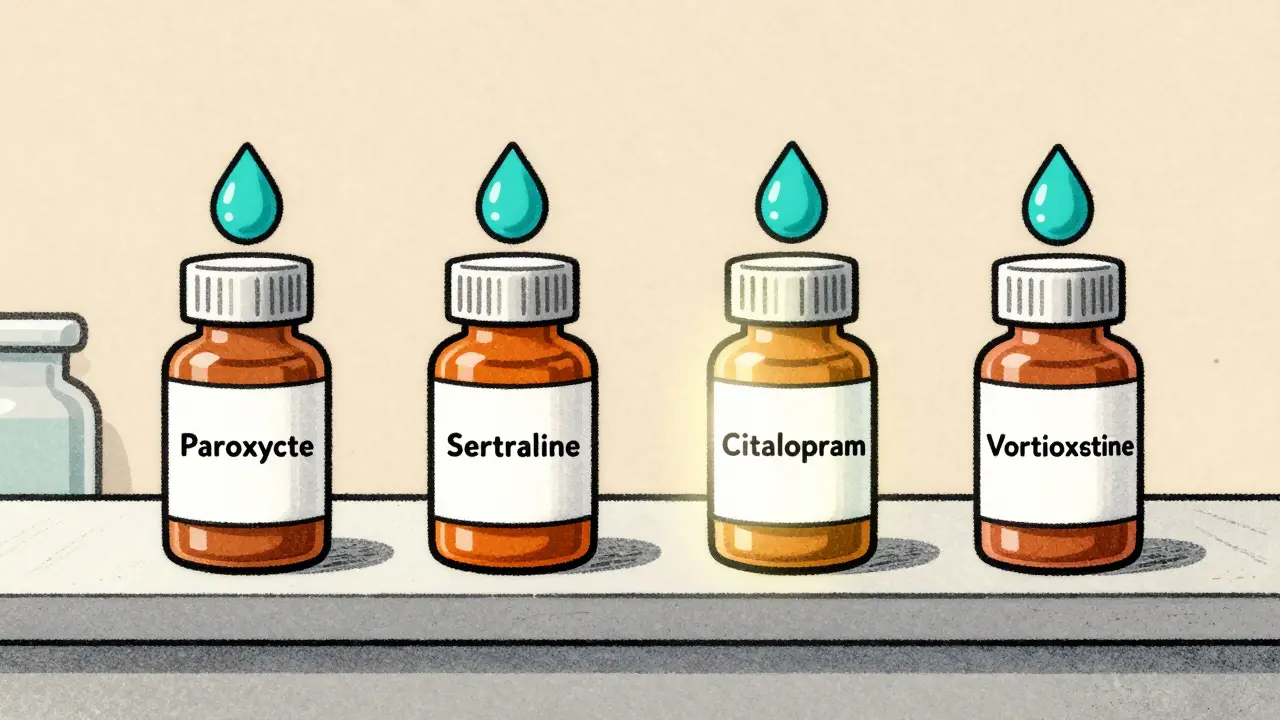
This is the most effective long-term fix. If you’re on paroxetine or sertraline, ask about switching to:
- Citalopram (if you’re on escitalopram)
- Fluvoxamine (lowest SSRI risk)
- Trazodone (often used for sleep and depression, low sweating risk)
- Vortioxetine (newer, designed for fewer side effects)
One 2023 study showed 78% of patients who switched from escitalopram to citalopram saw complete resolution of sweating within two weeks. No dose change. Just a different molecule.
2. Try an Adjunctive Medication
If switching isn’t possible-or you’re not ready-your doctor might add a small dose of:
- Glycopyrrolate (1-2 mg daily): An anticholinergic that blocks sweat glands. Takes 3-7 days to work.
- Benztropine (0.5-1 mg daily): Also anticholinergic, often used for tremors but effective for sweating.
- Terazosin (1-5 mg at night): A blood pressure med that also reduces sweating via alpha-blockade. Works well for night sweats.
These aren’t first-line for everyone, but they’re safe for short-term use and often covered by insurance. Side effects are mild-dry mouth, blurred vision-but far less disruptive than drenching sweats.
3. Use Cooling Gear
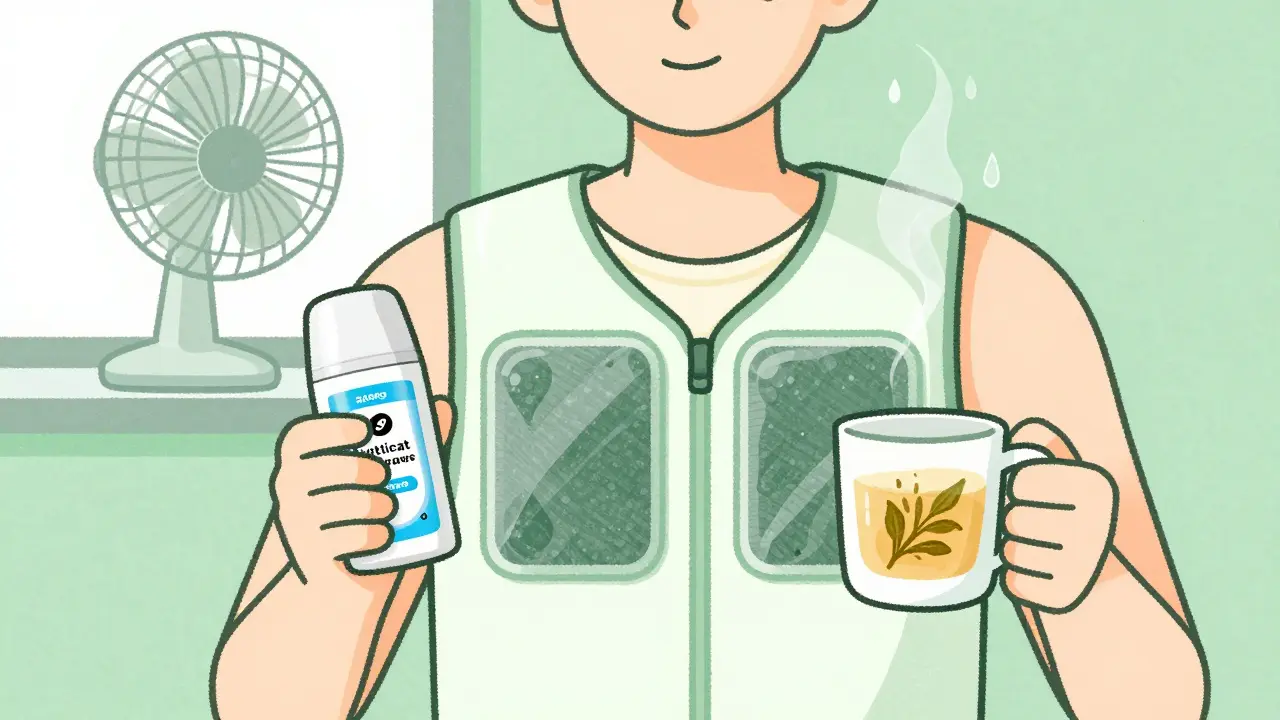
Back in 2022, a small pilot study tested cooling vests on people with medication-induced hyperhidrosis. The results? 60% reported a significant drop in sweat volume. These aren’t fancy. They’re lightweight, wearable vests with gel packs or phase-change material that stay cool for hours.
You can also:
- Wear moisture-wicking undershirts (like Under Armour or Nike Dri-FIT)
- Use clinical-strength antiperspirants with 15-20% aluminum chloride (apply at night)
- Keep a small towel or cooling wipe in your bag for quick relief
One woman in Wellington told me she keeps a chilled gel pack in her desk drawer. She uses it during Zoom calls. Simple. Effective.
4. Environmental Tweaks
Don’t underestimate your surroundings:
- Keep your bedroom at 18-20°C (65-68°F) at night
- Use breathable cotton or bamboo sheets
- Open windows or use a fan-even on low
- Avoid caffeine, alcohol, and spicy food in the evening
These don’t fix the root cause, but they make the nights bearable. And sleep is non-negotiable when you’re managing depression.
What Doesn’t Work
Many people try:
- Reducing their antidepressant dose-often fails because sweating isn’t dose-dependent
- Over-the-counter antihistamines like Benadryl-no effect on serotonin-related sweating
- Herbal remedies like sage or witch hazel-no clinical evidence for ADIES
Don’t waste time or money on these. Stick with what’s proven.
When to Talk to Your Doctor
If sweating is:
- Waking you up multiple nights a week
- Forcing you to change clothes during the day
- Causing you to avoid social situations
- Leading you to think about quitting your medication
…then it’s time to have a real conversation. Bring this article. Show them the data. Ask:
- “Can we switch me to a lower-risk antidepressant?”
- “Would glycopyrrolate or terazosin be safe for me?”
- “Is my sweating consistent with ADIES-or could it be something else?”
Doctors aren’t always trained on this side effect. But they can fix it. You just have to ask.
It’s Not Just About Sweat
One man on Reddit said, “I got better mentally, but I felt like a walking swamp. I stopped taking it. My depression came back harder.”
That’s the cruel irony. The medication helps your mind but makes your body feel unbearable. And because it’s not talked about, you feel alone. You think it’s your fault.
It’s not.
ADIES is a biological side effect-not a personal failure. You’re not weak for struggling with it. You’re not crazy for wanting relief.
There are options. They work. You don’t have to choose between mental health and physical comfort. You can have both.
Start with the lowest-risk switch. Try the cooling vest. Talk to your doctor about glycopyrrolate. Don’t wait until you’re ready to quit. Act now. Your sweat doesn’t define your recovery.
Is excessive sweating from antidepressants dangerous?
Excessive sweating itself isn’t dangerous, but it can be a sign of serotonin syndrome if accompanied by rapid heartbeat, confusion, muscle stiffness, or fever. Those symptoms require immediate medical attention. Otherwise, ADIES is uncomfortable and disruptive, but not life-threatening.
Will I get used to the sweating over time?
No. Unlike nausea or drowsiness, which often fade after a few weeks, antidepressant-induced sweating rarely improves on its own. Studies show symptoms persist for six months or longer without intervention. Don’t wait for it to get better-take action.
Can I just lower my dose to stop sweating?
Sometimes, but not reliably. Research shows only about 40% of people see improvement with dose reduction because sweating isn’t always tied to how much you take. Lowering your dose might make your depression worse without stopping the sweating. It’s not the best first step.
What’s the best antidepressant if I sweat a lot?
Fluvoxamine and vortioxetine have the lowest rates of sweating among antidepressants. Trazodone is also low-risk and often used for sleep. If you’re on escitalopram, switching to citalopram at the same dose has helped many people. Always consult your doctor before switching.
Are cooling vests really effective?
Yes. A 2022 pilot study found that 60% of people using cooling vests reported a significant reduction in sweat volume. They’re not a cure, but they’re a practical, drug-free tool that works while you explore longer-term solutions.
How long does it take for glycopyrrolate to work?
Most people notice reduced sweating within 3 to 7 days of starting glycopyrrolate at 1-2 mg daily. It’s taken once or twice a day, depending on your doctor’s recommendation. Side effects like dry mouth are mild and often fade with time.
Can I use regular antiperspirant for this?
Regular antiperspirants won’t help much. You need clinical-strength products with 15-20% aluminum chloride. Apply them at night to dry skin, especially underarms. This blocks sweat glands more effectively and is the most accessible non-prescription option.
Is this side effect getting more attention?
Yes. Since 2018, the FDA requires antidepressant labels to include specific sweating risk data. In 2024, the Anticholinergic Risk Scale started rating antidepressants by sweating potential. New drugs like LS-2-1123 are being designed to avoid this side effect entirely. The field is moving toward better solutions.



9 comments
Roshan Joy
Man, I didn’t realize how common this was. I was on sertraline for 8 months and thought I was just bad at regulating my body temp. Turns out I was just sweating like a sauna. Switched to fluvoxamine and boom - no more midnight towels. 🙌
Michael Patterson
Okay so let me get this straight - you’re telling me the whole reason i’ve been changing shirts 3x a day is because my brain’s serotonin levels are throwing a rave? I mean sure, i’ve read this stuff before but like… why the hell is this not on every drug pamphlet? I’m not a lab rat, i’m a person trying to not smell like a gym sock at a job interview. And don’t even get me started on how my partner looks at me like i’m a human humidifier. Also i tried the aluminum chloride thing - it worked for like 3 days then my armpits started burning like i’d dipped them in lava. Sooo… yeah. Not perfect. But at least i’m not alone.
Priscilla Kraft
Thank you for writing this. I’ve been on vortioxetine for 6 months and the sweating went away completely after week 2. I wish I’d known about the citalopram/escitalopram switch earlier - I wasted 4 months thinking it was ‘just me’. Also, the cooling vest? Game changer. I bought one off Amazon for $40 and now I can sit through meetings without my shirt sticking to my back. 🧊💙
Matthew Miller
Wow. So you’re telling me people are quitting their meds because they sweat? Like… is this really a crisis or are we just being babies? I’ve been on 80mg of sertraline for 10 years and I’ve never once had to change clothes. Maybe if you didn’t wear synthetic fabrics or drink 5 espressos before noon you wouldn’t be a walking swamp. Also glycopyrrolate? That’s a prescription for dry mouth and constipation. You’re trading one hell for another. Stop whining and build tolerance.
Vincent Clarizio
Let’s be real - this isn’t just about sweat. It’s about dignity. You take a pill to stop your mind from screaming at you, and then your body starts screaming back louder. And nobody talks about it because it’s ‘weird’ or ‘embarrassing’? That’s the real tragedy. I had to quit my job because I couldn’t shake the fear that people could smell me from across the room. I tried everything - sage tea, acupuncture, ice packs taped to my neck (yes, really). Nothing worked until I switched to trazodone. Now I sleep through the night. And I can hug my niece without worrying she’ll think I’m a wet dog. This isn’t ‘just a side effect.’ It’s a silent war. And you’re not losing if you’re fighting it.
Madhav Malhotra
From India - we don’t talk about this here either. But my cousin switched from escitalopram to citalopram and it fixed everything. No drama, no new meds. Just a different version of the same drug. Funny how something so small can change your life. Also, if you’re in a hot climate, cotton kurtas are the best thing ever. Breathable, cheap, and you don’t look like you just ran a marathon at 9am. 😊
Alex Smith
So let me get this straight - you’re recommending we start taking anticholinergics to fix a side effect caused by a drug that’s supposed to help our brains? And you call this ‘treatment’? You’re not treating the problem, you’re just slapping a bandage on a bullet wound. And the cooling vest? Cute. But it’s a bandaid. Literally. What we need is better drugs designed not to turn us into human swamp monsters. Not more antiperspirants. Not more hacks. We need pharmaceutical innovation. And until then, we’re just playing whack-a-mole with our own biology.
Adewumi Gbotemi
I’m from Nigeria. Here, people think depression is just ‘bad thinking.’ But sweating? That’s real. My brother took sertraline and started sweating so bad he couldn’t go to church. We found a doctor who switched him to trazodone. Now he sleeps. Now he smiles. No magic. Just the right pill. Don’t give up. Talk to someone. Even if they don’t understand - you deserve to be comfortable.
Sean Feng
Just stop taking them