
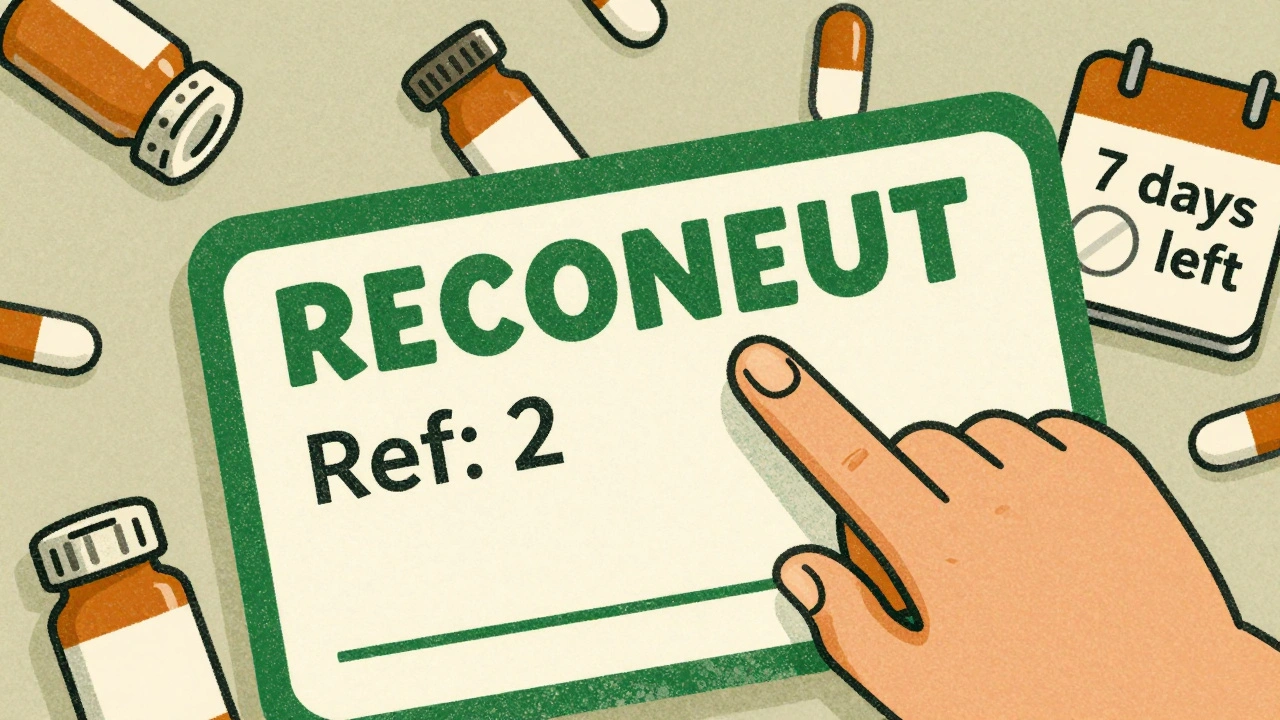
Ever stared at your prescription label and wondered what that little Ref: 3 actually means? You’re not alone. Many people miss the importance of this tiny piece of text - until they’re out of pills and stuck waiting for a doctor’s appointment. Refill information isn’t just a formality. It’s your lifeline to staying on track with your meds without unnecessary delays.
What Does Refill Information Actually Say?
On most prescription labels, you’ll see something like Ref: 2 or Refills: 0. That’s your refill count. It tells you how many more times you can walk into the pharmacy and get the same medication without needing a new prescription from your doctor.
Let’s say your label says Ref: 5. That means you’ve got five more fills left. Each time you pick up a new bottle, that number drops by one. When it hits Ref: 0, you can’t get another refill unless your doctor writes a new prescription. It doesn’t mean you’re out of pills - it means you’re out of refills. That’s a big difference.
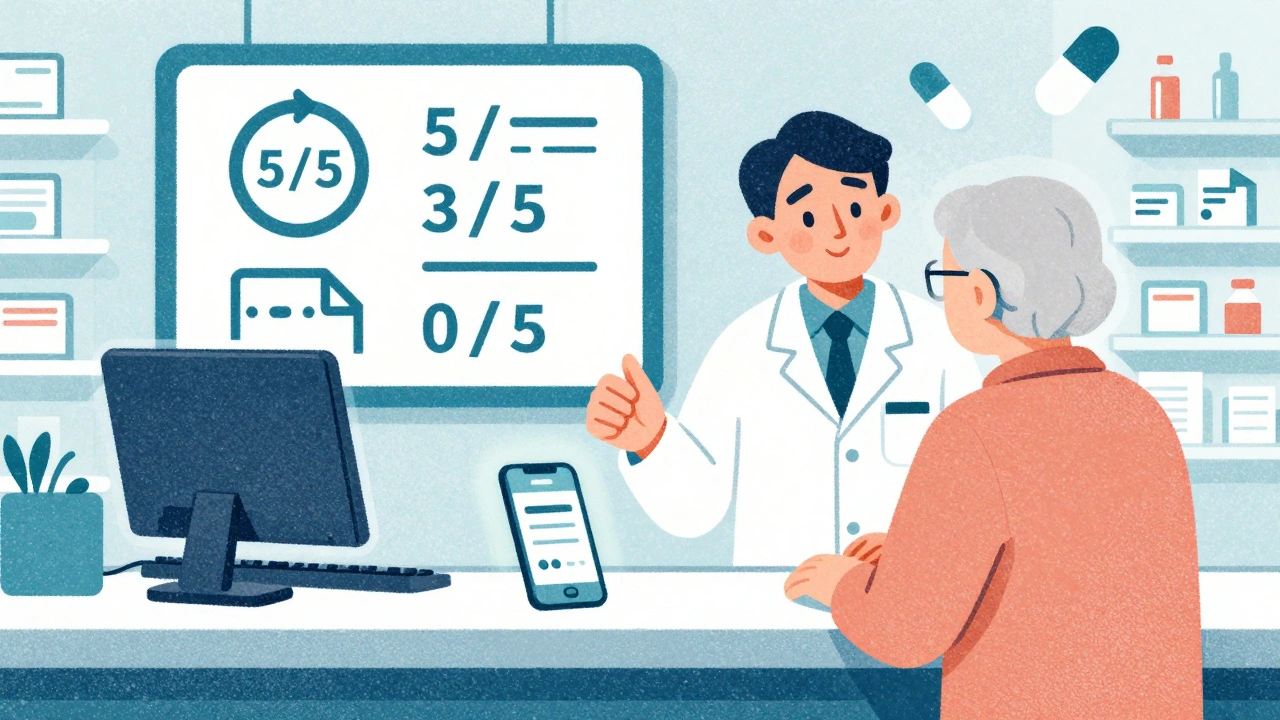
Some labels also show the original number of refills authorized. For example: Refills: 5/5 means you started with five and have used none. Refills: 2/5 means you’ve used three already. Not all pharmacies show both numbers, but if they do, it helps you track usage over time.
Where to Find It on the Label
Refill info is usually not near the dosing instructions. That’s intentional. The U.S. Pharmacopeial Convention (USP) recommends placing refill details lower on the label so you don’t accidentally confuse it with how much to take or when. You’ll typically find it near the bottom, close to the pharmacy’s phone number, prescription number, or expiration date.
At CVS, you’ll see it in the middle section of their color-coded labels, often grouped with the prescription number. Walgreens puts it near the bottom with the fill date. Independent pharmacies often follow the Pharmacy Association of Nova Scotia’s format, which places refill info clearly below the medication name and strength. No matter where you get your meds, if you know where to look, you’ll find it.
Why This Matters More Than You Think
Running out of medication isn’t just inconvenient - it can be dangerous. Studies show that patients who don’t understand their refill info are 37% more likely to miss doses or stop taking their meds altogether. That’s not just about feeling unwell. For conditions like high blood pressure, diabetes, or depression, skipping doses can lead to hospital visits, complications, or even worse outcomes.
And here’s something most people don’t realize: Ref: 0 doesn’t mean you’ve used all your pills. It means you’ve used all your authorized refills. You might still have 10 pills left in the bottle - but you can’t get more without a new script. That’s why pharmacists see so many confused patients showing up saying, “I still have pills, why can’t I refill?”
A 2022 Pharmacy Times survey found that 15-20% of calls to doctors’ offices were from patients who misunderstood this simple detail. A quick glance at your label could save you a phone call, a wait, and a missed dose.
How to Avoid Running Out
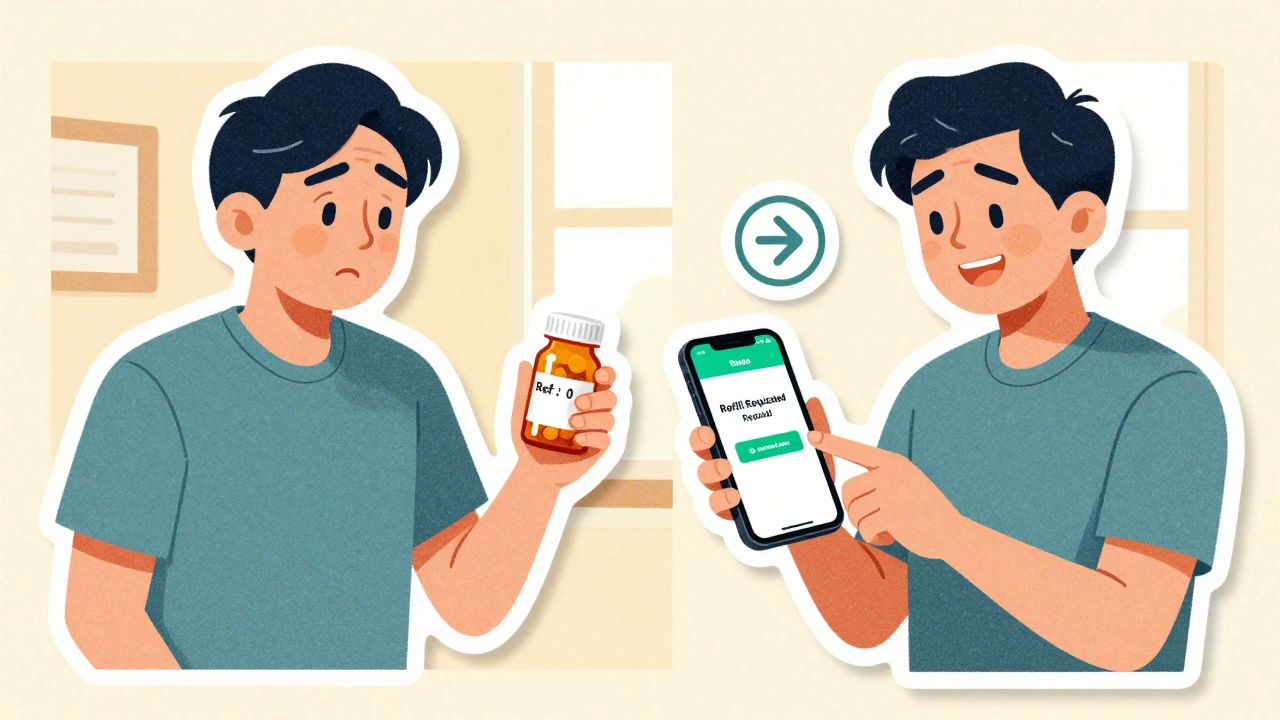
Don’t wait until your bottle is empty. Check your refill count every week when you organize your meds. If you see Ref: 1, plan ahead. Most pharmacies need 3-5 days to process a refill request - especially for controlled substances like painkillers or ADHD meds, which can take up to 72 hours.
Here’s a simple rule: Call or use your pharmacy’s app when you have about 7 days’ worth left. That gives you time to handle delays, insurance issues, or if your doctor needs to approve the refill. If you’re on Medicare Part D, refills aren’t allowed until 23 days after your last fill for a 30-day supply. Commercial insurers like UnitedHealthcare let you refill at 80% of your supply - so for a 30-day prescription, that’s day 24.
Some pharmacies, like CVS, now offer automatic refill programs. You sign up once, and they’ll notify you when your med is ready. They even have a feature called Spoken Rx that reads your label aloud through the app - including refill info - which helps people with vision issues or low literacy.
What If There Are No Refills Left?
If your label says Refills: 0 or No Refills, you need a new prescription. This is common for medications that require regular monitoring - like blood thinners, antidepressants, or insulin. Your doctor may need to check your labs, adjust your dose, or assess how you’re doing before authorizing more.
Some states have strict rules. California requires labels to say No Refills in bold if no refills are allowed. Texas requires both the total refills authorized and the remaining number to be shown. Even if your label doesn’t make it obvious, the pharmacy staff should be able to tell you what’s on file.
Don’t assume your doctor will automatically refill it. Most don’t. You have to ask. Call your doctor’s office or use their patient portal. If you’re on a long-term med, ask your doctor at your next visit if they can increase your refill count - maybe from 3 to 6 - so you don’t have to keep calling.
Digital Tools Are Changing the Game
Pharmacies are getting smarter about refill reminders. By 2025, 85% of U.S. pharmacies are expected to send automated texts or app alerts when a refill is ready or when your supply is running low. CVS, Walgreens, and Express Scripts already offer this. You can set up notifications for specific meds so you’re never caught off guard.
There’s also a new universal refill icon system being tested by the American Pharmacists Association. Early results show a 41% drop in refill-related errors when patients see a simple symbol - like a circular arrow with a number - instead of just text. That’s huge for older adults or those with low health literacy.
And if you’re tech-savvy, most pharmacy apps now let you request refills with one tap. No calls. No waiting. Just open the app, find your med, and hit “Request Refill.” It’s fast, reliable, and keeps you in control.
What to Do If the Label Doesn’t Make Sense
If you’re unsure what the refill number means, or if it’s missing, don’t guess. Call your pharmacy. Pharmacists are trained to explain this stuff - and they’d rather answer a question than have you go without your meds.
Ask: “How many refills do I have left?” or “Do I need a new prescription for this?” Most will reply immediately. If they’re busy, leave a message. Many pharmacies have automated systems that can check your account and call you back.
Also, check your insurance portal. Sometimes your plan shows refill status too - and it might be more detailed than the label.
Final Tip: Make It a Habit
Refill information isn’t something you check once. It’s part of your daily health routine. Treat it like checking your blood pressure or taking your pills. Add it to your weekly checklist. Write it down. Set a phone reminder. Use your app. The more you pay attention, the less stress you’ll have.
Understanding your prescription label gives you power. You’re not just a patient waiting for the next refill - you’re someone who knows exactly what’s left, when to act, and how to keep your treatment on track. That’s how you stay healthy, avoid emergencies, and take real control of your health.
What does 'Ref: 0' mean on my prescription label?
'Ref: 0' means you have no refills left - not that you’re out of pills. You’ll need a new prescription from your doctor to get more of this medication. You might still have pills in the bottle, but you can’t refill it without authorization.
Can I refill my prescription before I run out of pills?
Yes, but your insurance may not cover it yet. Most plans require you to wait until you’ve used 75-80% of your current supply. For a 30-day prescription, that’s usually around day 24. Check with your pharmacy or insurer if you’re unsure.
Why do some pharmacies show 'Refills: 3/5' and others just 'Ref: 2'?
It’s a difference in labeling style. Some pharmacies show both the total refills authorized (5) and how many are left (2). Others only show the remaining count. Both are correct - just different formats. If you’re unsure, ask your pharmacist to clarify.
What should I do if my refill info is missing from the label?
Call your pharmacy immediately. It’s rare, but sometimes labels print incorrectly. The pharmacy can check your account and tell you how many refills you have left. Don’t assume - always confirm.
Can I transfer my prescription to another pharmacy if I have refills left?
Yes. When you transfer, the remaining refills go with your prescription. The new pharmacy will see how many refills are left and can fill them as long as they haven’t expired. Just bring your current bottle or call your old pharmacy to initiate the transfer.
How long are refills good for?
Most prescriptions expire one year after the original fill date, unless your doctor says otherwise. Even if you have refills left, you can’t use them after that date. Always check the expiration date on your label.
If you’re managing multiple medications, consider using a pill organizer with refill reminders built in. Or set calendar alerts for when your refills are due. Small habits like this prevent big problems down the road.




9 comments
Marvin Gordon
Been there. Had a bottle with 12 pills left and zero refills. Thought I was crazy until I called the pharmacy. Turns out the doc only authorized 5 refills total. No big deal once you know where to look. Just check the bottom of the label every Sunday with your meds. Simple habit, huge difference.
Rupa DasGupta
OMG I thought Ref: 0 meant I was out of pills 😭 I almost skipped my anxiety med for 3 days bc I was scared to call the dr 😭 now I check my app every Thursday and cry when it says 'Refill ready' 🥺💖
Jennifer Patrician
They don't want you to know this but the 'Ref: 0' thing is a scam. Pharmacies and Big Pharma want you to keep going back to the doctor so they can bill more. I once had a 6-month script with 3 refills and they made me call 4 times just to get one more. They profit off your confusion. Don't let them.
Mellissa Landrum
they been hiding the refil info on purpose so old folks like my grandma dont know when to ask for more and then they get sick and go to the er and the hospital bills go up and insurance companies make more money. its all a racket. i saw it on a youtube video.
Mark Ziegenbein
Let us not mince words here: the entire system is predicated on the assumption that patients are functionally illiterate when it comes to pharmaceutical logistics and this is a deliberate design choice by regulatory bodies who prioritize institutional convenience over patient autonomy. The placement of refill information at the bottom of the label is not an accident-it is a form of linguistic marginalization. The USP’s guidelines, while ostensibly well-intentioned, function as a quiet mechanism of disenfranchisement for the elderly, the neurodivergent, and the linguistically marginalized. I have personally witnessed a 78-year-old veteran in a CVS parking lot weeping because he didn’t realize 'Ref: 1' meant one more fill, not one more pill. This is not healthcare. This is bureaucratic cruelty dressed in Helvetica font.
Ali Bradshaw
Big fan of the automatic refill programs. Signed up for CVS’s system last year and it’s been a game-changer. No more panic calls. They text me when it’s ready, even remind me if I haven’t picked it up in 5 days. I wish every pharmacy did this. It’s not hard. It’s just kind.
Philip Kristy Wijaya
One must observe that the proliferation of digital refill interfaces, while ostensibly convenient, introduces a new vector of vulnerability: algorithmic oversight, data harvesting, and the erosion of pharmaceutical privacy. The pharmacy application, though efficient, is a Trojan horse of surveillance capitalism. One taps 'Request Refill' and surreptitiously surrenders behavioral data, adherence patterns, and medical history to corporate entities with no fiduciary duty to the patient. The convenience is seductive, but the cost is the commodification of health.
Kylee Gregory
I think the real win here is recognizing that this isn’t just about labels or apps-it’s about empowering people to be active participants in their own care. Whether you’re tech-savvy or not, whether you read every word or just glance at the bottle, the fact that we’re talking about this at all means we’re moving in the right direction. Maybe the next step is simpler language on labels. Maybe it’s universal symbols. But the goal should be inclusion, not just efficiency.
ashlie perry
they’re watching you through the bottle