
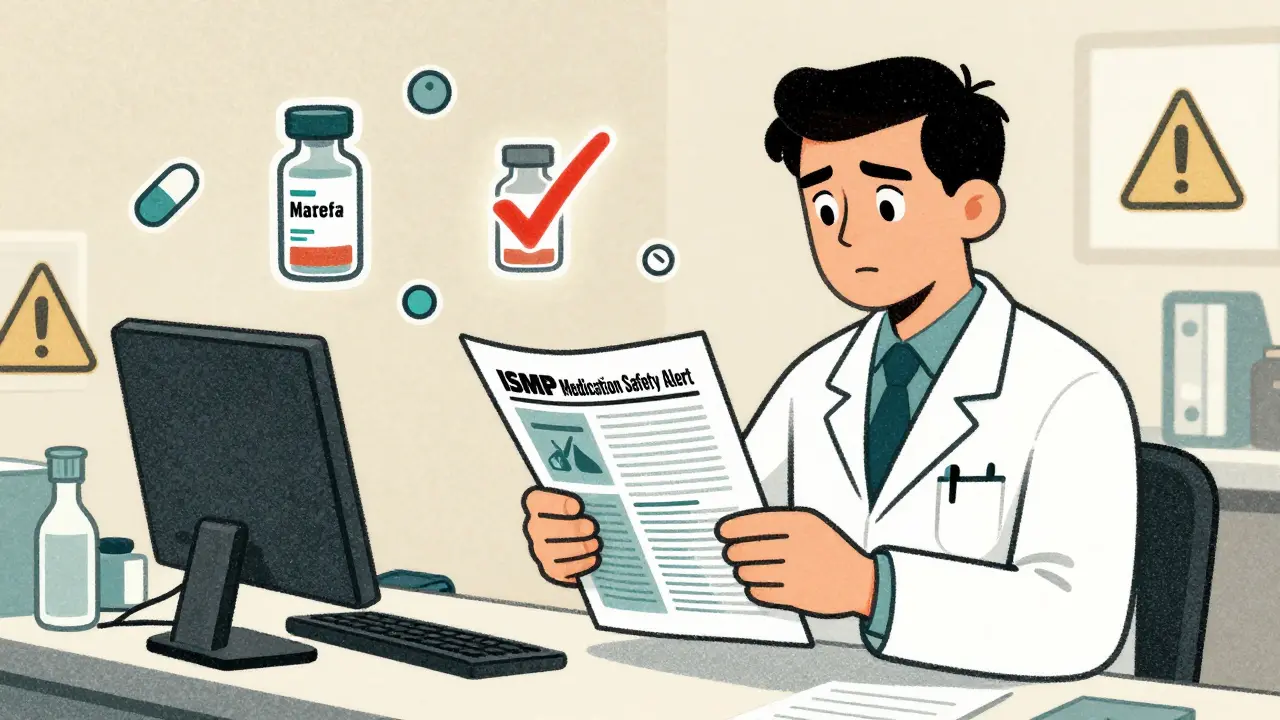
Every year, thousands of preventable medication errors happen because someone missed a critical safety update. Not because they didn’t care - but because they didn’t know where to look, or how to filter the noise. If you’re a pharmacist, nurse, doctor, or even a hospital administrator, staying current on medication safety isn’t optional. It’s the difference between a patient walking out safe and a preventable tragedy. The good news? There are clear, reliable ways to track these updates - if you know where to start.
Know Where the Updates Come From
You can’t follow what you don’t know exists. The most trusted medication safety updates come from professional societies and regulatory bodies that track real-world errors, not just theory. The ISMP (Institute for Safe Medication Practices, now part of ECRI) is the gold standard. They publish a weekly Medication Safety Alert! newsletter based on over 2,800 error reports filed in 2022 alone. These aren’t hypotheticals - they’re real cases from hospitals, clinics, and pharmacies. If a drug was mislabeled, a dose was miscalculated, or a look-alike pill caused confusion, ISMP finds out and warns you before it happens again.The FDA (U.S. Food and Drug Administration) also issues drug safety communications - but they’re reactive. The FDA often waits until harm has already occurred before issuing a warning. In 2023 alone, they released 47 alerts. The median delay between when a problem was identified and when the public was warned? 47 days. That’s why you can’t rely on the FDA alone. Use it as a backup, not your primary source.
For hospital-based teams, ASHP (American Society of Health-System Pharmacists) offers practical tools like their Medication Safety Self-Assessment and targeted guidelines. These aren’t just summaries - they’re checklists, workflow templates, and implementation roadmaps. Their free resources cover everything from high-alert medications to IV pump programming. For perioperative staff, AORN (Association of periOperative Registered Nurses) released a major update to their Medication Safety guideline in October 2023, adding new sections on tech integration and organizational accountability. And globally, the WHO (World Health Organization) leads the Medication Without Harm initiative, pushing for a 50% reduction in severe medication errors by 2022 - a goal still being tracked across 137 countries.
Choose the Right Subscriptions
Not all updates are created equal. You don’t need to subscribe to everything - but you do need the right mix.For most clinicians, start with three:
- ISMP Medication Safety Alert! - $299/year. Weekly emails. Actionable. Real. This is the one most professionals say is worth every dollar.
- FDA Drug Safety Communications - Free. Sign up for email alerts. Use it to catch what ISMP might miss - especially for new drugs or black box warnings.
- ASHP Medication Safety Resource Center - Free basic access. Premium ($99/year) gives you downloadable tools and CE credits. Great for hospitals and clinics that need to build protocols.
If you work in surgery or anesthesia, add AORN’s guidelines - updated every two years, but now moving toward quarterly micro-updates as of early 2024. For global context or policy work, track WHO’s Medication Without Harm resources. You don’t need to pay for WHO - their toolkits are free and publicly available.
Don’t waste money on generic newsletters or commercial platforms that repurpose public data. Stick to the sources that get their info from frontline error reports - not marketing teams.
Set Up a System - Don’t Just Subscribe
Subscribing is step one. Actually using the updates is step two - and most people skip it.Here’s how to make it stick:
- Designate a safety lead. In hospitals, this is usually a pharmacist or nurse specialist. They read all the alerts, summarize the top 2-3 action items, and share them in team huddles. ISMP recommends 2-3 hours per week for this role.
- Link updates to existing workflows. If ISMP warns against using "U" for units (because it looks like a 0), update your EHR template. If AORN says to double-check IV labels in the OR, add it to your pre-op checklist. Don’t just file the email - change the process.
- Use the tools. ASHP’s Medication Safety Self-Assessment is a free, 30-question tool that helps you find gaps in your practice. Take it every six months. It’s not a test - it’s a mirror.
- Train during orientation. New staff should get a 15-minute briefing on where to find safety alerts. Make it part of onboarding, not an afterthought.
One hospital in Ohio reduced medication errors by 63% in just 30 days after they started using AORN’s updated guideline in simulation training. They didn’t just read it - they practiced it.

Watch Out for Information Overload
There’s a problem: too many alerts. In 2023, a survey found 37% of ISMP subscribers felt overwhelmed. You’re not alone. The Joint Commission found that 22% of hospitals failed safety audits not because they ignored guidelines - but because there were too many conflicting ones.Here’s how to cut through the noise:
- Ignore the fluff. If an alert says “be cautious” without telling you exactly what to do, skip it. Focus on alerts with clear actions: “Stop using this abbreviation,” “Verify this dose with a second clinician,” “Use barcode scanning for this drug.”
- Filter by risk. Use the NCC MERP Index to classify errors by severity. Focus first on those that could cause death or serious harm (Level E and above).
- Use your EHR. Epic and Cerner are rolling out direct integrations with ISMP best practices in 2024. That means safety alerts will pop up right when you’re prescribing or administering a drug. This will cut down on manual checking - but you still need to know what to look for.
Dr. Michael Cohen, former president of ISMP, put it bluntly: “Relying on a single source for medication safety updates is as dangerous as using a single verification step in medication administration - redundancy saves lives.” He’s not talking about subscribing to 10 newsletters. He’s talking about having two or three trusted sources that cover different angles.
What to Do When You See a Problem
You read an alert. You see a pattern. You think, “We’ve had this happen here.”Don’t just file it away. Report it.
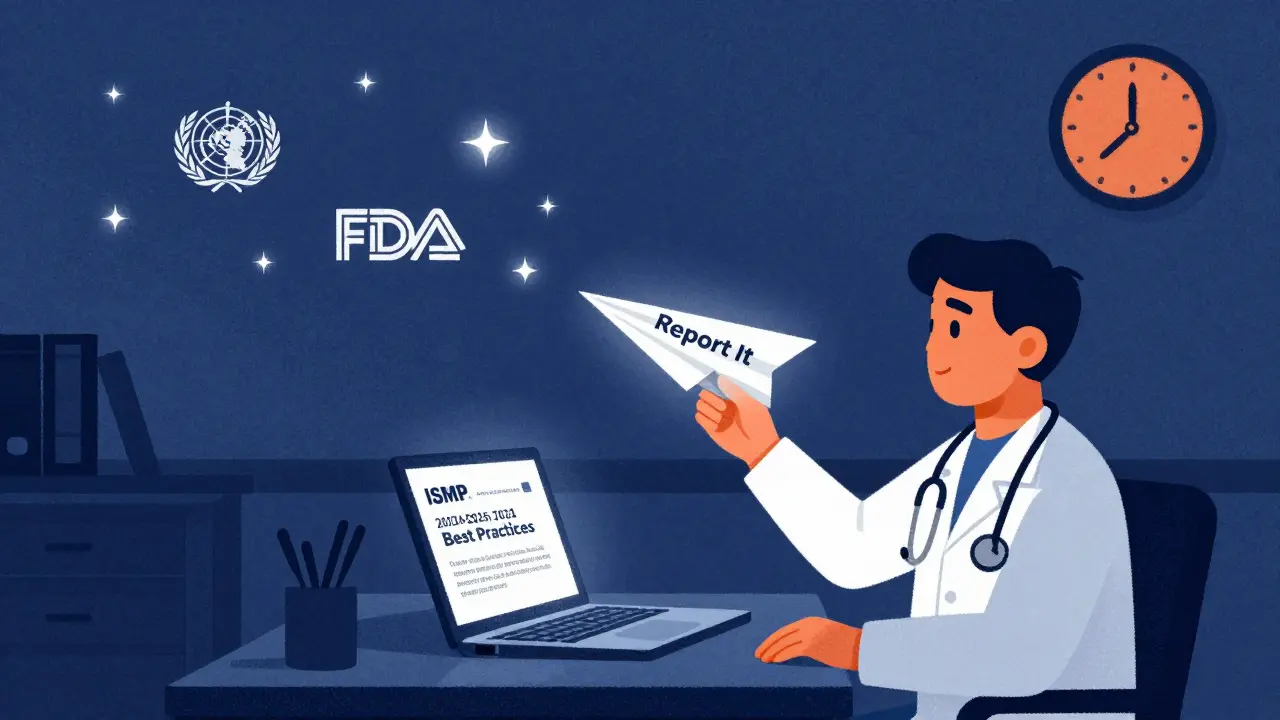
ISMP runs the National Medication Errors Reporting Program (MERP). It’s anonymous. It’s free. And it’s how they find the next big issue before it spreads. If a nurse gave the wrong dose because a label was unclear, report it. If a pharmacy mixed up two similar-looking drugs, report it. You’re not blaming anyone - you’re helping everyone.
Similarly, if you see a drug label that’s misleading, or a warning that doesn’t match real-world use, report it to the FDA’s MedWatch program. Your report could trigger a national alert.
One nurse in Texas reported a recurring error with a high-alert insulin brand. Three weeks later, ISMP published a safety alert. Two months after that, the manufacturer changed the packaging. That’s the power of reporting.
Keep It Fresh - Updates Change Fast
Medication safety isn’t static. In March 2024, ISMP released its 2024-2025 Targeted Best Practices - and for the first time, they included two new sections: AI-assisted prescribing and compounding pharmacy oversight. AORN announced in February 2024 they’re switching from biennial updates to quarterly micro-updates. WHO launched a new toolkit for handoff communications in September 2023.If you’re still using 2022 guidelines, you’re working with outdated information. Set calendar reminders:
- Check ISMP weekly
- Review FDA alerts monthly
- Revisit ASHP’s self-assessment every six months
- Update your team’s protocols after every major guideline revision
And if you’re in a small clinic or private practice? You still need this. The AMA’s 2023 Physician Practice Compass found that 62% of community-based providers get less than 20 minutes a week to review guidelines. That’s not enough. But 10 minutes - focused on just ISMP and FDA - can make a difference.
Final Rule: Don’t Go It Alone
Medication safety isn’t a solo sport. It’s a team sport. You need systems, tools, and people working together.Start with one subscription - ISMP’s weekly alert. Add the FDA email list. Use ASHP’s free tools. Report errors. Share updates with your team. Make it part of your routine, not a chore.
The cost of not acting? $42 billion a year in avoidable healthcare spending. Thousands of preventable deaths. That’s not a statistic - it’s your next patient.
Stay alert. Stay informed. Stay safe.
What’s the most important safety update source for frontline staff?
For most clinicians, ISMP’s weekly Medication Safety Alert! is the most valuable. It’s based on real error reports, comes out every week, and gives clear, actionable steps - not vague advice. It’s used by 87% of U.S. hospitals and has a 92% implementation rate among subscribers.
Do I need to pay for these updates?
Not necessarily. The FDA’s alerts are free. ASHP offers free basic access to guidelines. WHO’s toolkits are free. ISMP’s newsletter costs $299/year - but many hospitals pay for it as part of their safety budget. If you’re an individual, the cost is worth it if you’re prescribing, dispensing, or administering medications. For institutions, it’s a low-cost investment compared to the cost of even one serious error.
Can I rely on my hospital’s internal policy instead?
No - not alone. Internal policies should be based on external safety updates, not the other way around. If your hospital’s policy doesn’t reflect the latest ISMP, FDA, or AORN guidelines, it’s outdated. Use professional society updates to improve your local policy - don’t replace them with it.
What if I work in a small clinic with no safety officer?
Assign one person - even if it’s you - to check ISMP and FDA alerts once a week. Set a 10-minute calendar block. Read the top two alerts. Ask: “Could this happen here?” If yes, adjust your process. You don’t need a team - just a habit.
Are there apps or tools that automatically track these updates?
Not yet - but they’re coming. Epic and Cerner are integrating ISMP alerts directly into their EHRs in 2024. Until then, use email alerts and calendar reminders. Don’t wait for tech to save you - build the habit yourself.

8 comments
Liam George
Let’s be real - ISMP? FDA? WHO? All controlled by Big Pharma’s shadow cabal. They release alerts *when it’s convenient* - after the stock drops, after the patent expires. The real danger isn’t medication errors - it’s the institutionalized lie that these ‘safety’ orgs are independent. They’re glorified PR arms for the pharmaceutical oligarchy. You think they’d warn you about the 37% of drugs with hidden cardiotoxicity? Nah. They’ll warn you about capital-U units while letting lethal drug interactions slide. Wake up. This isn’t safety - it’s behavioral conditioning.
And don’t get me started on Epic and Cerner integrating ‘ISMP alerts’ - that’s just another way to lock you into their ecosystem while they sell your prescribing data. The system doesn’t want you safe. It wants you compliant.
Real safety? It’s not in newsletters. It’s in refusing to prescribe anything unless you’ve cross-checked every metabolite against 12 independent databases - none of which are sponsored by a drug maker. And no, your EHR’s ‘decision support’ doesn’t count. That’s a trap.
They want you to think you’re protected. You’re not. You’re being managed.
Next time you see an alert - ask: Who benefits if I follow this? And who benefits if I don’t?
Todd Nickel
There’s a subtle but critical flaw in the assumption that subscribing to ISMP, FDA, and ASHP is sufficient. The real issue isn’t access to information - it’s cognitive load. The human brain has a finite bandwidth for processing risk signals, and when you’re bombarded with 15+ alerts per week - many of which are low-probability, high-visibility noise - you develop alert fatigue. This isn’t just anecdotal; a 2022 JAMA study showed that clinicians who received more than 10 safety alerts per week were 40% more likely to ignore high-risk alerts.
The solution isn’t more subscriptions - it’s smarter filtering. The NCC MERP Index is underutilized. If you’re not triaging alerts by severity (Level E and above), you’re just collecting digital clutter. I’ve seen hospitals automate this using simple rules in their EHR: flag only alerts that contain actionable verbs (‘discontinue,’ ‘verify,’ ‘relabel’) and exclude those with ‘consider,’ ‘be cautious,’ or ‘may.’
Also - and this is rarely discussed - most of these updates assume a fully resourced, staffed, and digitally integrated environment. What about rural clinics with one pharmacist working 80-hour weeks? The guidelines are brilliant. The context isn’t. We need adaptive, tiered protocols - not one-size-fits-all checklists.
And yes, I still subscribe to ISMP. But I read it with a red pen - not a highlighter.
Austin Mac-Anabraba
Let’s cut through the performative wellness culture masquerading as clinical safety. ISMP is not a ‘gold standard’ - it’s a bureaucratic feedback loop with a newsletter. The fact that 87% of U.S. hospitals subscribe doesn’t mean they implement anything - it means they’ve checked a Joint Commission box. Compliance ≠ safety.
The real problem? No one is held accountable. You get an alert. You ‘review’ it in a meeting. You file it. Nothing changes. The same nurse misreads the label. The same IV pump gets programmed wrong. The same patient dies. And the hospital? They just update their ‘Medication Safety Policy’ document - version 7.3 - and call it a day.
And don’t pretend the FDA is ‘reactive.’ They’re complicit. They approve drugs based on industry-funded trials with cherry-picked endpoints, then issue alerts *after* the harm is done because they lack the authority - or the will - to demand real-world evidence upfront.
The only thing that works? Litigation. When a family sues, then - and only then - does the system move. Until then, this is theater. You’re not preventing errors. You’re documenting your participation in the ritual of pretending you care.
Phoebe McKenzie
I’m so tired of people acting like this is a ‘professional responsibility’ issue. It’s not. It’s a moral failure. Every time someone says ‘I just don’t have time’ to read an ISMP alert, they’re saying ‘I value my schedule more than a patient’s life.’
And don’t give me that ‘small clinic’ excuse. You think your patient is less important because they’re in a town with 2,000 people? Newsflash - death doesn’t care about your zip code.
I’ve seen nurses ignore alerts because ‘it’s not in our protocol.’ That’s not a system failure - that’s a character failure. You get paid to protect people. If you can’t find 10 minutes a week to read a 300-word email, you’re not a clinician - you’re a glorified pill dispenser.
And yes, I’m calling you out. If you’re reading this and you’ve ever skipped an alert - you know who you are. Go fix it. Or get out.
Patients aren’t data points. They’re people. And you? You’re the last line of defense. Stop pretending you’re too busy to be their hero.
gerard najera
ISMP first. Then FDA. Then nothing else. Everything else is noise.
Stephen Gikuma
Why are we trusting a bunch of bureaucrats in D.C. to tell us what’s safe? ISMP, FDA, WHO - all part of the same globalist agenda to centralize control over healthcare. They don’t care about patients. They care about control. Why do you think they push for EHR integration? So they can track your prescribing habits. So they can flag ‘high-risk’ doctors. So they can punish you for prescribing something they don’t like.
And don’t tell me ‘it’s for safety.’ I’ve seen what happens when you follow their ‘best practices.’ You end up with patients on five meds because you’re too scared to prescribe one. You’re not protecting them - you’re suffocating them with bureaucracy.
Real safety? It’s clinical judgment. It’s experience. It’s knowing your patient - not following a checklist written by someone who’s never held a stethoscope.
Stop outsourcing your brain to these agencies. Trust yourself. Trust your training. Trust your gut. That’s what saved lives before they had email alerts.
Bobby Collins
ok but like… what if you just… forget to check? i mean i swear i subscribed to ismp but then my email got hacked and now i think i’m getting spam from them and i just delete everything. is that bad? 😅
Layla Anna
My grandma took 17 meds and I used to read the ISMP alerts with her every Sunday. We’d highlight the ones that applied and call her pharmacist together. She didn’t know what ‘NCC MERP’ meant, but she knew when something felt ‘off.’
That’s the real system - not the alerts, not the EHRs, not the policies. It’s the person who sits with you, who asks ‘why?’ and who refuses to let the system ignore you.
So if you’re feeling overwhelmed? Find one person. A family member. A coworker. A patient. Read one alert with them. Just one.
That’s how change happens. Not in committees. Not in newsletters. In quiet moments, between people who care.
❤️