
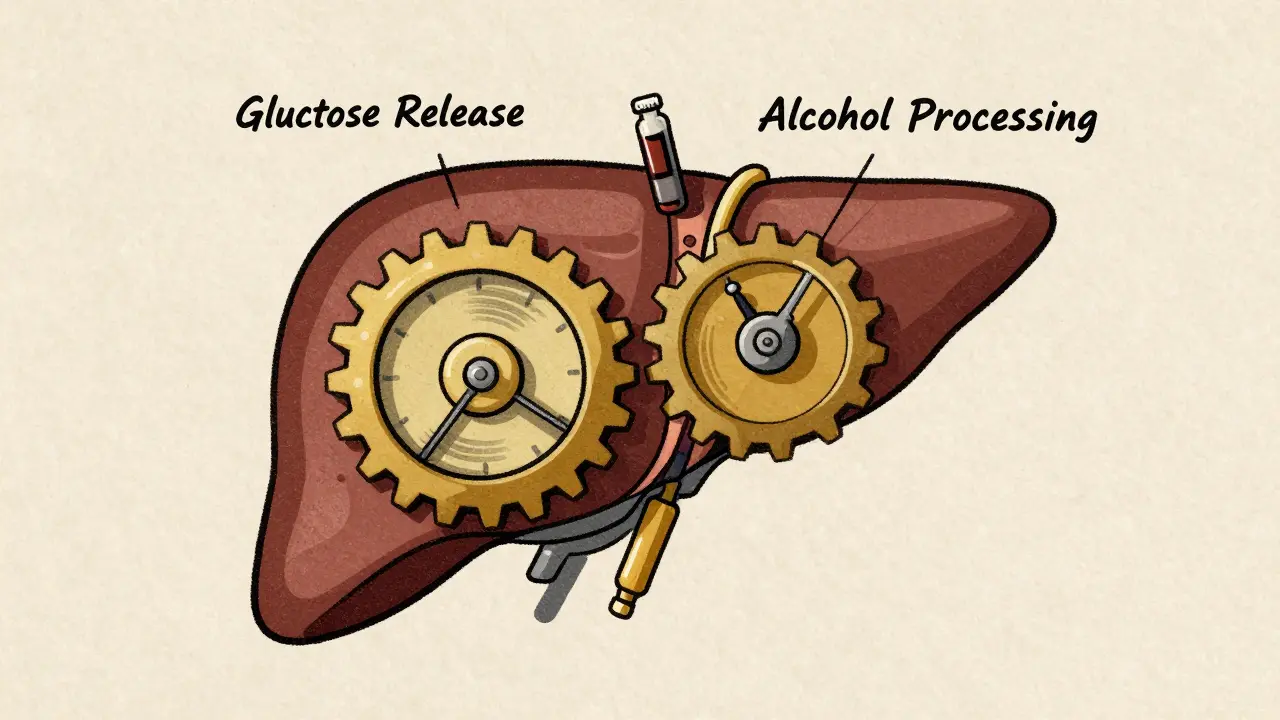
When you have diabetes and take medication to control your blood sugar, drinking alcohol isn’t just a casual choice-it can be dangerous. Many people don’t realize that even one or two drinks can trigger a serious drop in blood sugar, especially if they’re taking insulin or sulfonylureas. The risk doesn’t end when the last sip is gone. Alcohol can cause low blood sugar hours later, sometimes while you’re asleep. And it’s not just about blood sugar. Your liver, already working hard to manage glucose, gets overwhelmed trying to process alcohol at the same time. This double burden can lead to lasting damage, especially if you drink regularly.
Why Alcohol Makes Blood Sugar Drop
Your liver is the body’s glucose warehouse. It stores sugar as glycogen and releases it when blood sugar dips-like between meals or during sleep. But when alcohol enters your system, the liver switches priorities. It treats alcohol like a toxin and focuses all its energy on breaking it down. That means it stops releasing glucose. For someone on diabetes meds, this is a recipe for trouble.
Insulin and sulfonylureas push your blood sugar down. They’re meant to help. But if your liver isn’t releasing sugar because it’s busy processing alcohol, your blood glucose can crash. This isn’t just a minor dip. It can drop below 70 mg/dL-and keep falling. The worst part? The symptoms of low blood sugar-dizziness, confusion, slurred speech, sweating, and weakness-look a lot like being drunk. If you’re at a party and start stumbling, people might assume you’ve had too much to drink. No one realizes you’re in danger.
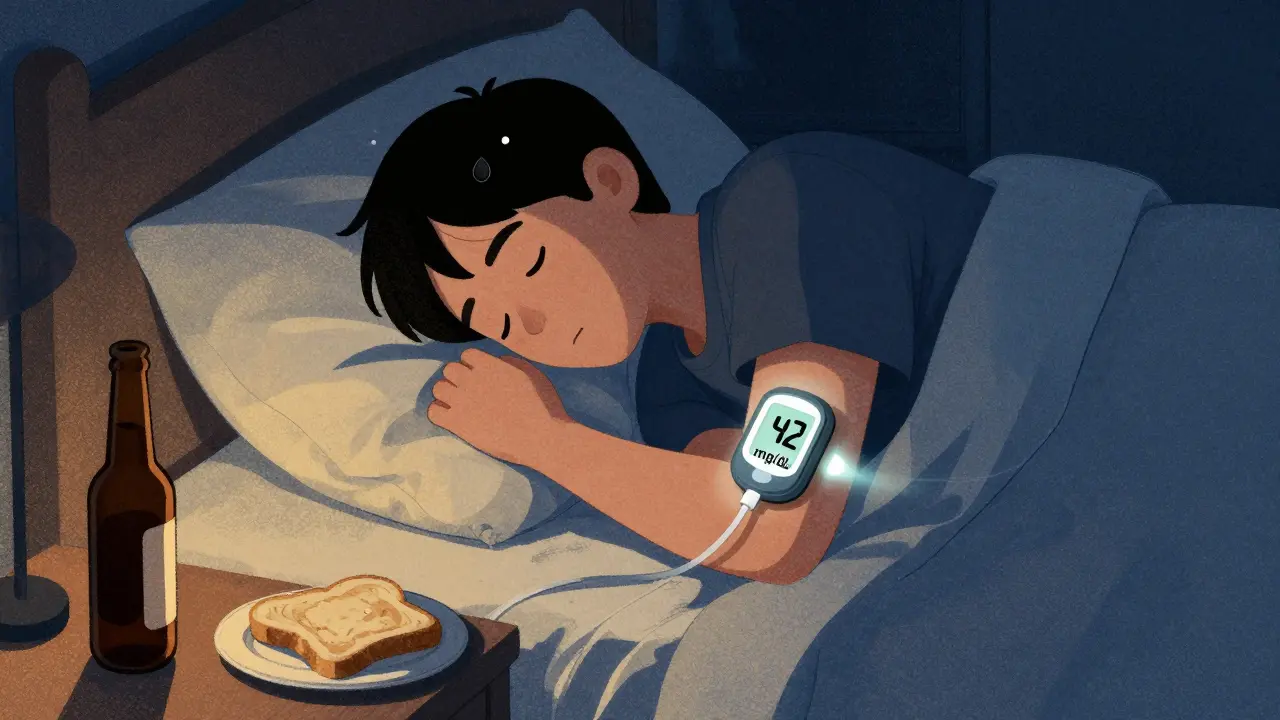
And here’s what most people miss: the danger doesn’t vanish when you stop drinking. Alcohol can cause hypoglycemia 8 to 12 hours later, especially if you drank without eating or if you exercised afterward. One Reddit user shared how they woke up at 3 a.m. with a blood sugar of 42 mg/dL after having two beers with dinner. They had no warning signs. Their CGM alarm saved them. This isn’t rare. Many people with diabetes report nighttime crashes after drinking, even if they felt fine before bed.
Metformin and Alcohol: A Silent Risk
Metformin is one of the most common diabetes pills. It doesn’t cause low blood sugar on its own, so many assume it’s safe to drink with. But that’s not true. Alcohol and metformin both stress the liver. When you combine them, you increase the risk of lactic acidosis-a rare but life-threatening condition where lactic acid builds up in the blood. Symptoms include nausea, vomiting, stomach pain, muscle cramps, and extreme fatigue. These are easy to mistake for a bad hangover.
And then there’s the gut. Metformin often causes bloating, gas, and diarrhea. Alcohol irritates the stomach lining too. Together, they can turn mild discomfort into a full-blown digestive crisis. One study found that people who drank while on metformin reported twice as many gastrointestinal side effects as those who didn’t. The more you drink, the worse it gets. A single drink might be okay for some. Three drinks? High risk.
How Alcohol Harms the Liver Over Time
Your liver doesn’t just handle sugar. It filters toxins, breaks down drugs, and makes proteins. Alcohol forces it into overdrive. Long-term drinking leads to fatty liver, inflammation, and eventually scarring-cirrhosis. For someone with diabetes, this is a double hit. Diabetes already increases liver fat. Alcohol speeds up the damage. A 2023 study from the Joslin Diabetes Center found that people with type 2 diabetes who drank moderately (1-2 drinks daily) had higher liver enzyme levels than those who didn’t drink at all. These enzymes signal liver stress. Elevated levels mean the organ is working harder than it should.
And it’s not just about quantity. How you drink matters too. Binge drinking-four or more drinks in one sitting for women, five or more for men-causes sudden spikes in liver inflammation. This can trigger acute hepatitis, even in people who don’t drink every day. The liver can’t recover fast enough between episodes. Over time, this leads to permanent damage. And once the liver is scarred, it can’t regulate blood sugar properly. That makes diabetes harder to control. It’s a vicious cycle.
What You Should Drink (and What to Avoid)
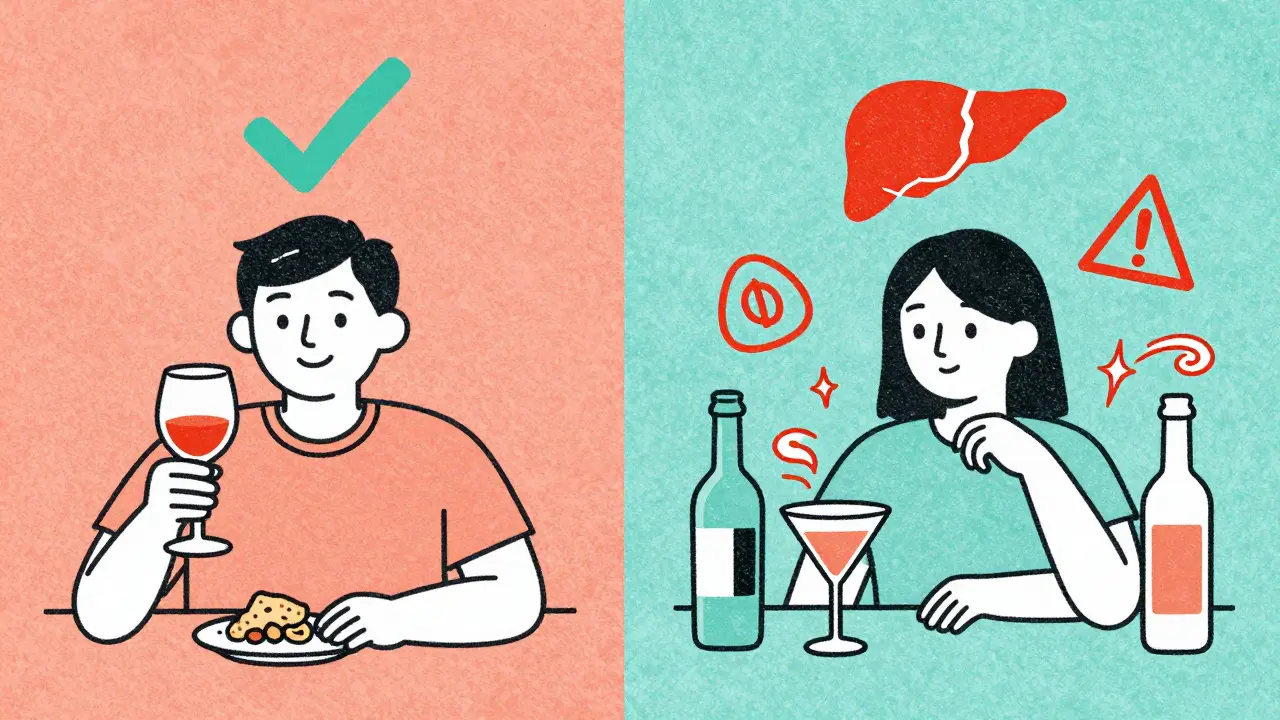
If you choose to drink, it’s not about quitting entirely-it’s about reducing risk. The American Diabetes Association says there’s no one-size-fits-all rule. But here’s what works for most people:
- Always eat first. Have a meal or snack with carbs before you drink. Don’t sip on an empty stomach. Even a handful of nuts or a slice of whole-grain toast helps.
- Choose low-sugar drinks. Avoid sweet cocktails, sugary mixers, and regular soda. Opt for light beer, dry wine, or seltzer with a splash of lime. A shot of spirits with soda water is better than a margarita.
- Limit how much. Stick to one drink per day for women, two for men. One drink means 12 oz of beer, 5 oz of wine, or 1.5 oz of hard liquor.
- Check your blood sugar. Test before you drink, while you’re drinking, and again before bed. If your blood sugar is below 100 mg/dL, don’t drink. Wait until it’s stable.
- Wear medical ID. If you pass out from low blood sugar, someone needs to know you have diabetes. A bracelet or necklace can save your life.
Many people think they’re safe if they’re not on insulin. That’s a myth. Even if you’re on metformin or GLP-1 drugs like Ozempic, alcohol still affects your liver and blood sugar control. It’s not about the drug-it’s about how your body processes alcohol.
What No One Tells You About Alcohol and Diabetes
There’s a hidden problem: hypoglycemia unawareness. Some people with long-term diabetes lose the ability to feel when their blood sugar drops. They don’t get shaky, sweaty, or dizzy. Their body stops sending alarms. This is terrifying when combined with alcohol. You might feel fine while drinking… then collapse hours later with no warning.
Continuous glucose monitors (CGMs) like Dexcom G7 and FreeStyle Libre 3 help. They show trends and can alert you to drops-even while you sleep. But they don’t detect alcohol. They only show what’s happening to your sugar. You still have to connect the dots: “I drank last night. My sugar dropped at 2 a.m. That’s not a coincidence.”
And here’s the truth most doctors don’t say: alcohol can also raise blood sugar. Heavy drinking (more than 15 drinks a week for men, 8 for women) can cause insulin resistance. Your body starts ignoring insulin. Your liver dumps extra glucose. Your sugar spikes. Then, when you stop drinking, your liver rebounds and crashes again. It’s a rollercoaster. One day, high. The next, low. No stability. No control.
When to Say No
Some people should avoid alcohol completely:
- If you have liver disease (fatty liver, hepatitis, cirrhosis)
- If you’ve had severe hypoglycemia before, especially without warning
- If you’re pregnant or trying to get pregnant
- If you have nerve damage (diabetic neuropathy)-alcohol makes it worse
- If you’re struggling to control your blood sugar despite meds and diet
And if your doctor hasn’t talked to you about alcohol? Ask. A 2021 study found that only 43% of primary care doctors routinely ask diabetic patients about drinking. That’s a gap. You deserve to know the risks. Don’t wait for them to bring it up.
What to Do If You Have a Low Blood Sugar Reaction
If you feel dizzy, confused, or weak after drinking:
- Stop drinking immediately.
- Check your blood sugar.
- If it’s below 70 mg/dL, eat 15 grams of fast-acting carbs: 4 glucose tablets, ½ cup of juice, or 1 tablespoon of honey.
- Wait 15 minutes. Check again.
- If it’s still low, repeat.
- After your sugar comes up, eat a snack with protein and carbs (like peanut butter on toast) to keep it stable.
If someone else is unresponsive, call 911. Don’t try to give them food or drink-they could choke. Emergency responders can give glucagon or IV glucose. That’s life-saving.
Can I drink alcohol if I take metformin?
Yes, but with extreme caution. Metformin doesn’t cause low blood sugar on its own, but alcohol increases the risk of lactic acidosis and worsens stomach side effects. Limit yourself to one drink occasionally, always eat first, and avoid binge drinking. Talk to your doctor if you drink regularly.
Why does alcohol cause low blood sugar hours after drinking?
Your liver prioritizes clearing alcohol over releasing stored sugar. This effect lasts for several hours, even after you stop drinking. If you’re on insulin or sulfonylureas, your body keeps pushing sugar down while your liver isn’t refilling it. That’s why nighttime crashes happen.
Is wine safer than beer or liquor for people with diabetes?
Dry wine is generally better than sweet drinks because it has less sugar. But the alcohol content is what matters most. One 5-ounce glass of wine has about the same alcohol as one beer or shot of liquor. The key isn’t the type-it’s the amount and whether you ate.
Can alcohol make diabetes worse over time?
Yes. Heavy drinking damages the liver, increases insulin resistance, and makes blood sugar harder to control. It can also worsen nerve damage and increase the risk of heart disease. Even moderate drinking can raise liver enzymes in people with diabetes, signaling early damage.
Should I check my blood sugar after drinking even if I feel fine?
Yes. You can feel completely normal and still be dropping into dangerous low blood sugar. Alcohol masks the symptoms. Check your level before bed if you’ve had any alcohol. Set an alarm if needed. It’s better to wake up to a low reading than to wake up in the hospital.



11 comments
Haley DeWitt
Okay, but can we talk about how alcohol literally turns your liver into a confused intern who forgot its job description?? 🥲 I had a 2-beer night last weekend and woke up at 3 a.m. with my CGM screaming like a banshee-41 mg/dL. No shaking. No sweating. Just… dead silence. My body stopped caring. I cried. Then I ate honey straight from the jar. Never again. 😭
John Haberstroh
Man, this post hit like a gut punch wrapped in a velvet glove. I used to think ‘one drink’ was harmless-until I started seeing my numbers dip like a stock market crash at midnight. The liver thing? Wild. It’s like your body’s got two bosses yelling at once: ‘Release glucose!’ and ‘Burn this poison!’ And guess who loses? The poor old hepatocyte. I’ve started switching to dry sparkling water with lime. Tastes like rebellion. And my A1C’s finally calming down. 🍸➡️💧
Carrie Schluckbier
ALERT. ALARM. BELL. RINGING. They’re hiding the truth. Big Pharma doesn’t want you to know alcohol isn’t the villain-it’s the cover-up. Insulin? It’s a slow poison. Metformin? A Trojan horse. Alcohol? Just the scapegoat. They make you afraid of beer so you don’t ask why your meds are making your pancreas scream. I’ve seen the documents. The studies? Buried. The FDA? Complicit. Wake up. Your liver isn’t failing-it’s being sabotaged. BY DESIGN.
guy greenfeld
There’s a metaphysical layer here, you know? Alcohol doesn’t just lower glucose-it lowers the soul’s capacity for equilibrium. We’re not just talking biochemistry. We’re talking existential dissonance. The liver, that ancient alchemist, was meant to transmute chaos into order. But alcohol? It’s the philosopher’s stone turned to ash. It doesn’t just disrupt sugar-it disrupts meaning. And when your body forgets how to hold itself together… what does that say about the self? Are we just sugar-coated ghosts, waiting for the next drink to dissolve us?
Adam Short
Right, so Americans are scared of a pint? In the UK we’ve been drinking with diabetes since the 1970s. My grandad had Type 2 and drank stout every night. Lived to 89. The real problem? You lot overthink everything. Eat a sandwich. Don’t be a baby. If you’re on meds, you’re already on a tightrope. Adding alcohol? Just don’t fall off. Simple. No drama. No CGM panic. Just… life.
Sam Pearlman
Hold up-so you’re saying I can’t have my nightly margarita? With salt? On the rocks? With extra lime? I mean… I’m just trying to survive this pandemic, y’all. My anxiety’s through the roof. My sugar’s fine. I check it. I eat. I’m not a monster. Can’t we all just chill? I’m not gonna die from one drink. I’m gonna die from stress. And you’re all stressing me out.
Steph Carr
Oh honey, let me tell you about my French grandmother who drank a glass of red with every meal and lived to 97. She also had Type 2. She didn’t check her sugar. She didn’t own a CGM. She just… lived. And you know what? She was happier than all of us with our spreadsheets and alarms. Maybe the answer isn’t more control. Maybe it’s more joy. One glass. One moment. One human being who refuses to be a lab rat. I’ll drink to that. 🍷
Liam Earney
It’s not just the liver, you know? It’s the whole damn ecosystem. The gut microbiome? Shattered. The circadian rhythm? Obliterated. The emotional regulation? Gone. Alcohol doesn’t just interfere with glucose-it disrupts the symphony of your entire physiology. And when you’re diabetic, you’re already playing an instrument with half the strings. Now you’re pouring bleach into the soundhole. I’ve seen people with stable HbA1c turn into walking chaos after just two drinks. It’s not a myth. It’s a slow-motion implosion. And no one talks about the shame. The isolation. The guilt. The quiet sobbing at 2 a.m. because you ‘just had one’ and now your body hates you.
Oliver Calvert
Metformin and alcohol lactic acidosis risk is real but rare. Less than 1 in 10000. Don’t panic. Eat before drinking. Stick to one. Avoid binge. Check glucose. Done. No need for fearmongering. Most people manage fine. Your liver is tough. It’s not a fragile flower.
Prateek Nalwaya
In India, we have a saying: "Dil ki baat, paani mein doob jaaye" - the heart’s whisper sinks in water. Alcohol doesn’t just drown your liver-it drowns your awareness. I’ve seen friends with diabetes forget their meds, then blame the alcohol. But the truth? The alcohol didn’t make them forget. The fear did. The shame. The loneliness. The belief that they’re broken. Maybe the real cure isn’t in the CGM. Maybe it’s in the conversation. The quiet "I’m here". The shared silence. Not the warning.
Jonathan Ruth
Just say no to alcohol period. Its all a scam. The ADA is funded by liquor companies. They want you to think its safe. Its not. My cousin died from lactic acidosis. He thought one drink was fine. He was wrong. No exceptions. No excuses. No wine. No beer. No nothing. If you want to live, dont drink. Simple. No debate. No nuance. Just facts.